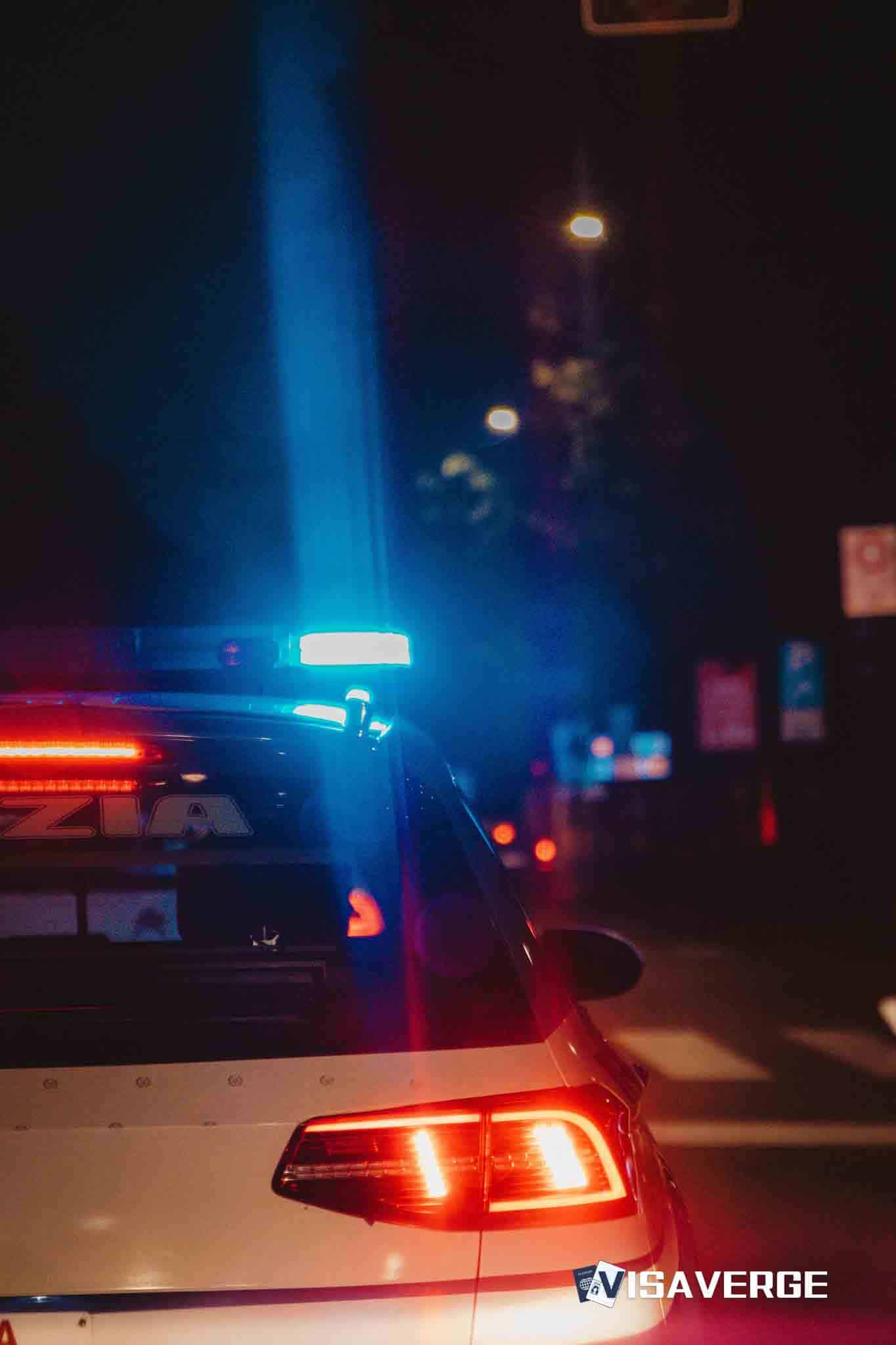
(DROGHEDA, COUNTY LOUTH) Gardaí are investigating suspected arson at an asylum centre in Drogheda after a blaze on October 31, 2025 forced firefighters to rescue five people, including four children and a baby, from the top floor. Officers believe an accelerant was used to deliberately start the fire at the International Protection Accommodation Service (IPAS) building on Halloween night, and fireworks were thrown into the property as the blaze took hold.
Twenty-eight people were living in the centre at the time. Firefighters brought them to safety in a late-night operation, carrying children down smoke-filled stairs and guiding families through corridors blackened by soot. A 20-day-old baby was among those rescued, and several residents, including small babies, were taken to Our Lady of Lourdes Hospital, Drogheda, for checks. Their injuries were not serious, but Justice Minister Jim O’Callaghan called the episode a

“criminal attack”
and warned of
“serious consequences for those responsible.”
He added:
“This was a terrifying ordeal for the women and children living there, a number of whom were taken to hospital.”
The suspected arson and the rescue effort unfolded as Halloween fireworks echoed across Drogheda. Investigators are examining CCTV that reportedly shows a man setting the fire on the stairs of the centre before sparks and embers spread. Gardaí have appointed a Senior Investigating Officer and launched a full inquiry, combing the George’s Street area for clues and appealing to anyone with dashcam or camera footage from Halloween night to come forward. A Garda spokesperson said:
“A full Garda investigation into this arson attack is underway. There will be serious consequences for those responsible.”
Taoiseach Micheál Martin condemned the attack
“in the strongest terms,”
calling it
“deeply disturbing”
and stating:
“To put vulnerable families, including young children, at risk is abhorrent and has no place in our society. Our thoughts are with those affected by this horrifying experience.”
The Labour TD for Louth, Ged Nash, praised the emergency services and warned how narrowly the town had avoided tragedy. He said the
“swift and professional actions of the Fire Service and An Garda Síochána”
saved lives, adding:
“Let’s be clear. Small babies were hospitalised overnight. The deaths of children, of families, was avoided last night thanks to the response of the fire service and gardaí. Had the fire occurred only a matter of hours later, we could in all probability be dealing with an unspeakable catastrophe this morning.”
Inside the asylum centre, the alarm system roused residents and sent them towards exits as smoke thickened. Fireworks thrown into the building helped fuel the blaze, and emergency crews used ladders and breathing apparatus to reach those trapped on upper floors. The property itself suffered minor fire damage, but the smoke damage was extensive enough to render the building uninhabitable for now. Local authorities and the accommodation provider began sourcing alternative accommodation for all displaced residents so families could move out of temporary shelters and hospital observation rooms and into safer lodgings while the building is assessed.
The investigation has set a tight focus on how and where the fire started. Gardaí believe an accelerant was used to start the blaze on the stairs, a confined area where fuel would catch quickly and smoke would rise fast to the top floor. On Halloween, when fireworks and small blazes are common, investigators must sort normal seasonal noise from the deliberate act seen on CCTV. Detectives are gathering witness statements from residents and neighbors who reported sudden flames and loud bangs, and are reviewing multiple camera angles from premises along George’s Street where figures may have been captured approaching or leaving the entrance around the time the fire was set.
As families regroup after a night of fear, the human cost is becoming clearer. Parents tried to keep children calm as firefighters moved door to door, while blankets and towels were pressed over faces to filter smoke. In the hours after the rescue, paramedics ferried small babies and their mothers to Our Lady of Lourdes Hospital for observation. While doctors reported no serious injuries, the shock has lingered. Minister O’Callaghan said the event was a
“terrifying ordeal,”
language that echoed across Drogheda as neighbors gathered outside the sealed entrance and looked at the blackened stairwell. Community members said they were stunned and saddened that anyone would target people who came to Ireland for safety.
Nick Henderson, chief executive of the Irish Refugee Council, described how fragile life can be for families still finding their footing in a new country.
“Families, children, and babies who have fled war and persecution are targeted as they try to rebuild their lives in safety. Those responsible are a tiny minority and do not reflect the proud and welcoming spirit of the Drogheda community,”
he said. His words matched what many residents said—anger at the attackers, pride in the emergency response, and worry for the people who have to move again, this time because of smoke damage in a building where they had begun to settle.
The IPAS facility housed people seeking international protection who had been placed in Drogheda by the state while their cases are processed. The Halloween night attack has drawn urgent attention because the centre contained children, including the 20-day-old baby whose rescue underscored how quickly the incident could have turned fatal. As the smoke spread, firefighters reached the top floor to bring down four children and a baby, along with other residents guiding one another through corridors where alarms screamed and lights flashed through haze.
Gardaí have asked anyone who was in or near George’s Street on Halloween night to check for footage that could show the moments before or after the blaze. Investigators say even short clips from doorbell cameras or fast-moving dashcams could provide a crucial angle of the suspect or a vehicle. The appeal includes two contact numbers for information: Drogheda Garda Station on 041 9874200 and the Garda Confidential Line on 1800 666 111. Officers say callers can provide information in confidence and that the inquiry will continue until those responsible are identified and brought before the courts.
While flames did not consume the building, smoke damage has been heavy enough to force everyone out. Soot has stained walls and ceilings, and the smell of burning still hangs in stairwells where the accelerant is believed to have been poured. The provider and local officials are arranging transport and short-term accommodation, with priority for families with babies and small children. In addition to new rooms, caseworkers are helping residents replace smoke-damaged items, arrange medical follow-ups from the hospital, and reconnect with schooling and community supports disrupted by the sudden move.
Political leaders framed the attack as part of a worrying pattern that has seen some asylum accommodation sites become targets of threats and unrest. In recent months, protests have gathered outside several buildings in other towns and parts of Dublin, reflecting rising anti-immigration sentiment that NGOs and migrant support groups say has spread online. The nature of the Drogheda incident—arson using an accelerant and fireworks, at night, when children were home—has intensified calls for a firm response. The Taoiseach’s statement that the attack was
“deeply disturbing”
and
“in the strongest terms”
condemned indicates that government leaders see a boundary crossed when families and a 20-day-old baby are forced through smoke at the hands of attackers who chose a night of fireworks to mask their actions.
In the aftermath, praise for the emergency services has been consistent and detailed. Neighbors said fire crews arrived quickly and did not hesitate to run inside, where they set up ladders and checked rooms. Gardaí secured the site, cleared bystanders, and helped families gather at a safe point away from the asylum centre’s doors. Ged Nash’s warning—
“Had the fire occurred only a matter of hours later, we could in all probability be dealing with an unspeakable catastrophe this morning”
—reflects how time and chance played a part. On another night, with people asleep and alarms slower to rouse them, smoke in an interior stairwell could have trapped residents before help arrived.
For investigators, the accelerant is a key forensic detail. Traces on steps or banisters, burn patterns that spread upward from a specific point, and residues found by laboratory tests can confirm how the fire was fed after ignition. Fireworks, when thrown indoors, add rapid ignition sources and hot debris to a confined space, making escape more hazardous. CCTV that reportedly shows a man lighting the stairs could offer a clear sequence of events. Once police match that image with a face or witness account from George’s Street, the inquiry could accelerate further.
Officials say alternative accommodation is being sourced for all 28 residents displaced by the blaze. That process carries its own upheaval, especially for families who had enrolled children in local schools or built relationships with volunteers and neighbors in Drogheda. Support groups will likely aim to keep families in the area if possible so that children can maintain routines and parents can reach services at Our Lady of Lourdes Hospital and other local clinics. Even as repairs are assessed, the smoke damage means a return is not imminent, and the building will remain cordoned off while the Garda inquiry proceeds.
The attack also raises questions about security measures for accommodation centres, especially on nights like Halloween when fireworks are commonplace and visibility can be poor. CCTV at the Drogheda site appears to have captured crucial footage, underscoring the importance of cameras covering stairwells and entry points. Beyond cameras, staff training on evacuation, functioning alarm systems, and close ties with local fire stations can help. In this case, the alarm system worked and alerted residents to evacuate, a factor repeatedly cited by officials and neighbors who say lives were saved because alarms sounded in time.
As the town absorbs what happened, statements of solidarity have circulated alongside the official appeals. Neighbors left messages and offered clothing and toys for children moved from the asylum centre, while community leaders urged calm and patience as Gardaí gather evidence. The Irish Refugee Council’s statement that attackers are
“a tiny minority”
has echoed in local conversations, with residents keen to stress that Drogheda is not defined by one night’s violence. The broader fear, shared by people living in other accommodation sites, is that one attack can frighten children and erode the sense of safety that families need after leaving war or persecution.
Gardaí maintain that tips from the public often unlock cases like this. Anyone with information can contact Drogheda Garda Station on 041 9874200 or the Garda Confidential Line on 1800 666 111. The force has asked people with even minor clips to come forward, especially if they were in the George’s Street area around the time the fire started. Further updates will be provided by An Garda Síochána as the investigation progresses and as officers work to identify the person seen on CCTV and any others who may have helped.
For now, the priority remains the families who lived on George’s Street and must uproot again. The emergency response saved lives, and leaders have promised that
“serious consequences for those responsible”
will follow. Behind the official language and the forensic work are small details that stick: the 20-day-old baby carried down stairs through smoke; the firefighters moving from door to door as alarms rang; the parents who left with children in their arms, grateful to be alive but unsure where they would sleep next. Drogheda will remember the Halloween night when an accelerant and fireworks turned an asylum centre into a crime scene. The town will also remember who ran in.
This Article in a Nutshell
On October 31, 2025, suspected arson at the IPAS asylum centre in Drogheda forced firefighters to rescue five people, including a 20-day-old baby. Gardaí believe an accelerant and fireworks were used; CCTV reportedly shows a man lighting the stairs. Twenty-eight residents were displaced by smoke damage and are being rehoused. Investigators have launched a full inquiry, appealed for dashcam and camera footage from George’s Street, and warned of serious consequences for those responsible.