- Newborns must have individual documents such as a passport and visa before traveling to the United States.
- Parents should verify U.S. citizenship birthright status prior to applying for any dependent visa categories.
- A Consular Report of Birth Abroad or separate visa application is required for all non-citizen children.
Parents holding a temporary visa must secure a separate passport and immigration document for a child born abroad before the family travels to the United States. The child does not automatically receive either parent’s status.
The first step is to determine whether the child acquired U.S. citizenship at birth. A qualifying child should generally receive citizenship documentation and a U.S. passport, not a visa in a parent’s category.
Families should register the birth with the civil authority where it occurred and obtain the official birth certificate. A hospital birth notification may help with that process, but it generally cannot replace the civil record for a passport or visa application.
Free toolDS-160 Form Filling Online Helper ToolThe certificate should show the child’s full name, date and place of birth, both parents’ names, the names as they appear in their passports, and the official registration number or seal.
A parent’s status does not cover the newborn. The child needs an individual travel document.
Parents should also avoid final travel arrangements until the child’s U.S. passport or visa has been issued. A pending application, appointment, or receipt does not authorize travel.
Citizenship must be checked before any visa application
A child born outside the United States can acquire citizenship at birth if at least one parent was a U.S. citizen and the applicable parentage, physical-presence, and other statutory requirements were met.
The analysis depends on the child’s date of birth, whether one or both parents were citizens, whether the parents were married, the citizen parent’s physical presence in the United States, and the legal and biological or gestational relationship between the parent and child.
For a child born in wedlock on or after November 14, 1986, to one U.S.-citizen parent and one noncitizen parent, the citizen parent generally must have accumulated five years of physical presence in the United States before the birth. Two of those years must have come after the parent turned 14.
Other family arrangements and birth dates follow different rules. The family should resolve that question before requesting a visa in a dependent category.
If the child acquired citizenship at birth, the parents can apply through the relevant U.S. embassy or consulate for a Consular Report of Birth Abroad, known as a CRBA. The Department of State issues CRBAs to qualifying children under age 18.
Parents can normally pursue the CRBA and the first U.S. passport through the U.S. post abroad. The documents serve separate purposes.
| Document | Main purpose |
|---|---|
| Foreign birth certificate | Establishes the locally registered birth and parentage details |
| CRBA | Documents acquisition of U.S. citizenship at birth |
| U.S. passport | Serves as the child’s U.S. travel document |
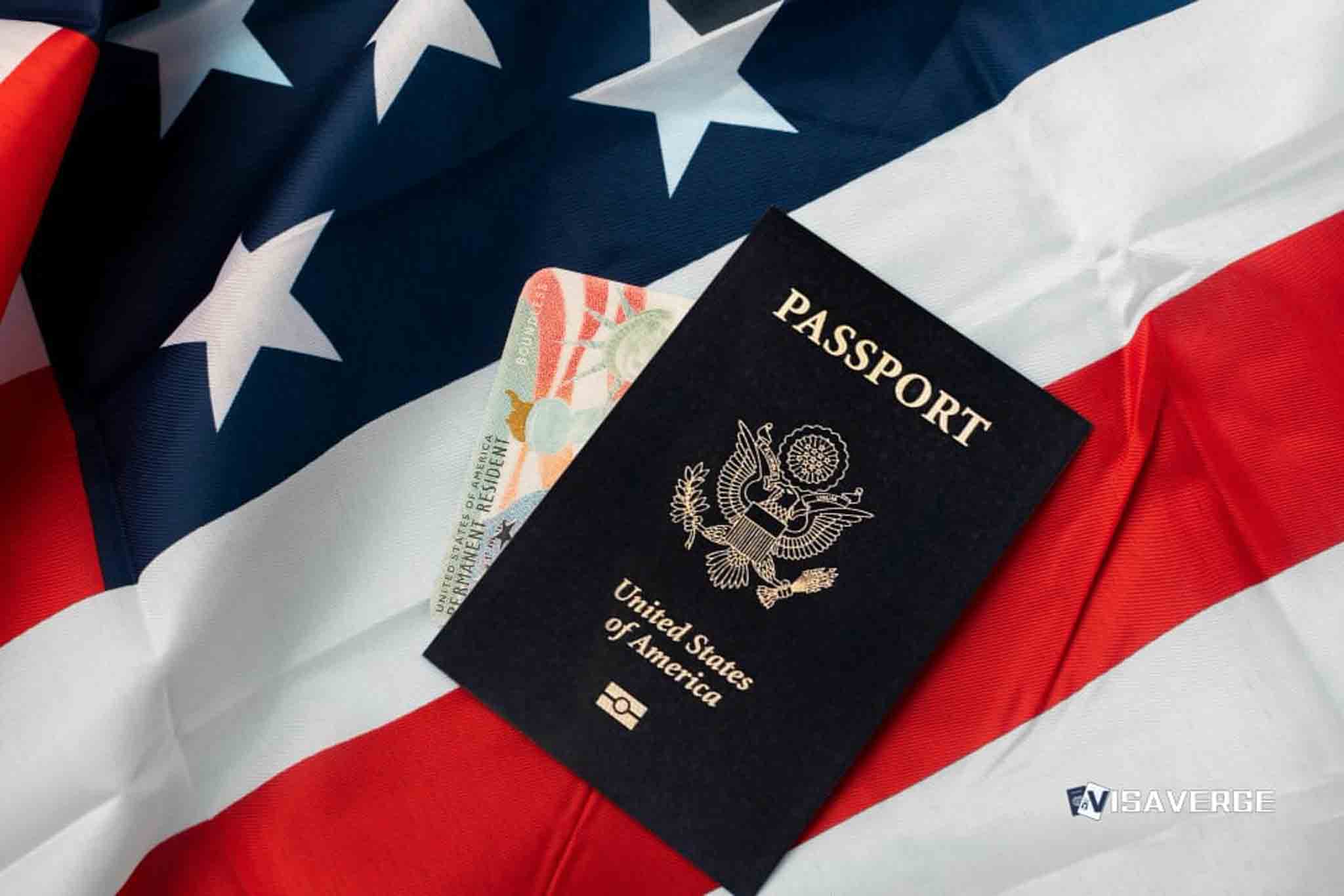
A CRBA does not replace the foreign civil birth certificate. A child who is a U.S. citizen should normally use a U.S. passport to travel to the United States rather than apply for a visa in a parent’s category.
A noncitizen child needs a foreign passport and a separate application
When the child did not acquire U.S. citizenship, the parents should obtain a passport from the child’s country of nationality. The child generally cannot travel internationally using only a birth certificate or an entry in a parent’s passport.
The passport information must match across the DS-160, any Form I-20 or Form DS-2019, the visa appointment, airline reservations, and the child’s immigration records.
The appropriate category depends on the parent’s status. Children of qualifying H, L, O, and P workers may apply in the corresponding classifications:
| Parent’s category | Child’s category |
|---|---|
| H worker | H-4 |
| L-1 worker | L-2 |
| O worker | O-3 |
| P worker | P-4 |
The Department of State recognizes accompanying or following-to-join spouses and minor children in these categories. The child’s visa validity generally cannot exceed the principal worker’s visa validity.
Typical supporting evidence includes the child’s passport and birth certificate, the parent’s passport and visa, the principal worker’s petition approval, employment confirmation, and proof that the parent continues to hold or will obtain the underlying status.
A newborn does not automatically receive H-4 status. The child must obtain an H-4 visa before traveling to seek admission in that classification, unless the child is a U.S. citizen or another narrow exception applies.
Students and exchange visitors use separate school or sponsor records
A spouse or unmarried minor child accompanying an F-1 or M-1 student applies for F-2 or M-2 status. The school must enter each child into SEVIS and issue an individual Form I-20.
Each family member still submits an individual visa application. Dependents do not pay a separate SEVIS I-901 fee.
An unmarried child under 21 may qualify for J-2 status when the principal’s exchange category permits dependents. The program sponsor issues a separate Form DS-2019, and the child submits a separate application with the parent’s J-1 records and proof of the relationship.
The DS-160 family or group feature can copy common information into related applications. It does not eliminate the need to create an individual application for each family member, including a newborn.
A parent or guardian may complete and sign the form for a child who cannot do so personally.
Pending immigrant cases follow different rules
A newborn can often be added to an employment-based, family-preference, or other immigrant case that permits derivative children. A derivative child is generally the principal beneficiary’s unmarried child under 21.
The Consular Electronic Application Center, or CEAC, allows qualifying family members to be added to an existing case. The family must then complete the relevant fees, Form DS-260, and civil documents for the child.
Parents should promptly notify the National Visa Center or the consular post and provide the child’s birth certificate, passport biographical page, updated family information, Form DS-260, a medical examination when directed, and applicable fees.
Immediate-relative cases require separate attention. Children cannot ordinarily be included as derivative applicants on a parent’s immediate-relative petition.
When a U.S. citizen petitions for a spouse as an immediate relative, a separate petition may be required for each qualifying child. The family should not assume that the newborn can simply be attached to the parent’s case.
The child’s coverage must be arranged separately after arrival
Immigration permission does not automatically enroll a newborn in health insurance. The family must address coverage as a separate task.
Childbirth can trigger a special enrollment right under an employer-sponsored health plan. The employee generally must request enrollment within 30 days after the birth.
The birth can also create a Special Enrollment Period for Marketplace coverage. HealthCare.gov advises families to report the birth promptly and complete enrollment within the applicable period.
Parents should obtain written confirmation of the child’s effective coverage date, whether coverage begins from birth or arrival, required proof of birth, premium changes, and pediatric and emergency-care coverage.
Documents should be assembled before the flight
Before boarding a flight to the United States, the family should carry:
- the child’s valid passport;
- the child’s visa or U.S. passport;
- the birth certificate;
- the CRBA, when applicable;
- the principal parent’s passport and visa;
- petition approval,
Form I-20, orForm DS-2019; - proof of continuing employment or study;
- parental consent when one parent is not traveling; and
- health-insurance confirmation.
A family waiting on a dependent visa should not treat a DS-160 filing, visa appointment confirmation, or CRBA application as permission to board. The child must have the issued document required for the intended travel.
The sequence is straightforward: register the birth, assess citizenship, obtain a CRBA and U.S. passport if the child is American, or obtain the foreign passport and correct visa if not. Families with a pending immigrant case should update it promptly, then arrange health coverage before departure.