(UNITED STATES) Refugees who arrived in the country between January 2021 and late January 2025 can still move forward toward Green Cards, even after President Biden halted new arrivals under the U.S. Refugee Admissions Program (USRAP) in January 2025. The suspension has raised deep worries in refugee communities, but it does not cancel the rights of people already admitted to work toward lawful permanent residence.
Basic legal rule and how the one‑year clock works

Under long‑standing U.S. law, a person admitted as a refugee may apply for a Green Card after one year of physical presence in the United States 🇺🇸. That basic rule remains in force as of November 2025.
In practice, this means:
- A refugee admitted on January 15, 2024 becomes eligible to file one year later, on or after January 15, 2025, assuming other legal requirements are met.
- The date of arrival (not the later suspension of USRAP) controls when the one‑year clock starts.
Timeline summary
| Event | Date / Range |
|---|---|
| Eligible arrival window mentioned | January 2021 – late January 2025 |
| Executive order pausing USRAP signed | January 27, 2025 (effective from 12:01 a.m. ET that day) |
| Legal status noted current as of | November 2025 |
| (Later paragraph also references) | January 2021 – February 2025 |
Key point: Arrival date determines eligibility for filing; the suspension affects future admissions, not the rights of those already admitted.
What happened on January 27, 2025
On January 27, 2025, President Biden signed an executive order pausing the USRAP beginning 12:01 a.m. Eastern time that day. Under the order:
- New refugees generally cannot be admitted through the program.
- Exceptions may be made on a case‑by‑case basis with approval from top officials.
- The White House described the pause as a temporary security and policy review.
The timing caused immediate confusion for families already in the U.S. about whether their path to permanent status had been cut off.
Federal guidance and legal interpretation
Federal officials and analysts have stressed that people who arrived before the cut‑off keep the same Green Card rights as before.
- According to analysis by VisaVerge.com, the suspension applies to admissions going forward under USRAP, not to the adjustment process for those already in the country.
- Refugees admitted anytime from January 2021 up to and including January 26, 2025 fall under the normal rule: they may apply for permanent residence after one year, provided they still meet all legal standards.
Main step: filing Form I‑485
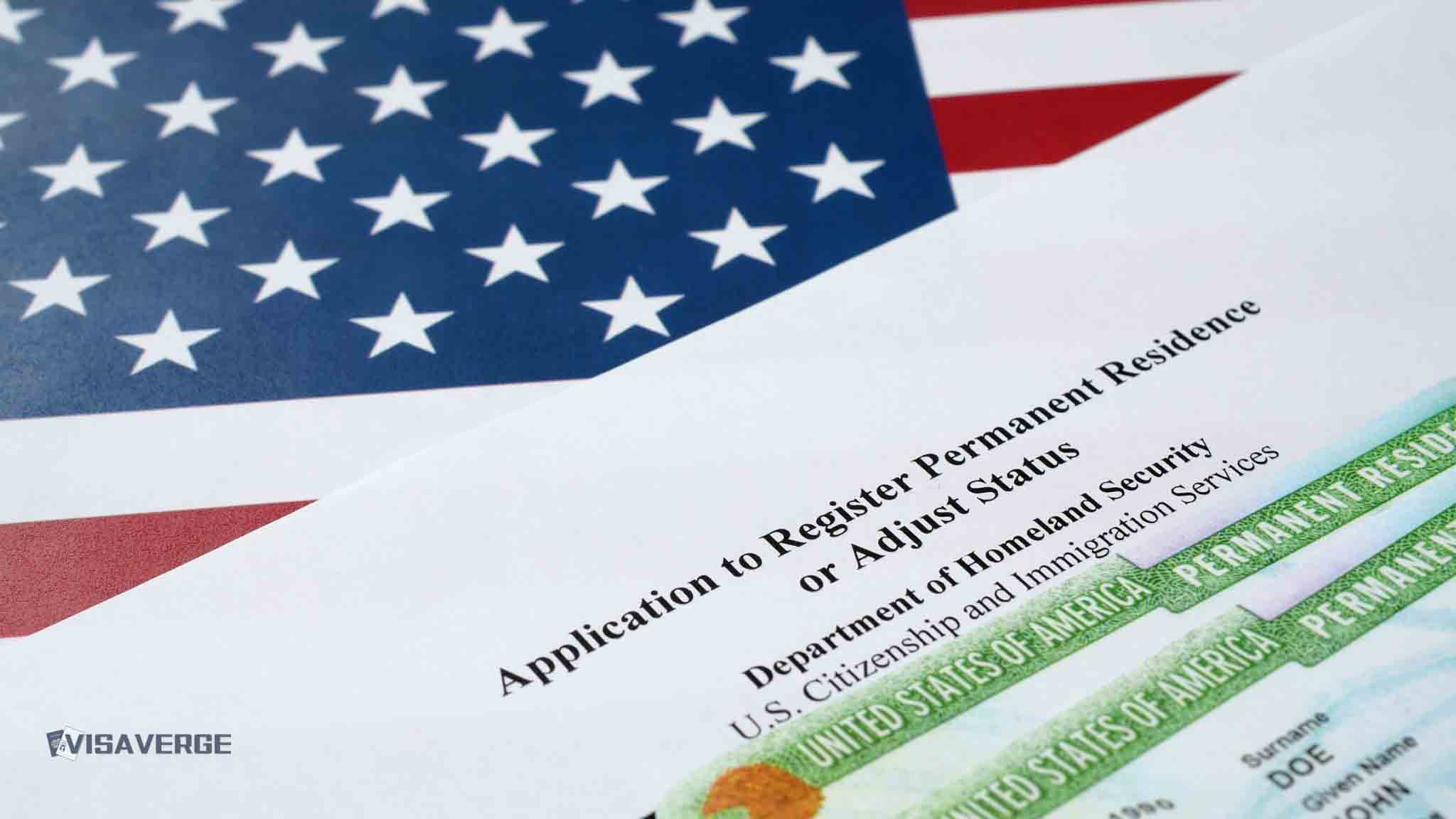
The principal action for eligible refugees is filing Form I‑485, Application to Register Permanent Residence or Adjust Status, with U.S. Citizenship and Immigration Services (USCIS).
- Official form and filing instructions are available on the USCIS website at Form I‑485, Application to Register Permanent Residence or Adjust Status.
- USCIS explains refugee applicants must demonstrate:
- They were admitted as refugees.
- They have lived in the United States for at least one year since admission.
- They have not firmly resettled in another country before coming to the U.S.
- They must pass background checks and must not have committed disqualifying crimes.
Step‑by‑step filing (high level)
- Confirm you were admitted as a refugee and have completed one year of physical presence.
- Gather supporting evidence (admission documents, records of continuous residence, criminal history disclosures, etc.).
- Complete and submit Form I‑485 following instructions at Form I‑485, Application to Register Permanent Residence or Adjust Status.
- Attend any USCIS interviews or biometrics appointments and respond to requests for evidence.
- Await adjudication — USCIS will evaluate continuous residence, any changes in personal situation, and security/criminal concerns.
Important: Approval is not automatic just because a year has passed. USCIS reviews each case individually.
Common review issues USCIS considers
- Continuous residence since admission.
- Changes in personal circumstances (marriage, criminal arrests, lengthy trips abroad).
- Security or criminal concerns that might bar permanent residence.
Refugees who have been arrested or who have left the U.S. for prolonged periods may face additional questions during adjudication.
Case‑by‑case admissions under the order
The executive order authorizes the Secretary of State and the Secretary of Homeland Security to allow individual refugees to enter on a case‑by‑case basis if:
- Admission is found to be in the national interest, and
- Admission does not threaten U.S. security or welfare.
- These approvals are expected to be rare, but they remain an option for especially urgent or sensitive cases.
Refugees admitted via these exceptions are treated the same as other refugees upon arrival: their one‑year clock toward Green Card eligibility starts on their U.S. admission date, and they may file Form I‑485 after a year under the same legal standards.
Real‑world impacts and community response
The practical consequences are significant:
- Families that arrived in 2021 and 2022 are often at or past their one‑year mark and are seeking to move from temporary refugee documents to Green Cards.
- Many refugees view permanent residence as the moment they can plan for college, buy homes, or change jobs without fear of losing status.
- The USRAP suspension has increased anxiety that future political shifts could change the rules again.
Immigration lawyers and community groups report:
- High confusion among refugees who arrived in 2024 and early 2025.
- Some refugees incorrectly believe they no longer qualify and are delaying applications.
- Advocates urge refugees to rely on official government guidance, not social media rumors. The main USCIS website, USCIS.gov, remains the federal source for current rules and filing directions.
Family separation and long‑term outcomes
The policy change creates a split between:
- Those already in the U.S. preparing Green Card applications, and
- Relatives abroad who may face a blocked USRAP pipeline.
-
Once refugees become permanent residents, they generally have stronger tools for family reunification through regular immigration channels, though that process can be slow and complex.
Administrative and workload effects
Inside government agencies:
- Workload may shift from processing future admissions to managing long‑term cases for existing refugee populations.
- Some advocates hope this will reduce backlogs and speed the move from temporary status to permanent residence.
- Others worry that political debates about refugee policy could lead to longer processing times or closer scrutiny of individual files.
Final legal picture (current)
- For refugees admitted between January 2021 and late January 2025, the pathway to a Green Card remains open: if admitted before January 27, 2025 and they have lived in the U.S. at least one year, they can apply through the standard adjustment process.
- Refugees admitted afterward through case‑by‑case decisions under the order follow the same one‑year rule.
- The pause affects new entries to USRAP, not the long‑term status of people already inside the country under current law.
Bottom line: The future of USRAP admissions may be uncertain, but the path from refugee status to permanent residence for people already in the country is still open under existing law.
Refugees admitted from January 2021 through late January 2025 retain the right to apply for permanent residence after one year of physical presence, despite the USRAP suspension effective Jan. 27, 2025. The pause stops most new admissions but allows rare case-by-case exceptions. Eligible refugees should file Form I-485 with USCIS, prove refugee admission and continuous residence, and pass background checks. Advocates recommend consulting official USCIS guidance and immigration counsel to navigate possible scrutiny and avoid procedural errors.