(UNITED STATES) Members of Congress from both parties have introduced new legislation to ensure air traffic controllers are paid during any future government shutdowns, responding directly to the chaos that followed the 43-day shutdown that ended in November 2025. The proposal, unveiled on Capitol Hill, aims to keep the nation’s air traffic control system functioning even when lawmakers fail to agree on federal spending, after the recent lapse in funding forced controllers to work without pay and triggered nationwide delays and cancellations.
Who is sponsoring the bill
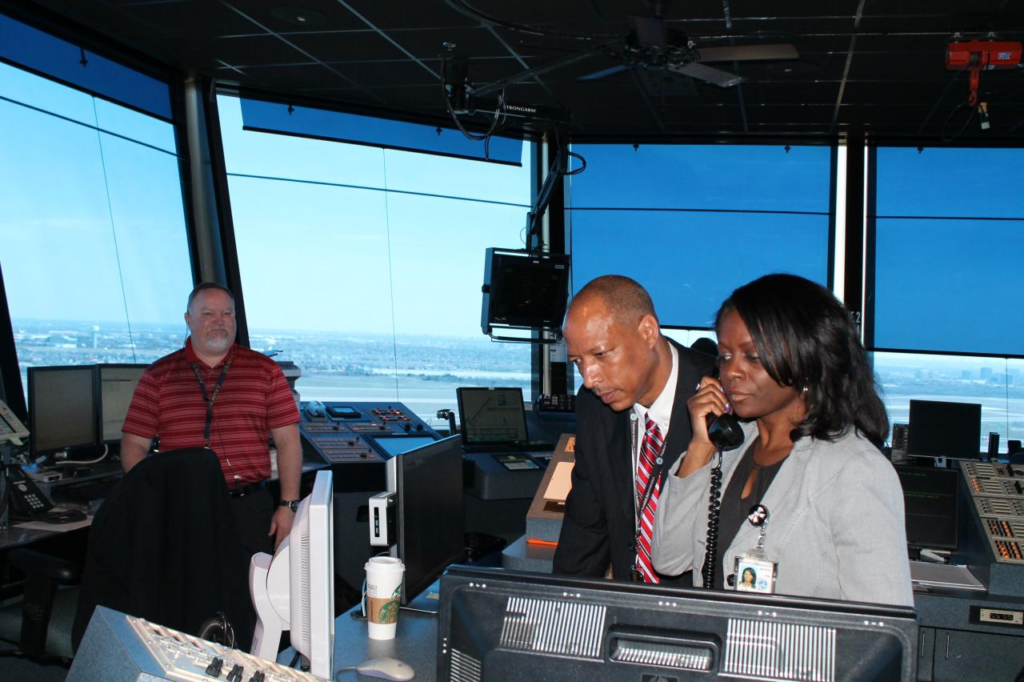
The measure is being advanced by a bipartisan group led by U.S. Rep. Sam Graves of Missouri, the Republican chairman of the House Transportation and Infrastructure Committee.
Joining Graves are:
- Dem. Rep. Rick Larsen (Washington)
- Dem. Rep. Andre Carson (Indiana)
- Rep. Troy Nehls (Texas), Republican and head of the aviation subcommittee
This push follows an earlier effort by Rep. Aaron Bean, who introduced the “Aviation Funding Stability Act of 2025” in October with the same central goal: protecting the paychecks of controllers and keeping the Federal Aviation Administration (FAA) running when federal appropriations run out.
The funding mechanism: an insurance account
At the heart of the new bill is an unusual funding strategy that taps a little-known federal insurance account. Lawmakers want to draw on a $2.6 billion fund originally set up to reimburse airlines if the government ever commandeers their planes and they are damaged.
Under the proposal:
- Money from that fund could be used to pay air traffic controllers and cover essential FAA operations during a shutdown.
- The tap would automatically shut off if the balance drops below $1 billion.
House Transportation Committee staff say that threshold would still leave enough funds to operate the FAA for about four to six weeks during a funding lapse.
Quick comparison of funding options
| Fund/Option | Current balance (reported) | Key point |
|---|---|---|
| Insurance account (proposal) | $2.6 billion | Tap allowed until balance falls below $1 billion; intended to cover 4–6 weeks of operations |
| FAA aviation trust fund (alternative) | $5 billion | Collected from airline-related fees; CBO reportedly places a higher cost on using this option |
Supporters argue the insurance-fund approach keeps core aviation services running without creating a new tax or fee. An alternative under discussion would pull from the FAA’s existing aviation trust fund, which holds about $5 billion collected from airline-related fees. But the Congressional Budget Office (CBO) has reportedly placed a much higher cost on that option, making the insurance-fund idea more attractive to budget-conscious lawmakers.
Safety and accountability framing
Rep. Graves has framed the issue in stark safety terms, stressing that the country cannot afford a repeat of the recent disruption. He said the bill is designed to:
“guarantee that controllers, who have one of the most high-pressure jobs in the nation, will get paid during any future funding lapses and that air traffic control, aviation safety, and the traveling public will never again be negatively impacted by shutdowns.”
His comments echo growing concern in the aviation sector that the 43-day shutdown exposed deep weaknesses in how the system responds when the federal government runs out of money.
What happened during the shutdown
During the 43-day funding lapse:
- Thousands of air traffic controllers were told to report to work without pay.
- Controllers missed multiple paychecks, worsening an existing staffing shortage.
- With towers and FAA radar facilities stretched thin, even a few unexpected absences at a single facility could trigger major slowdowns.
- Industry accounts summarized in congressional discussions linked that fragile situation to widespread flight delays and cancellations, stranding passengers and disrupting airline schedules.
Nick Daniels, president of the National Air Traffic Controllers Association (NATCA), described the financial hit:
- Controllers received two consecutive zero-dollar paychecks during the 43-day shutdown — the first time in U.S. history that had happened.
- For a workforce guiding thousands of flights daily, working without pay while handling normal on-the-job pressure raised concerns about both morale and long-term safety.
Daniels and other union leaders have pressed Congress to create a permanent backstop so controllers are never again put in that position.
Industry support
Airlines and major industry groups have lined up behind the new effort:
- Delta Air Lines CEO Ed Bastian has urged lawmakers to find a lasting fix.
- The trade association Airlines for America has joined that call.
- Analysis by VisaVerge.com reports industry leaders view guaranteed pay for air traffic controllers as essential to maintaining confidence in the U.S. aviation system during political standoffs.
Legislative prospects and deadlines
Despite a broad coalition, passage is uncertain. Similar ideas have been floated since the major shutdown in 2019, but none reached the president’s desk. Lawmakers face another deadline at the end of January 2025, when the current government funding measure expires.
Supporters hope to:
- Attach the insurance-fund proposal to a larger spending bill, or
- Move it as standalone legislation before the January deadline.
However, there is no guarantee that leadership in either chamber will give the proposal floor time amid larger budget fights.
Stakes for travelers and the aviation system
For travelers, airlines, and aviation workers, the stakes are high. The 43-day shutdown served as a real-time stress test that many believe the system barely passed. With the FAA already managing controller shortages, any repeat would again risk:
- Long lines at airports
- Unpredictable schedules
- New pressure on an already-stretched workforce
While current proposals focus tightly on pay and basic operations, they also raise broader questions about how essential transportation services should be insulated from political deadlock.
Scope and intent of the proposals
Officials stress the proposals aim to maintain existing services during a shutdown, not to expand the FAA’s mission. The intent is to treat the safety net for air traffic controllers as a temporary bridge, offering four to six weeks of breathing room while Congress resolves broader spending fights.
More information about FAA operations and funding responsibilities is available through the official Federal Aviation Administration website: https://www.faa.gov — a key reference point for lawmakers and industry groups as they debate details.
Outlook
As the next funding deadline approaches, attention in the aviation world will focus on whether the Aviation Funding Stability Act of 2025 and related bills can gain traction where earlier efforts failed. If Congress does not act, controllers and airlines could again be at the center of a political standoff that directly affects both safety and the reliability of the national airspace system.
For now, the bipartisan push signals a rare point of agreement: after the 43-day shutdown, leaving the pay and stability of air traffic controllers at the mercy of budget brinkmanship is no longer seen as acceptable.
This Article in a Nutshell
A bipartisan group in Congress introduced the Aviation Funding Stability Act of 2025 to ensure air traffic controllers are paid during government shutdowns. The bill would tap a $2.6 billion federal insurance fund to cover essential FAA operations until the balance falls below $1 billion, an approach designed to sustain services for four to six weeks without new fees. The measure responds to a 43-day November 2025 shutdown that left controllers unpaid and disrupted flights. Passage faces uncertainty before an end-of-January 2025 funding deadline.