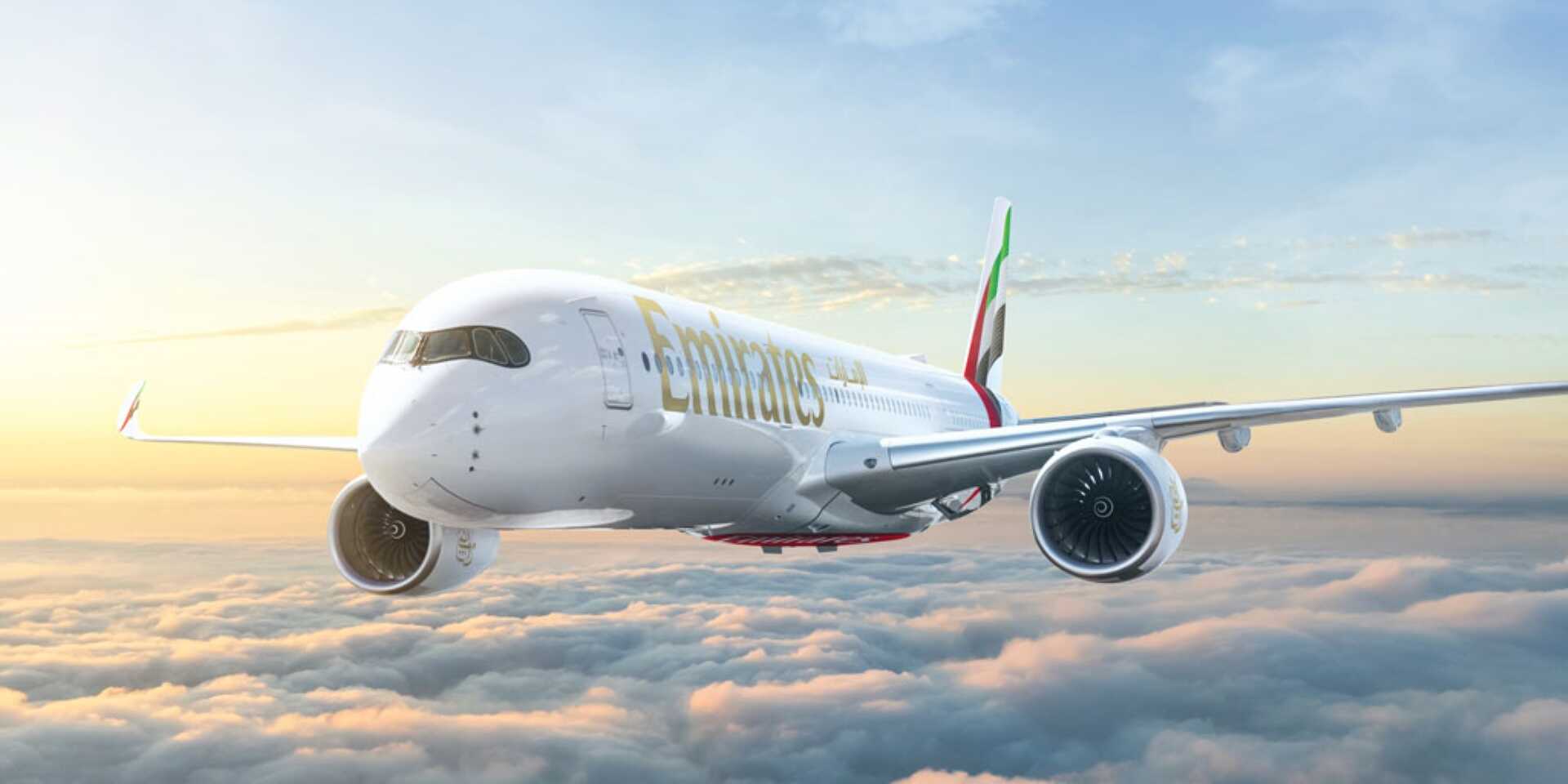
- Emirates launched the U-Dream Headrest on three Airbus A350 aircraft to improve economy-class sleep comfort.
- The airline plans a full A350 rollout by the end of 2026 and factory installation on all 270 Boeing 777X jets.
- Retrofits for Airbus A380 and Boeing 777 aircraft will begin from 2027 during scheduled cabin modification work.
Emirates launched its new adjustable economy-class headrest Monday, giving passengers a way to support their heads and necks without carrying a separate travel pillow. The U-Dream Headrest is already operating on three Airbus A350 aircraft.
The carrier plans to complete installation across its A350 fleet by the end of 2026. It will also install the feature at the factory on all 270 Boeing 777X aircraft on order.
The rollout begins on a limited number of aircraft. Existing Airbus A380s and Boeing 777s are scheduled to receive the equipment from 2027, as cabin modification work proceeds.
Emirates said it is the first airline globally to introduce the adjustable ergonomic support at scale. The headrest forms part of the Z400 Economy Class seat, developed through a multi-year collaboration with Safran Seats.
The design targets one of economy class’s familiar sleep problems. Its padded leather wings fold inward around the passenger’s head and neck, helping prevent the forward or sideways movement often associated with sleeping upright.
Sir Tim Clark, President of Emirates, said the design was intended to improve comfort on long-haul flights.
“Emirates never rests on its laurels when it comes to customer experience and we have found a way to significantly improve the comfort for Economy Class passengers, especially those travelling long-haul. The U-Dream changes the game if the person wants to sleep – by supporting the neck in full. No more neck pillows needed. It’s another innovation that shows our commitment to customers and cements our Economy Class as the best.”
The headrest moves in eight directions
The unit provides 8-way multi-directional movement, according to the airline’s launch announcement. Passengers can move it vertically and adjust its tilt to suit different heights and body types.
Its side wings provide the distinctive part of the design. They fold inward rather than leaving the headrest as a simple flat cushion. That creates lateral support around the neck while the central section supports the back of the head.
The airline positions the feature as an economy-class comfort upgrade rather than a change to the ticket product. It is designed to bring support associated with premium cabins into the economy cabin.
The headrest uses padded leather. Emirates said the material is intended to withstand regular use and allow easier maintenance between flights.
Cabin crews have received training to help passengers adjust the units. Each headrest is also cleaned after every flight, the airline said.
The first aircraft are already carrying the feature
Three aircraft had the new headrests in service when Emirates announced the launch on July 20, 2026. The carrier’s next milestone is the end of 2026, when it expects the feature to cover its A350 fleet.
The installation forms part of the airline’s wider multibillion-dollar fleet refurbishment programme. Additional research describes that programme as a US$5 billion cabin retrofit programme tied to Emirates’ “Fly Better” brand promise.
Emirates acted as the launch customer for this specific Safran innovation. The carrier described the integration as a significant financial investment across its widebody fleet.
That investment will reach new aircraft before it reaches much of the existing fleet. Every 777X on order is due to receive the headrest before delivery, while retrofit work on existing A380 and 777 aircraft starts in 2027.
| Aircraft group | Installation plan | Timing |
|---|---|---|
| A350 fleet | Retrofitted aircraft | By the end of 2026 |
| Boeing 777X | Factory-installed on all 270 aircraft on order | As delivered |
| Airbus A380 | Retrofit during cabin modification work | From 2027 |
| Boeing 777 | Retrofit during cabin modification work | From 2027 |
The schedule is tied to planned cabin work on the older aircraft. Emirates said the retrofit programme is structured to minimize aircraft downtime.
Safety testing covers the new cabin equipment
The headrest underwent independent testing against European Union Aviation Safety Agency safety standards, according to the airline’s announcement. The safety assessment covers the adjustable support installed in the economy seat.
The design’s movement gives passengers more control than a fixed headrest. Vertical adjustment allows the support to match a passenger’s height, while tilt and inward-folding wings let travelers create a more enclosed position for rest.
The feature does not promise a bed in economy. It addresses the position of the head and neck while a passenger remains seated.
Emirates described the intended benefit in practical terms: less head movement during sleep and less need for a bulky personal travel pillow. The airline’s claim focuses on comfort during long-haul travel, where passengers may spend many hours in the same seat.
The programme also puts cabin crew into the adjustment process. Staff can help passengers set the headrest, while the post-flight cleaning procedure addresses the surfaces used by successive travelers.
New deliveries will extend the rollout beyond the A350
The factory fit on the 777X gives Emirates a second path for expanding the feature. The 270 aircraft on order will receive the equipment during production rather than during a later cabin refurbishment.
The retrofit schedule will then move to the A380 and 777 fleets in 2027. Those aircraft will receive the equipment during scheduled cabin modification work, allowing the airline to combine the headrest installation with broader refurbishment activity.
The airline’s announcement places the U-Dream within its wider effort to refresh the passenger experience across its multibillion-dollar fleet programme. Economy passengers on the first three aircraft get the earliest access, while the planned factory and retrofit work sets out a longer rollout.
Emirates announced the product on Monday, July 20, 2026. Passengers seeking the feature will need to be booked on an aircraft that has already received the new cabin equipment, with the broader A350 target set for the end of 2026 and A380 and 777 retrofits beginning in 2027.