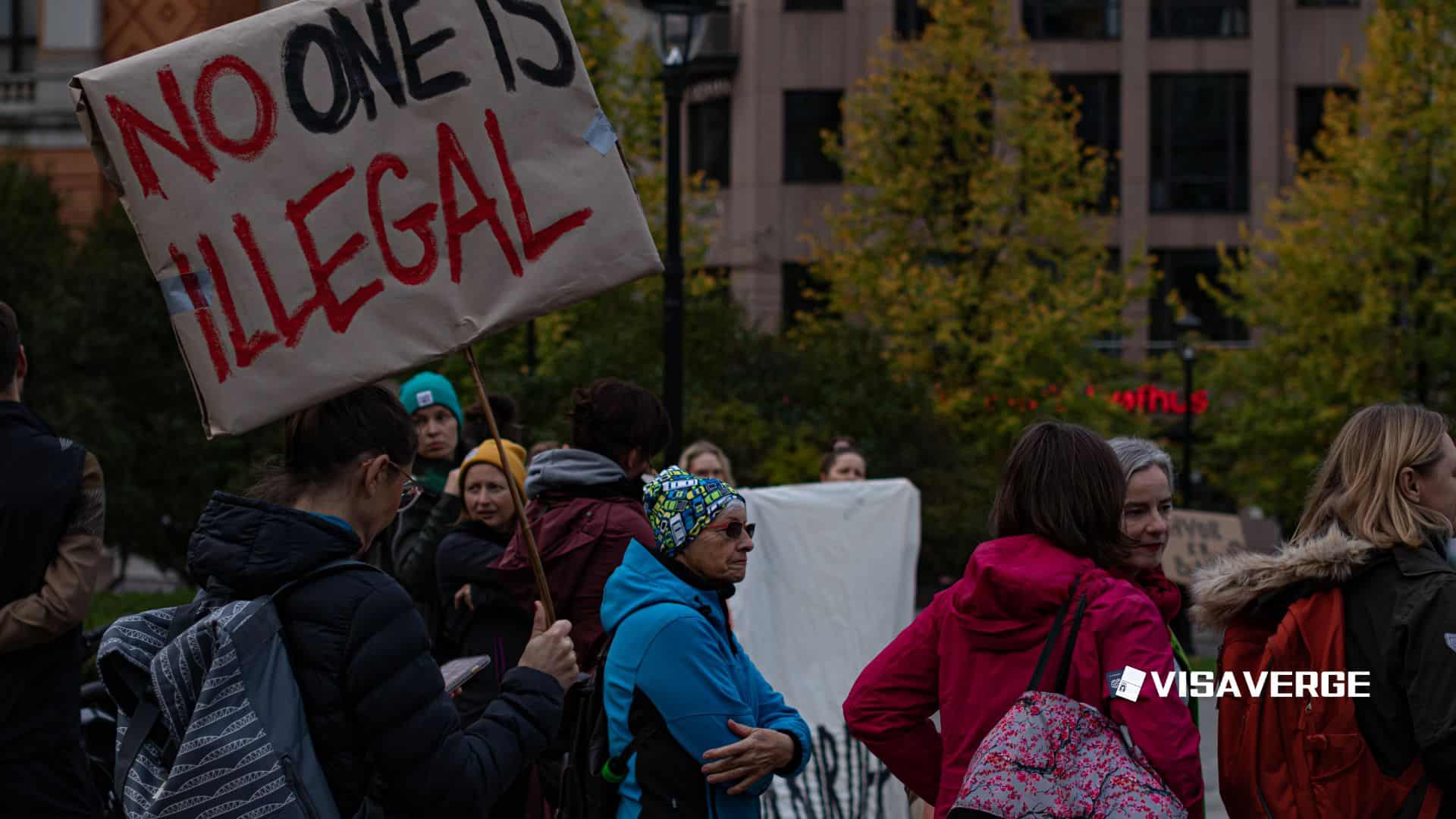
- Tony Burke will unveil Labor’s migration plan at the National Press Club on Thursday.
- The policy aims to cut net overseas migration from about three hundred thousand to two hundred twenty-five thousand.
- International students, overstayers, and some asylum seekers may face tighter visa pathways and fewer options to remain.
Home Affairs Minister Tony Burke will unveil Labor’s immigration policy at the National Press Club in Canberra on Thursday, pairing tighter visa controls with a plan to reduce net overseas migration toward 225,000 a year.
The speech, titled “The work of managing the migration program: Who arrives, who stays, who leaves,” is expected to set out restrictions on temporary migration, international students and people who remain after their visas expire.
Free toolUSCIS Receipt Number Decoder
One reported path would take the figure from about 300,000 in 2025 to 245,000 in 2026–27, then to 225,000 annually. Another account put the starting point at about 305,000 and described the reduction as a fall to about 225,000 over two years.
The government is not expected to announce a direct cut to the permanent migration program. That intake remains 185,000 a year.
Student families and overstayers face the first restrictions
International students are expected to face tighter rules on bringing family members to Australia. The proposed settings could effectively prevent many students from bringing dependants.
The measures would also make it harder for visa overstayers to switch into another visa category. Some people would therefore have to leave earlier rather than use a further application to remain.
The package may also affect partner visas and backpacker visas. Officials were still working through those elements in early September.
The government is separately seeking to reduce the number of unlawful non-citizens in Australia. The figure linked to that effort is roughly 77,000.
The proposed changes come as the temporary migrant population stands at about 3 million, according to one account of the plan. Labor is presenting the overhaul as tighter administration and regulation, rather than a headline cut to the migration program.
The package would narrow several routes to remain
| Area | Expected change |
|---|---|
| Visa overstayers | Tighter limits on switching into another visa category |
| Appeals | Reduced appeal rights for some cases |
| Protection claims | Tighter pathways after visa expiry |
| Bridging visas | Possible changes affecting some applicants |
| Rejected asylum seekers | Possible changes to bridging visas and work rights |
| Skilled applications from overseas | Processing already slowed under Ministerial Direction 119 |
The government has already slowed some visa processing. Working holiday maker visas were affected in July, while skilled visa applications from overseas were affected under Ministerial Direction 119.
The planned measures could also limit legal and administrative routes used by people seeking to stay after a visa expires. Tougher appeal rules and changes to protection pathways are among the options linked to the announcement.
Rejected asylum seekers may face new limits on bridging visas and work rights. Those details remain part of the broader package being assembled by the department.
Cabinet delay exposed the fight over how far Labor should go
Labor first planned to unveil the policy in early August. Cabinet disagreement over the scope of the changes delayed the speech at the last minute.
The revised plan is being framed as a management package. That language allows the government to promise lower migration numbers without announcing a direct reduction to the permanent intake.
Prime Minister Anthony Albanese is expected to be overseas when the minister speaks. The announcement has been scheduled before his United Nations trip to New York.
Julian Hill, the Assistant Minister for Multicultural Affairs, said Labor had discussed the next phase of reform with the Coalition.
“to find a way forward on the next phase of immigration reform”
Hill said the government wanted the system to have “control and precision.”
The policy is being developed while migration numbers remain above Treasury forecasts. Labor is also facing pressure from opposing parties and from figures within its own political base who are concerned about the effect of sharp visa reductions on employers.
Pressure is coming from One Nation, the Coalition and employers
One Nation unveiled its migration proposal on September 14, 2026, adding pressure on Labor and the Coalition to take a harder line.
Burke has warned that stopping immigration would “smash the Australian economy.” He said hospitals and aged care facilities could be forced to close, with regional communities hit first.
Business groups and some state Labor figures have also warned that steep visa cuts could damage the economy and reduce the available labor supply. Those concerns place pressure on the government to lower migration without worsening shortages in industries that rely on temporary workers.
Opposition Leader Angus Taylor has called for stronger migration controls. He told Albanese Australians have “lost confidence in your government's ability to secure our borders.”
Coalition demands include a UK-style safe-country list, removing legal aid for some visa appeal cases, and tighter limits on graduate pathways and asylum claims.
The government’s proposed approach is narrower than that full list. It focuses on visa administration, the movement of temporary migrants and the ability of applicants to remain after their original status ends.
The humanitarian program remains alongside the migration changes
Albanese said on August 27, 2026, that the refugee intake should be renewed in the coming budget because “the 20,000 places was available for 4 years.”
He also said the 20,000 refugee intake “remains government policy and will be continued in future years, consistent with Australia’s humanitarian commitments and sits beside our strong border security measures.”
That position keeps the humanitarian program separate from the proposed restrictions on temporary visas, overstayers and protection claims. The Coalition is seeking further limits on asylum claims, while Labor says border security measures can continue alongside the refugee intake.
The minister has used the labor market to argue against a complete halt in migration.
“would smash the Australian economy”
The speech will test how Labor balances its lower migration targets with hospitals, aged care providers and regional employers that depend on workers arriving through temporary and skilled visa channels.