- Massive protests across South Africa demanding migrant self-deportations triggered a U.S. nationwide Demonstration Alert on June 30, 2026.
- The U.S. Mission reduced diplomatic operations at all four South African posts due to potential security risks from large crowds.
- A new U.S. policy allocates ten thousand additional refugee slots for White South Africans citing state-sponsored discrimination concerns.
(SOUTH AFRICA) — Mass protests demanding the self-deportation of undocumented migrants swept South Africa after a June 30, 2026 deadline expired, prompting the U.S. Mission to issue a nationwide Demonstration Alert and reduce operations at all four diplomatic posts in the country.
The alert, issued June 29, 2026, applies to all U.S. citizens, diplomatic personnel, and consular applicants in South Africa. Under the State Department’s travel security framework, the Demonstration Alert requires individuals to avoid protest areas, monitor local government and police updates, and follow directives from South African authorities.
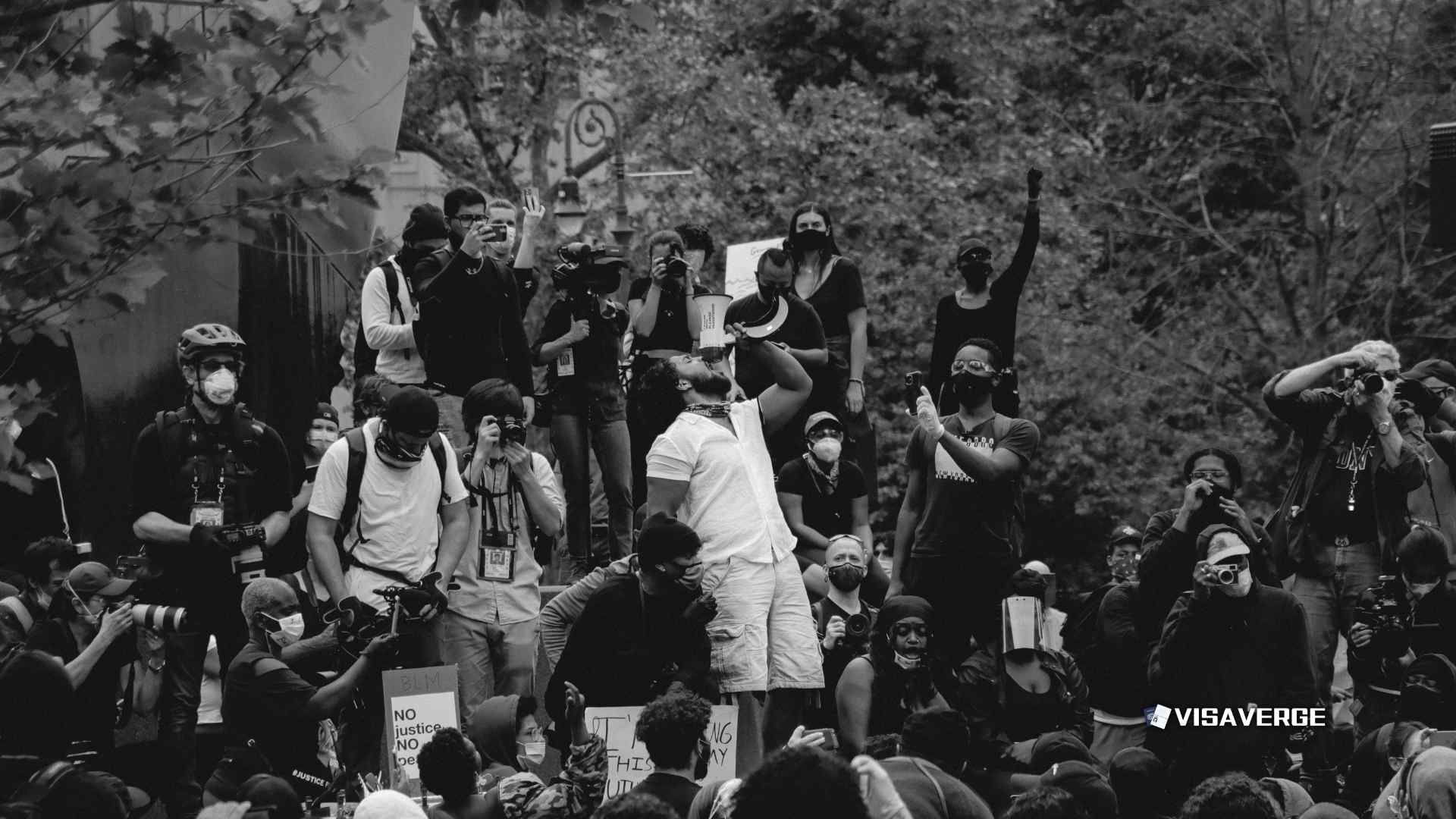
The State Department formally reduced operations at the Embassy in Pretoria and Consulates in Johannesburg, Cape Town, and Durban on June 30, 2026.
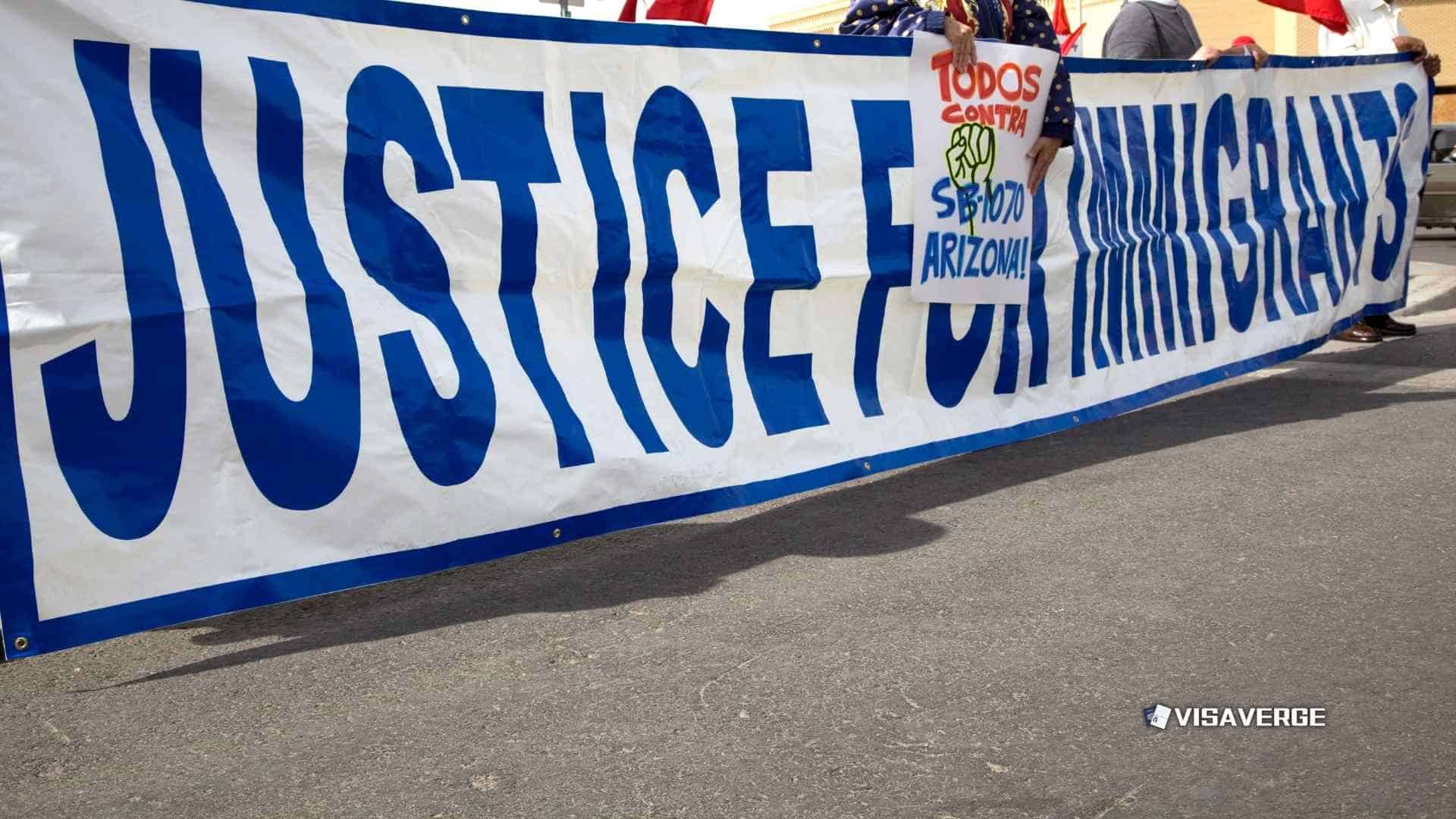
Free toolUSCIS Receipt Number DecoderThe “March and March” movement, founded by Jacinta Ngobese-Zuma, organized the protests. Tens of thousands of demonstrators marched through Johannesburg, Durban, and Pretoria after the movement’s unofficial June 30, 2026 deadline for undocumented foreigners to leave voluntarily.
Ngobese-Zuma characterized the marches as peaceful, though reports of stabbings and looting emerged in the Johannesburg neighborhoods of Yeoville and Rosettenville.
| India | China | ROW | |
|---|---|---|---|
| EB-1 | Feb 01, 2023 ▲109d | Jul 01, 2023 | Current |
| EB-2 | Nov 01, 2013 | Oct 01, 2021 ▲30d | Jan 01, 2025 |
| EB-3 | Jan 01, 2014 | Jan 08, 2022 ▲7d | May 15, 2024 ▼109d |
| F-1 | Jan 22, 2020 | Jan 22, 2020 | Jan 22, 2020 |
| F-2A | Sep 22, 2026 ▲31d | Sep 22, 2026 ▲31d | Sep 22, 2026 ▲31d |
The U.S. Mission’s alert warned that “any large-scale protest environment can become dangerous” and advised individuals to avoid large crowds. Consular services at all four missions are operating at reduced capacity, which may delay visa processing and American citizen services.
The protests intersect with a shift in U.S. refugee policy toward South Africa. A February 7, 2025 Executive Order, “Addressing Egregious Actions of The Republic of South Africa,” directed federal agencies to prioritize resettlement of White South Africans. The order cited what the administration characterized as state-sponsored discrimination.
On May 26, 2026, a White House memorandum raised the annual refugee allocation by 10,000 slots for White South Africans, citing “an unforeseen emergency refugee situation” due to “recent increases in the incitement of racially motivated violence.” Under INA § 207, the President may adjust refugee admissions in response to unforeseen emergencies after consulting Congress.
USCIS Director Joseph Edlow indicated the agency is implementing “robust vetting” for South African applicants. Secretary of Homeland Security Markwayne Mullin defended the policy during a June 2, 2026 Senate hearing, stating the U.S. must respond where it perceives “state-sponsored discrimination.”
Refugee processing under INA § 207 and 8 C.F.R. § 207 requires applicants to satisfy the statutory refugee definition, undergo security screening, and complete medical examinations.
Thousands of migrants from Malawi, Zimbabwe, and Mozambique fled to their respective consulates or boarded repatriation buses organized by home governments before the June 30 deadline. Reports of vigilante violence intensified in the days leading up to the deadline, particularly in Johannesburg’s Yeoville and Rosettenville districts.
South Africa hosts an estimated 2.4 million foreign nationals, according to official statistics. Some protest groups claim the undocumented population is significantly higher.
Statistics South Africa reported on June 30 that the formal economy shed 80,000 jobs in the first quarter of 2026. Rising fuel prices and unemployment have been cited as primary drivers of the unrest.
The diplomatic landscape shifted further on June 24, 2026, when a State Department spokesperson confirmed a “phased drawdown” of PEPFAR funding for South Africa. The HIV/AIDS assistance program is slated to end by September 30, 2026.
The spokesperson cited the South African government’s failure to address U.S. demands regarding human rights and property laws.
U.S. citizens in South Africa must monitor the Demonstration Alert page and the Travel Advisory for updated guidance. The alert carries no legal penalty for non-compliance, but the State Department’s ability to provide emergency assistance in protest zones may be severely limited.
Diplomatic security personnel cannot guarantee protection where local authorities have lost crowd control.
Individuals seeking refugee status under the new allocation must apply through USCIS. The agency has not published separate filing procedures for South African applicants beyond standard INA § 207 processing.
Applicants typically complete Form I-590, Registration for Classification as Refugee, through a designated resettlement support center.
No waivers or exceptions to the standard refugee vetting requirements have been announced. All applicants must meet the INA § 101(a)(42)(A) definition of a refugee, which requires demonstrating persecution or a well-founded fear of persecution on account of race, religion, nationality, membership in a particular social group, or political opinion.
The U.S. Embassy and Consulates in South Africa maintain updated information at za.usembassy.gov. The State Department’s Travel Advisory for South Africa is available at travel.state.gov.
USCIS newsroom updates appear at uscis.gov/newsroom, and DHS press releases are posted at dhs.gov/news-releases.
Resources: