Key Takeaways
• Mark Carney proposes temporary immigration caps: permanent residents limited to 1% and temporary residents to 5% of Canada’s population by 2027.
• His plan prioritizes integration and regional distribution, tying immigration numbers to housing, jobs, and public services capacity nationwide.
• Carney’s approach balances economic needs and infrastructure limits, emphasizing smarter immigration over both open-door and highly restrictive policies.
Mark Carney, recently sworn in as Canada’s 🇨🇦 Prime Minister, has brought fresh attention to immigration policies by sharing a balanced approach that mixes economic needs with the realities facing Canadian communities. Mark Carney’s views on immigration are shaped by years of economic leadership and personal experience as an international student. Now, as leader of the country, he wants changes that help both immigrants and local Canadian residents. His agenda stands out because it does not call for unlimited openness nor for closing doors, but instead looks for a “middle path” that focuses on what Canada 🇨🇦 can truly offer to newcomers.
Mark Carney’s Immigration Priorities: Growth With Limits
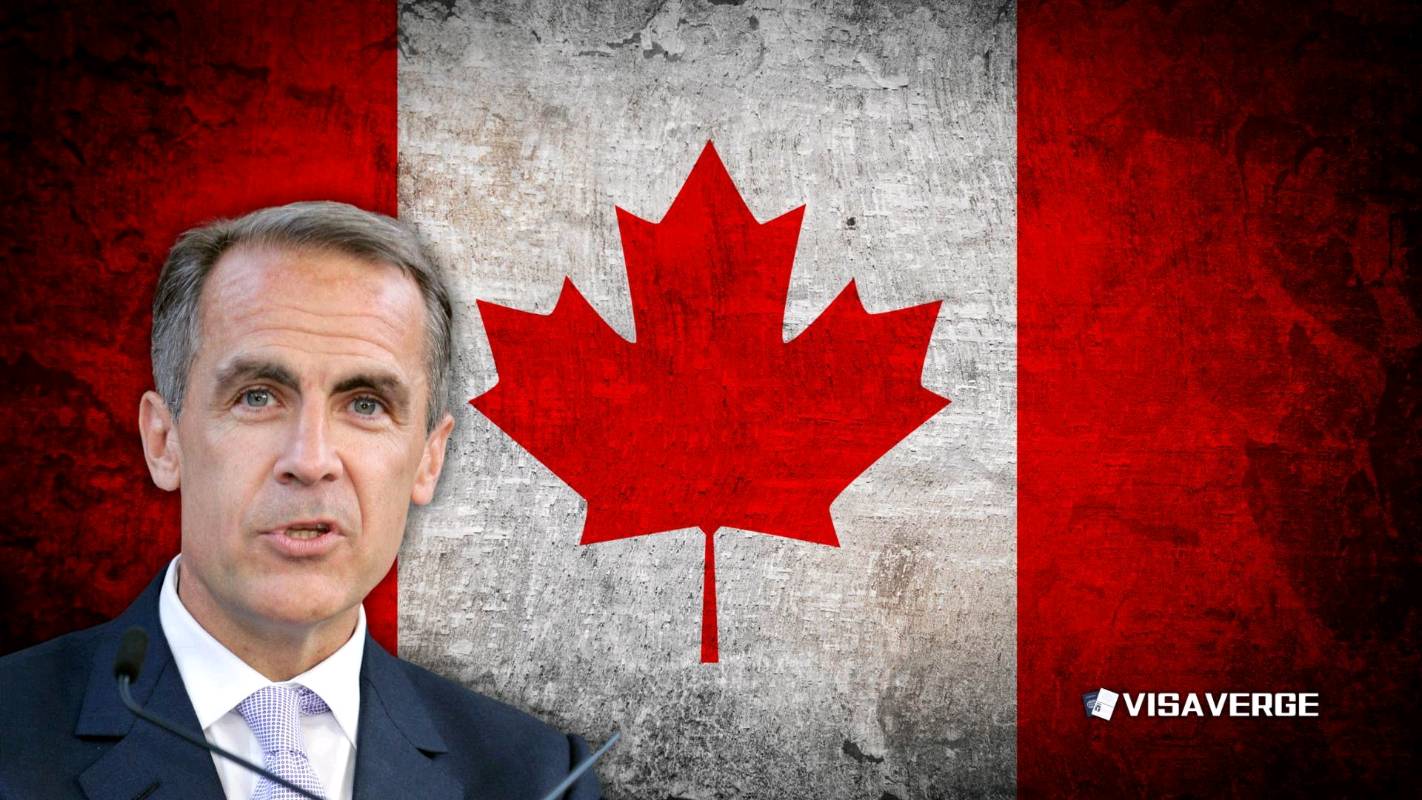
Mark Carney openly says that immigration is essential for Canada 🇨🇦. He points to the way newcomers keep the workforce growing, help pay for services for an aging population, and bring different skills from around the world. Still, he is also clear that letting immigration numbers get ahead of what the country can manage has caused problems. When too many people arrive too fast, there is not enough affordable housing, and health care services get stretched thin. Carney describes this kind of stress on communities as a real risk, saying Canada 🇨🇦 needs to “cap,” or temporarily set limits on, immigration figures to make sure everyone can live comfortably and find the help they need.
“Our population has gone up…about three percent per year because of immigration…that’s why we need a cap for a certain period of time.”
— Mark Carney, April debate (source: YouTube)
This quote points to his belief that the best policy is not about saying “more is always better,” but about finding the right balance for Canada 🇨🇦 so towns and cities can plan for steady and fair growth.
Immigration Caps: How Mark Carney’s Plan Differs
In recent years, Canada’s 🇨🇦 immigration policies under Prime Minister Justin Trudeau aimed for high numbers of admissions. Under this approach, around 500,000 new permanent residents were arriving every year, with an even larger wave of temporary residents: workers and students who did not stay for good, but who needed homes and public services.
Mark Carney believes that these figures are simply too high for what is possible at this time. Instead, his proposal introduces a series of temporary immigration caps—maximum limits—until Canada 🇨🇦 has time to catch up in building homes and expanding public services. These temporary caps include:
- Limiting permanent resident admissions to about 1% of the population by 2027, which is around 400,000 new people per year. This number matches policies that were in place before the pandemic and before recent record highs.
- Temporary residents, such as international students and foreign workers, would also be capped at a level that is no more than 5% of Canada’s 🇨🇦 total population by the year 2027. This is lower than their recent peak of over 7%, though still higher than what was typical in past decades.
By controlling both permanent and temporary flows, Carney hopes to reduce the strain on Canadian cities, especially in housing and health care.
Why Place Caps Now? Capacity Versus Openness
Carney does not reject the value of immigration; instead, he often repeats that Canada 🇨🇦 relies on newcomers for progress and new ideas. At the same time, he argues that measures of “success” need to include quality of life for immigrants and Canadian residents. In his view, simply raising numbers without checking if schools, hospitals, and roads can keep pace ignores the real impacts.
He sees this balance as not just smart for the economy, but also fair for people already in Canada 🇨🇦 and those who wish to move there. He often says that limiting numbers today gives the country a better chance to grow in the future.
Helping Newcomers Settle Before Raising Numbers
A big part of Carney’s vision is about making sure people who are already in Canada 🇨🇦 can fully join society before huge new waves arrive. He has proposed that policies should mostly focus on creating permanent pathways for people who are in Canada 🇨🇦 as students or workers, so they can stay and build a life if they want to.
This means giving those who have spent time in Canada 🇨🇦 and shown they want to stay a fair chance to become permanent residents, before looking for too many more new arrivals. Such a focus on “integration first” helps newcomers feel they belong, and gives local governments a chance to keep up with growth.
Regional Planning: Spreading Opportunity Across Canada 🇨🇦
Canada 🇨🇦 is a country of both huge cities and small communities. Mark Carney thinks immigration can be better planned not just for Toronto or Vancouver, but across all parts of the country. His policies call for stronger regional planning:
- Encouraging immigrants to move to smaller towns, not just big cities, by offering special incentives and support.
- Linking immigration numbers with the real number of homes, jobs, and services available in different regions.
- Using stricter requirements for things like language skills and job credentials, so immigrants arrive ready to work and settle successfully.
- Helping newcomers get their foreign training and experience recognized before they land in Canada 🇨🇦, so they can start working faster.
VisaVerge.com’s investigation reveals that Carney’s push for matching immigrant skills with local jobs, and for sending new arrivals across different parts of the country, has received both praise and criticism. While some see it as smart planning, others worry that smaller places may not always be ready to support newcomers in the best way.
International Students: Balancing Educational Benefits and Local Pressures
Mark Carney has unique insights into the world of international study, having once been an overseas student himself. He supports bringing in students from other countries because they add to campus life and often go on to become skilled workers in Canada 🇨🇦.
However, Carney disagrees with the recent trend where universities and colleges have relied too much on international student tuition fees to solve problems created by local underfunding. In his view, letting too many overseas students in without building more dorms and housing has made rents in college neighborhoods much too high. This can create a “mini housing crisis” in towns around big schools.
To fix this, he backs the current policy of keeping student permit numbers lower until campuses and cities can handle more arrivals. His approach to funding higher education is focused on working with the provinces to make sure local schools are well funded, not just dependent on foreign student money.
A Closer Look at The Numbers: Trudeau vs. Carney
What sets Carney’s plans apart is his belief in numbers that Canada 🇨🇦 can handle, not just numbers that look good on paper. Here’s a quick summary comparing past policies under the Trudeau government and what Mark Carney wants:
| Policy Area | Trudeau-era Approach | Mark Carney Proposal |
|---|---|---|
| Permanent Residents | ~500,000 per year (rising) | ~400,000 per year (~1% of pop.) |
| Temporary Residents | No formal cap | No more than 5% of the population |
| International Students | Open (recruitment focus) | Lower permit numbers, keep stable |
| Economic Selection | Points system in place | Tougher on language, credentials |
| Regional Distribution | Small pilot projects | Broader regional incentives |
*Note: Population caps and other numbers are based on recent sources and public debates.
Criticism and Debates: Not Too Much, Not Too Little
Mark Carney criticizes past Liberal policies under Justin Trudeau for not preparing well enough for the jump in immigration. He points to housing shortages and long wait times in hospitals as tensions that could have been avoided by better planning.
At the same time, Carney pushes back against the conservative leader Pierre Poilievre, who argues for sharp cuts and very strict entry rules. Carney sees this as going too far in the other direction and risking harm to the Canadian economy.
His answer is a call for “smart immigration”—bringing in enough newcomers to keep Canada 🇨🇦 strong, but not so many that communities suffer or lose the quality of life. He believes the solution is “smarter, not less” immigration.
Broader Impact: What Mark Carney’s Plan Means for Canadians and Newcomers
For people thinking about moving to Canada 🇨🇦, Mark Carney’s plan can mean a more stable experience. Newcomers would face fewer problems finding a home, school places for their kids, or health care, because numbers are set with these resources in mind.
For Canadians, especially those in cities where rents have soared or where schools are crowded, the changes could bring some relief. Local towns might see more support from national funds to handle growth, and smaller communities could see new opportunities as more immigrants are directed their way through incentives.
For employers worried about finding enough workers, Carney promises to keep the flow of talent steady, but only at a level that makes sense. He also wants to improve how education and experience from overseas are counted, so skilled workers are not left waiting for local licensing.
The Path Forward: Sustainable, People-Focused Immigration
At the heart of Mark Carney’s plan is the idea that success means both economic advantage and happy, settled communities. Quick increases in immigration, in his view, can threaten both goals. That’s why he favors temporary limits, not as a way to say “no” to newcomers, but as a way to make “yes” easier and better when the time is right.
The government under Carney promises to watch numbers, ask local leaders for advice, and adjust policies before expanding immigration again. This could lead to more frequent policy updates, as Canada 🇨🇦 tests how well its systems work for both newcomers and existing residents.
Those interested in detailed policies and statistics can look up the official Immigration, Refugees and Citizenship Canada website, which tracks laws, forms, and practices.
Sources Supporting This Approach
Many of the points above come straight from Carney’s own words and major Canadian news sources. For instance, his April debate quote about capping population growth shows his concern about fast change. Recent reports have stressed the problems in housing markets when too many arrivals push demand beyond what builders can keep up with.
As reported by VisaVerge.com, Carney’s approach of targeting newcomers for regions that need workers, along with language and skills screening, matches recommendations from economists and settlement groups who have warned against both open borders and harsh cuts.
Summary: A Thoughtful Shift in Canadian Immigration
Mark Carney’s immigration vision for Canada 🇨🇦 is shaped by a desire to connect open opportunity with realistic plans. He does not want to turn away talent or energy from other countries, but he wants to make sure that the country can handle the risk that comes with rapid growth.
By setting caps on both permanent and temporary residents, pushing for stronger settlement in smaller towns, and keeping the focus on supporting both newcomers and existing Canadians, Carney hopes to offer a more sustainable, people-centered approach to national growth.
His stance has already sparked national debate. Supporters see it as a path toward safe, fair, and lasting immigration, while critics worry about the impact on universities, businesses, and refugees. Still, Canada’s 🇨🇦 new leader is betting that careful planning now can lay the groundwork for a strong and welcoming society in the years ahead.
Learn Today
Permanent Residents → People authorized to live and work in Canada indefinitely, with most of the rights of citizens but without citizenship itself.
Temporary Residents → Individuals, such as international students or workers, allowed to stay in Canada for a limited period under specific visas.
Immigration Cap → A defined upper limit on the total number of immigrants allowed to enter or stay in a country during a set period.
Regional Planning → Coordinating immigration policies and settlement incentives to distribute newcomers more evenly across cities and smaller communities.
Credentials Recognition → The process of evaluating and validating foreign degrees, training, or professional experience for use in the Canadian labor market.
This Article in a Nutshell
Canada’s new Prime Minister, Mark Carney, introduces a measured immigration policy. He proposes temporary caps to limit permanent and temporary residents, prioritizing managed growth. Carney’s balanced approach focuses on supporting both newcomers and current Canadians, easing housing and service strains. His plan emphasizes “smarter, not less” immigration nationwide.
— By VisaVerge.com
Read more:
• Immigrants are vital to Canada’s healthcare system
• How public healthcare works in Canada for American expats
• Temporary foreign workers from the United States to Canada decline
• Out-of-status caregivers seek new hope under next Canada government
• Canada elections 2025 put immigration and permanent residency in focus