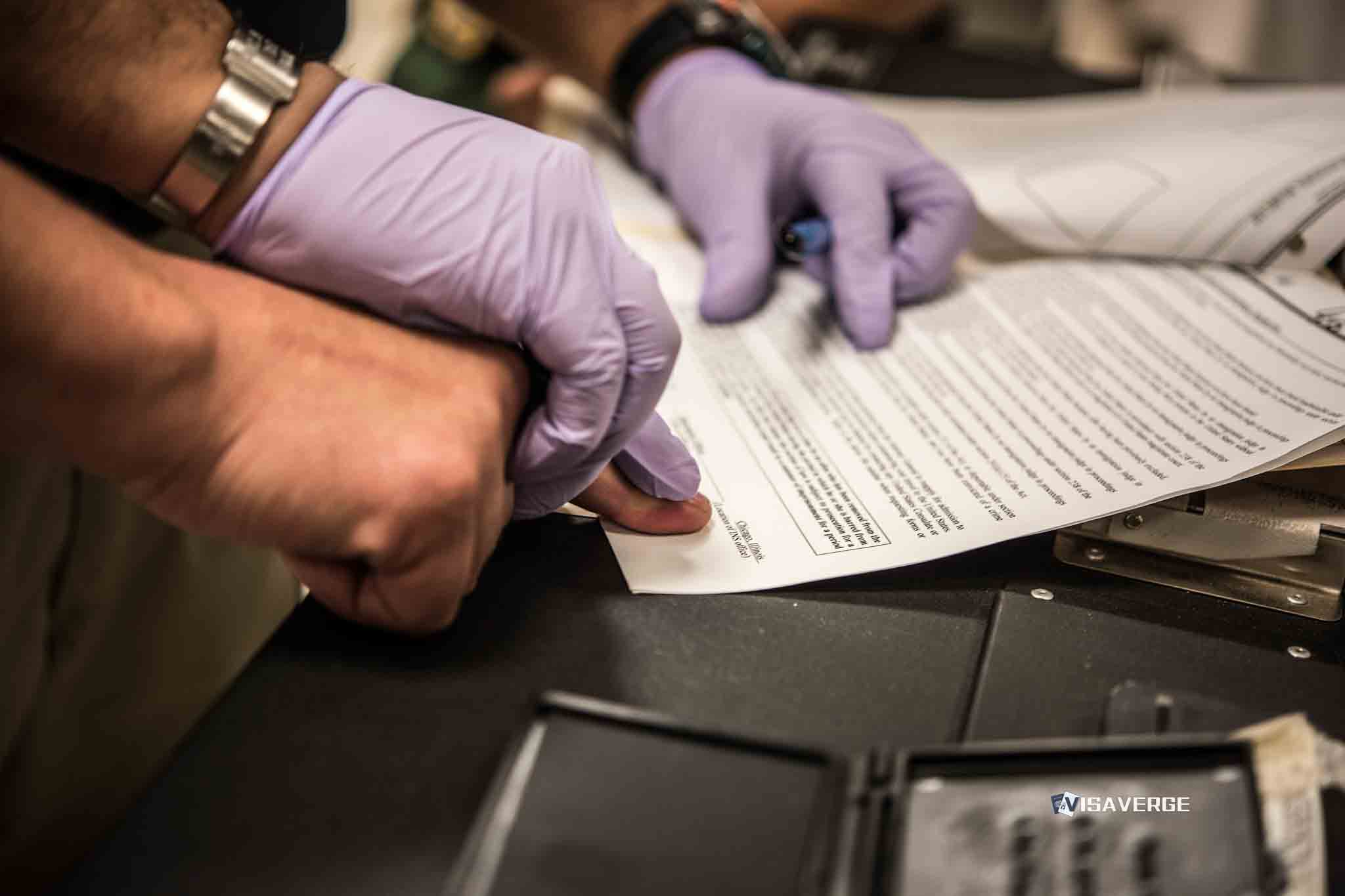
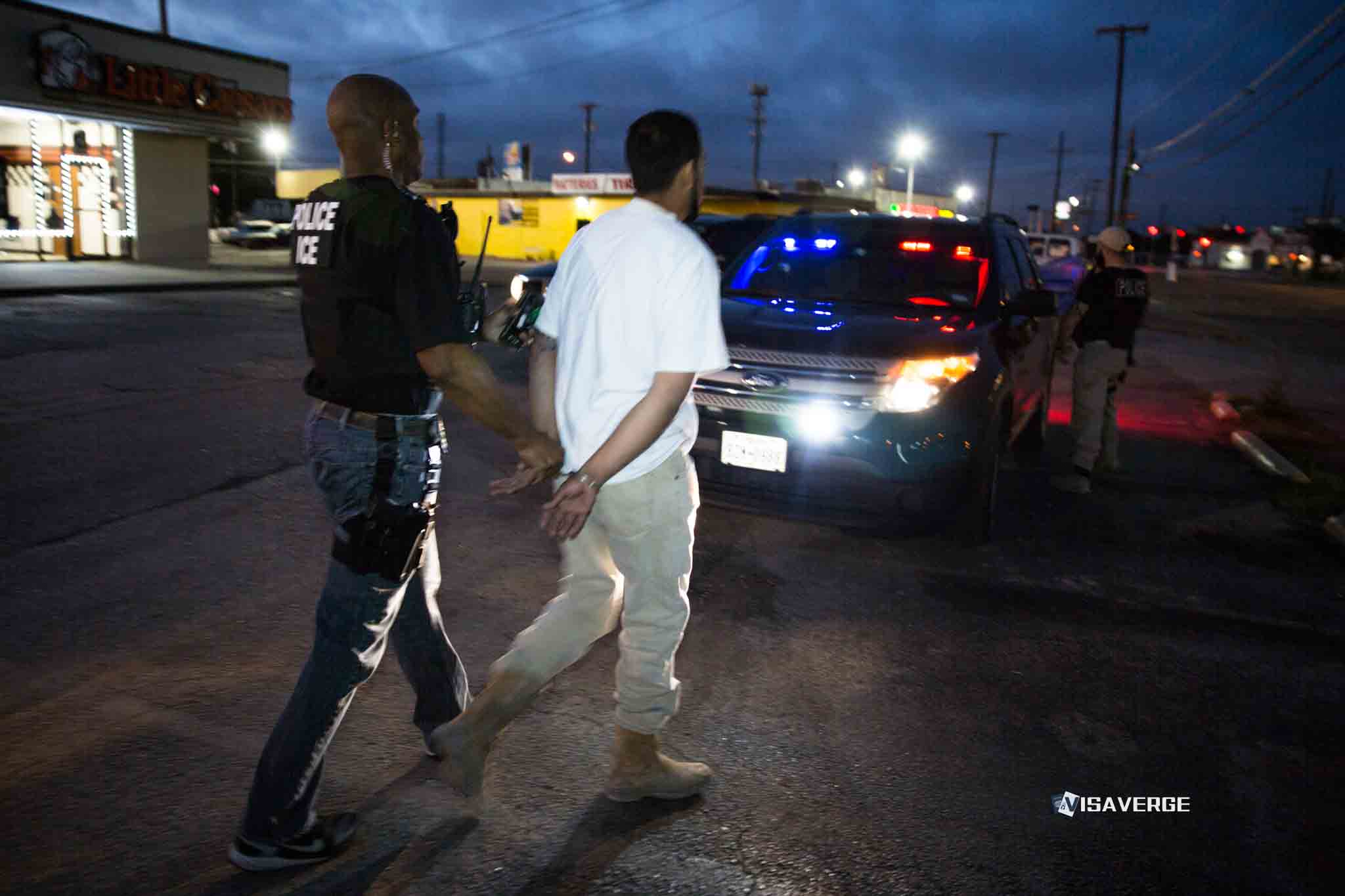
(CHICAGO, ILLINOIS) DHS Secretary Kristi Noem charges Chicago and Illinois leaders with blocking ICE deportation work under the state’s sanctuary city rules. At an August 8, 2025 event in Lombard, she spotlighted recent arrests and vowed tougher federal action.
Noem says Illinois policies “ignore the law” and let “dangerous criminal illegal aliens” stay, while ICE tries to remove people linked to serious crimes. State and city officials reject that framing and continue backing strong local limits on cooperation with federal immigration agents.
Free toolUSCIS Receipt Number Decoder
What happened in Lombard
- Noem held a press conference at a DHS site, presenting four people arrested by ICE in Illinois from Mexico, Micronesia, Honduras, and Poland. She called them the “worst of the worst.”
- She stood beside seized firearms, about 20 kilograms of fentanyl, and stacks of cash, saying these takedowns prove ICE can act even with local resistance.
- She praised President Trump’s immigration enforcement record and claimed recent border numbers show strict federal policies work.
- Outside, protesters gathered, criticizing ICE tactics and Noem’s visit. Videos online show masked agents and unmarked vehicles in some arrests, which advocacy groups say spread fear.
Why Illinois is in the spotlight
- Illinois is a sanctuary state. That means state and local agencies generally:
- Won’t ask about immigration status,
- Won’t honor ICE detainers without a judge’s order, and
- Won’t help with civil immigration arrests.
- A detainer is a request by ICE to hold someone so ICE can take custody.
- Chicago is a sanctuary city; Mayor Brandon Johnson has defended local limits on cooperation. Governor JB Pritzker has also backed statewide protections.
-
ICE has expanded detention bed capacity and says Illinois is a focus because the state has about 1.8 million foreign-born residents.
-
The current DHS leadership under Noem is pushing states and cities to cooperate more and has threatened to withhold federal funds from “obstructionist” areas, though no specific cuts for Illinois have been announced as of August 2025.
Noem’s key argument
- She says sanctuary rules let people with serious criminal records slip through, making it harder for ICE to remove them quickly.
- She argues local police should notify ICE when they release people charged with or convicted of violent crimes.
- “Public safety comes first,” she says, claiming federal law gives ICE the lead in immigration enforcement.
How Illinois leaders respond
- State and city officials argue sanctuary policies make communities safer by building trust, so victims and witnesses feel safe reporting crimes.
- They say local officers shouldn’t handle civil immigration work, which is a federal job.
- They point to past cases where heavy-handed tactics pushed immigrants into the shadows, making neighborhoods less safe because fewer people talk to police.
What this means for people in Illinois
- People arrested by ICE can face fast-track removal processes, especially under enforcement rules brought back from the Trump era.
-
Local police in Illinois remain limited by state law. They generally:
- Can’t arrest someone just for civil immigration reasons, and
- Can’t hold someone longer solely because ICE asks.
- Community groups warn that reports of masked agents and unmarked cars can scare families away from schools, clinics, and court dates, reducing crime reporting and weakening social services.
Legal and policy backdrop
- Immigration enforcement is a federal power, but states and cities control their own police.
- Courts have said the federal government can’t force local officers to carry out federal programs.
- Legal scholars expect more court fights if DHS tries to tie federal grant money to immigration cooperation without clear legal authority from Congress.
- Public safety experts are split:
- Some say sanctuary policies improve trust and reporting.
- Others say they keep ICE from getting custody of dangerous offenders.
Quotes and claims at the center of the debate
Noem accuses Illinois leaders of being “obstructionist” and “ignoring the law,” saying sanctuary rules protect criminals at the expense of residents who “have invested in this country.”
- Illinois leaders defend local control and say trust-based policing reduces crime over time.
- They argue local resources should target local crime, not civil immigration cases.
What happens next
- DHS under Noem plans more public pressure on sanctuary areas and may consider regulatory steps.
- Lawsuits are likely if funding threats move forward.
- Illinois leaders, including Governor Pritzker and Mayor Johnson, say they’ll keep their policies and fight any federal overreach.
- ICE plans to hold or increase deportation operations in the state and monitor how sanctuary rules affect arrests and transfers.
Practical steps for families and employers
- Know your rights
- In Illinois, local police usually can’t hold you on an ICE detainer without a judicial warrant.
- If ICE officers come to your home, you don’t have to open the door unless they show a warrant signed by a judge. Ask them to slide it under the door.
- Prepare documents and plans
- Carry copies of key papers: court orders, proof of identity, and contact details for a lawyer.
- Have a family plan for childcare and emergencies.
- Court attendance
- If you receive a Notice to Appear (NTA) for immigration court, attend every hearing.
- Missing a hearing can lead to an in‑absentia removal order. Court notices come by mail; keep your address current.
- For employers
- Confirm compliance with I‑9 rules and avoid discrimination.
- If ICE audits your workplace, contact counsel immediately.
Official resources and forms
- DHS news and policy updates appear at the official DHS website.
- For federal statements and releases related to enforcement actions, see U.S. Department of Homeland Security’s news page.
- If an arrest leads to removal proceedings, respondents often use Form EOIR‑33 to change address with the immigration court; that form is posted on the Department of Justice site.
- For specific relief, forms vary:
- Asylum applicants use Form I‑589 on the U.S. Citizenship and Immigration Services site at uscis.gov.
- For the latest federal guidance on ICE operations, see ICE’s official page on “Enforcement and Removal Operations.”
Community impact and trust
- Advocacy groups in Illinois say aggressive tactics drive people away from police and schools, reporting drops in attendance at clinics and legal workshops after publicized raids.
- Police chiefs in some cities argue that when witnesses fear ICE, gangs gain power because fewer people testify.
- Others say cooperation with ICE helps remove violent offenders quickly.
A broader political picture
- Analysts see Noem’s visit as a move to rally conservative voters who want faster removals and a tougher border stance.
- Supporters of sanctuary policies see the state as a shield for long‑time residents who work, pay taxes, and raise families but lack status.
- The fight in Illinois mirrors national divides that will continue into upcoming elections.
Bottom line for residents
- Expect more ICE activity and more public statements from both sides.
- Know your rights, keep documents in order, and seek legal advice early.
- People with past criminal convictions or pending cases face higher risk; talk to a qualified attorney about options like post‑conviction relief or forms of immigration relief.
According to analysis by VisaVerge.com, policy standoffs like this often lead to:
– uneven enforcement,
– confusion over detainers, and
– court challenges that take months or years.
During that time, clear information and early legal help make a real difference for families deciding what to do next.
This Article in a Nutshell