The Department of Homeland Security (DHS) has moved temporary immigration hearings into federal office buildings, including FEMA headquarters in Washington, D.C., and a floor of 26 Federal Plaza in Manhattan. The new rooms sit outside the established immigration courtrooms.
The department is using office and conference-room space at FEMA, USCIS, ICE, Coast Guard and other federal facilities. The first temporary sites appeared in September 2026.
At the Washington site, the FEMA Headquarters Conference Center began hosting “critical operations” on September 8, 2026, the department said. In Manhattan, hearings have taken place on the third floor, not in the established court on the 12th floor.
Free toolUSCIS Receipt Number Decoder
Some hearings have also used video links. Respondents appeared in the federal buildings while immigration judges conducted at least some proceedings remotely.
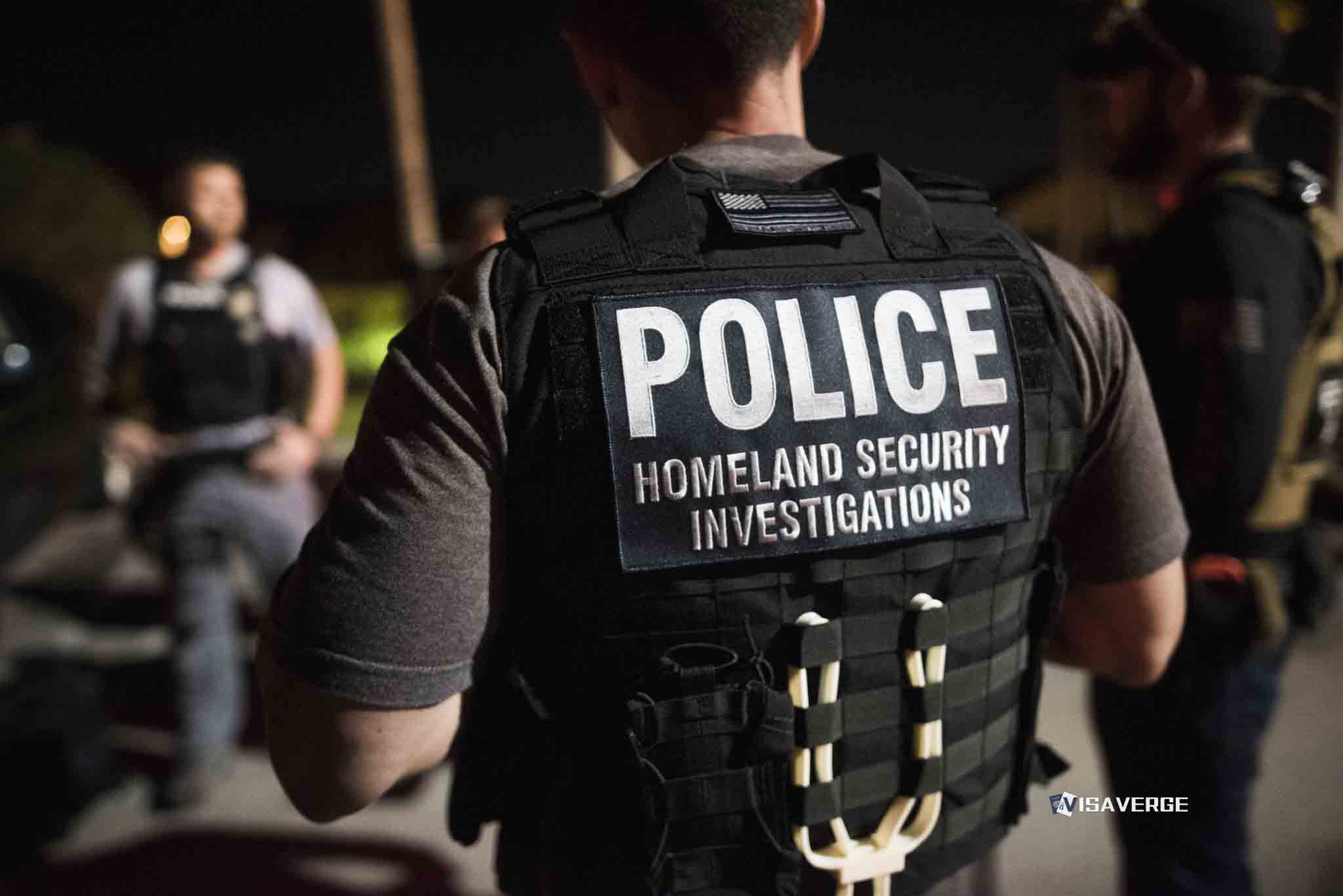
ICE officers have screened visitors at hearings that rules generally keep open
The White House directed the department to make federally controlled space available as the administration seeks to speed immigration-case processing and deportations. But the use of those buildings has raised questions about who controls access to hearings.
Immigration hearings generally remain open under 8 C.F.R. § 1003.27 and the Executive Office for Immigration Review’s July 15, 2026, Policy Memorandum PM 26-06. The rules allow restrictions in defined circumstances, including cases involving children or protected information, or when a judge finds limits necessary to protect a party, witness or public interest.
The access dispute centers on reports that ICE staff, rather than immigration judges, have decided who may enter the temporary hearing spaces. On September 23, 2026, officers kept Representative Greg Stanton (D-Ariz.), his staff and House Judiciary Committee staff from entering the FEMA courtroom.
Stanton later entered alone. His staff stayed outside. The presiding judge reportedly confirmed that the hearing was open to the public.
Representative Dan Goldman (D-N.Y.) said he could visit other floors of the Manhattan building but could not enter the third-floor hearing area. Attorneys with the American Immigration Lawyers Association, reporters and congressional offices have also reported being turned away from some department-controlled rooms.
Representative Jamie Raskin (D-Md.), the House Judiciary Committee’s ranking member, and Stanton wrote to administration officials on September 29, 2026. They demanded an explanation for the access limits and lack of notice, warning that letting department components decide entry could shift courtroom-access authority away from EOIR and immigration judges.
The representatives also asked for at least 10 days’ notice when a hearing moves to one of the new sites for people appearing without lawyers.
Missing signs and short notice can leave respondents at risk of missing court
The Washington and Manhattan locations reportedly have no exterior signs identifying them as immigration courts. Some respondents learned of a changed location only a few days before a hearing; others reportedly received no effective notice.
When the concerns arose, EOIR’s public court-location materials did not list the new sites as standard immigration courts. The buildings may not look like courthouses, and they can impose separate security procedures.
A missed hearing can carry a severe consequence. An immigration judge may issue a final order of removal when a respondent does not appear.
People with pending cases should check the location immediately before going to court, including on the hearing morning. EOIR’s Automated Case Information system and official court information channels can provide location details.
EOIR says the added rooms will help it process cases lawfully
EOIR says it is changing schedules and adding locations when needed to process cases “in a timely and lawful manner.” Immigration hearings are administered by the Justice Department office, while department components control some of the buildings where the hearings take place.
Greg Chen, senior director for government relations at the American Immigration Lawyers Association, criticized the lack of clear identification and reliable notice. He described the locations as operating outside normal public visibility.
The association’s policy brief says ICE officers have turned away attorneys, reporters, congressional personnel and other observers despite the general rule favoring public access. The dispute is not whether hearings can take place in federal office buildings, but whether respondents receive adequate notice and building security is overriding the public-access presumption.
More federal office sites remain under consideration
Officials are considering additional locations in Chicago, Denver, Miami, Los Angeles and San Antonio. The Washington and Manhattan rooms are the confirmed operating sites.