- ICE reopened Delaney Hall in 2025 as a 1,000-bed detention center managed by the GEO Group.
- The facility faces intense scrutiny following a detainee death in 2025 and allegations of overcrowding.
- A 2026 legislative bill aims to tax private prison profits to curb detention center expansion.
(NEWARK, NEW JERSEY) — U.S. Immigration and Customs Enforcement reopened Delaney Hall in Newark in 2025 as a 1,000-bed detention site run by GEO Group, creating the largest immigration detention center on the East Coast and setting off protests, lawsuits and scrutiny over conditions inside.
The ICE detention center, on Doremus Avenue near Newark Liberty International Airport, operates under a 15-year, $1 billion contract with the private prison company. Federal officials cast it as a hub for detention and deportation on the East Coast. Local officials, civil rights advocates and community groups have pushed back since the contract was announced on February 27, 2025.
By March 2026, the facility had become a flashpoint in New Jersey’s fight over immigration enforcement. A detainee died in December, 25 detainees sent a February letter alleging overcrowding and rights violations, and lawmakers were weighing a bill aimed at taxing private prison and detention profits.
Free toolUSCIS Receipt Number DecoderDelaney Hall reopened in spring 2025 during President Trump’s second term to meet federal demand for detention space as ICE expanded operations targeting noncitizens for removal. Its 1,000 beds made it ICE’s premier Northeast facility for adult males and females, including general population, intake, segregated housing and medical beds.
The airport location gives ICE a direct link for processing, transport and removals. In early 2025, GEO Group secured the fixed-price contract and projected $60 million in annual revenue, adding up to more than $1 billion over the term.
As of March 2026, ICE had also issued more work to GEO. A $5.7 million delivery order, 70CDCR26FR0000050, took effect on March 1, 2026, for detention and transportation services, extending operations through at least February 2027.
Federal officials presented the site as part of a wider detention buildout in New Jersey. Delaney Hall added about 600 beds to the state’s detention footprint when counted alongside facilities such as CoreCivic’s 300-bed Elizabeth Detention Center.
Former ICE Acting Director Caleb Vitello called the facility essential for “growing enforcement and removal operations consistent with federal mandates.” Its history has also fueled criticism. Delaney Hall first opened in 2011 and closed in 2017 before returning to service in 2025.
GEO Group fully owns and operates the center, providing what it called “comprehensive detention services” under ICE oversight. The company described the facility as “brand-new inside and all ready to go,” and moved to activate it by late June 2025 after winning the contract.
Beyond Delaney Hall, GEO deepened its role in federal immigration enforcement in December 2025, when its subsidiary BI Incorporated won a separate $121 million ICE contract for skip-tracing services. That work involves locating non-detained individuals through data verification and surveillance.
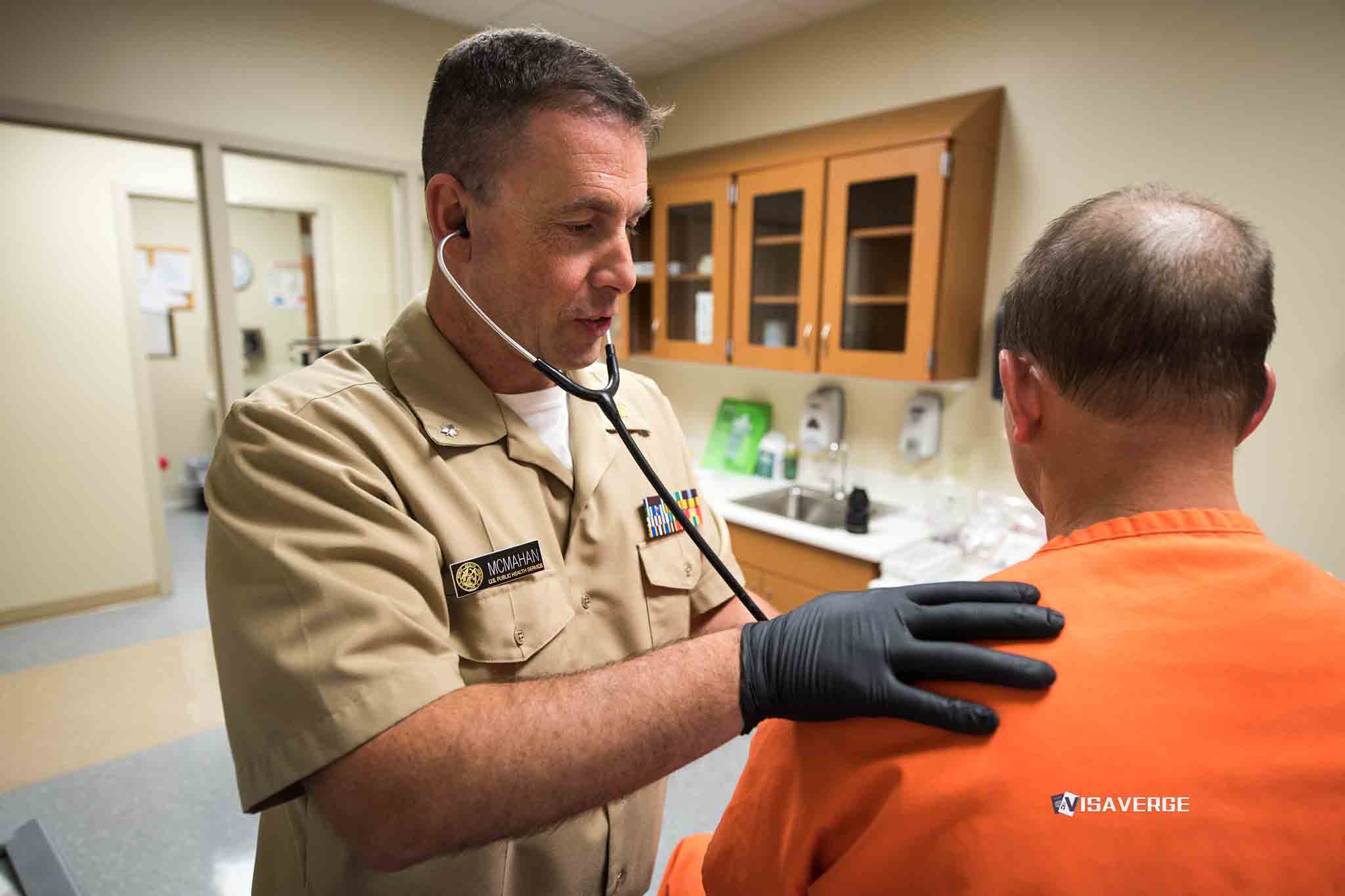
GEO says the Newark facility meets national standards and offers 24/7 medical care, legal visitation, dietician-approved meals, recreational amenities and access to off-site hospitals. The company says health staffing there is double that of many state prisons.
It also says detainees have access to in-person and virtual legal visits from Monday-Saturday 8 a.m.-7 p.m., and Sundays 8 a.m.-noon, along with consular access and pro bono legal lists updated quarterly. Family visitation runs Tuesdays and Thursdays 4-9 p.m., with a maximum of four visitors and rules barring disruptions. Children must be supervised.
Attorneys can schedule unlimited virtual visits, with a maximum of one 60-minute slot daily per detainee. Mail and electronic communications are processed on weekdays. Consular officials can access nationals at any time with credentials.
Opposition formed as soon as the contract became public. Newark Mayor Ras Baraka said Delaney Hall was “not welcome” and pledged legal action against the detention site.
That resistance spilled into the street in May 2025, when Baraka was arrested outside the facility during a visit. The confrontation helped turn Delaney Hall into a symbol of the clash between local sanctuary politics and the Trump administration’s enforcement drive.
The ACLU of New Jersey, led by Executive Director Amol Sinha, called the center a “serious threat” that would enable a “racist and xenophobic mass detention agenda.” The group urged passage of the Immigrant Trust Act, which would bar state and local cooperation with ICE.
Federal-state tensions widened in 2025 when the Department of Justice sued New Jersey over sanctuary policies that blocked arrests in nonpublic spaces. The case cleared a path for ICE actions as Delaney Hall expanded.
Community groups say the conflict has spread fear beyond the detention center itself. The concerns include raids at businesses and the effect on daily life, as trust in schools, workplaces and local institutions weakens.
The sharpest scrutiny followed the death of a detainee on December 12, 2025. Jean Wilson Brutus, a 41-year-old Haitian man, suffered a medical emergency after one day at Delaney Hall following his transfer from Union County Jail on a criminal mischief charge.
Emergency medical services took Brutus to University Hospital, where he died of suspected natural causes, ICE said. The death triggered demands for outside review and renewed calls to shut the facility.
U.S. Sen. Cory Booker accused GEO of “inhumane conditions” and “mismanagement,” and called for closure and Department of Homeland Security oversight. Rep. Bonnie Watson Coleman also called for an investigation and shutdown, pointing to chronic problems since spring 2025.
Activists then pressed for an independent probe. Their demands intensified in February 2026 after detainees circulated a letter that described life inside the facility in stark terms.
The letter, signed by 25 detainees and titled “Our Cry,” alleged overcrowding, unfit water and food, erratic meals, poor medicine distribution, and violations of due process and access to counsel. Written in Spanish, it compared confinement to “kidnapping.”
The detainees said some people had chosen self-deportation rather than remain at Delaney Hall while trying to pursue legal claims. The letter included complaints from people described as mentally ill, elderly and juvenile detainees, and called the system “inhumane.”
One signatory, Ecuadorian detainee Leonardo Villalba, was later transferred. The broader allegations fed a growing argument from advocates that the Newark ICE detention center was moving people through detention and removal too quickly while failing to provide basic care.
A prior detainee escape added to those concerns, though authorities recaptured the escapees quickly. Reports of substandard conditions at Delaney Hall have echoed criticism of the Elizabeth facility and widened the focus on detention conditions in New Jersey.
Meanwhile, New Jersey lawmakers have advanced a March 2026 bill that would tax profits from private prison and detention operations. The measure targets companies such as GEO and CoreCivic and seeks to curb financial incentives for expansion.
Critics have focused on the economics as much as the conditions. GEO’s profits in New Jersey rose roughly 10% quarterly last year, and Delaney Hall alone is projected to generate $60 million a year under the ICE contract.
The company remains deeply tied to federal detention policy. GEO operates Delaney Hall while ICE oversees it, and the site’s size and location make it central to detention and deportation plans in the Northeast.
The company says the center is equipped for large-scale operations. It points to medical staff, legal access, recreation, approved diets and hospital referrals as evidence that the facility can handle the surge in detentions.
Yet advocates and some elected officials say the center has come to represent the human cost of the enforcement push. They argue that the complaints in “Our Cry,” the death of Brutus, and the arrests and protests outside the building show the effects of relying on private detention.
The impact reaches beyond people held inside. Employers in restaurants, cleaning businesses and shops have reported worker shortages tied to fear of raids, while schools, churches and charities have faced rising pressure as families brace for possible separations.
Legal residents also face the risk of being caught up in sweeps, community advocates say. Mental health strains, especially for children, have added another layer to the tension surrounding the Newark facility.
For families trying to stay in contact with relatives inside, the rules are strict and the options limited. Detainees can use legal libraries, pro bono lists and attorney visits, and consular access remains available without time limits for officials with credentials.
For federal authorities, Delaney Hall serves a clear purpose. It detains people arrested for immigration violations, overstays or crimes, and recent task orders tied to transportation show how closely the center fits into removal operations.
As of March 2026, ICE’s latest order was 8% complete. The spending, the long contract term and GEO’s broader enforcement business all point to a facility built for sustained use, even as protests and legal challenges continue.
That has left Newark with a detention center that is both deeply embedded in federal policy and fiercely contested in the city around it. From Baraka’s declaration that it was “not welcome” to detainees writing that confinement felt like “kidnapping,” Delaney Hall has become one of the clearest markers of how the administration’s immigration agenda is playing out on the ground.