- China’s visa system in 2026 offers reduced fees and expanded options for short-term international travelers.
- Travelers must strictly match visa types to trip purpose to avoid application denials or legal penalties.
- Visa-free transit and 30-day stays in Hainan provide flexible alternatives for eligible global nationalities.
(CHINA) China’s visa system remains strict, but it is easier to enter in 2026 than it was a year ago. Reduced fees run through December 31, 2026, and expanded visa-free transit rules give many travelers more options for short stays.

For people planning a Tourist trip, a Business visit, study, work, or family reunion, the key point is simple: China Visa Types are still tied tightly to purpose. Pick the wrong one, and the application can be refused or the trip can end in penalties. VisaVerge.com reports that applicants now face faster processing in some places, but also closer document checks for work and business cases.
China Visa Types and the purpose behind each one
China groups visas into Diplomatic, Courtesy, Service, and Ordinary categories. Most foreign travelers use the Ordinary group, marked by codes such as L, M, Z, X1, X2, Q, S, and R. Each code matches one purpose, and embassy officers look for a direct fit between the trip and the visa.
Free toolDS-160 Form Filling Online Helper ToolL visas cover tourism and sightseeing. M visas cover commercial travel, meetings, and trade fairs. Z visas are for employment and start the path to a residence permit. X1 and X2 cover long-term and short-term study. Q visas serve family reunion with Chinese citizens or permanent residents. S visas cover visits to foreign workers or students in China, while R visas are for high-level talent.
Other codes matter too. G visas cover transit. F visas cover non-commercial exchanges, academic visits, and short volunteering. C visas are for crew members. J visas cover journalism. D visas are for permanent residence.
Documents consular officers expect to see
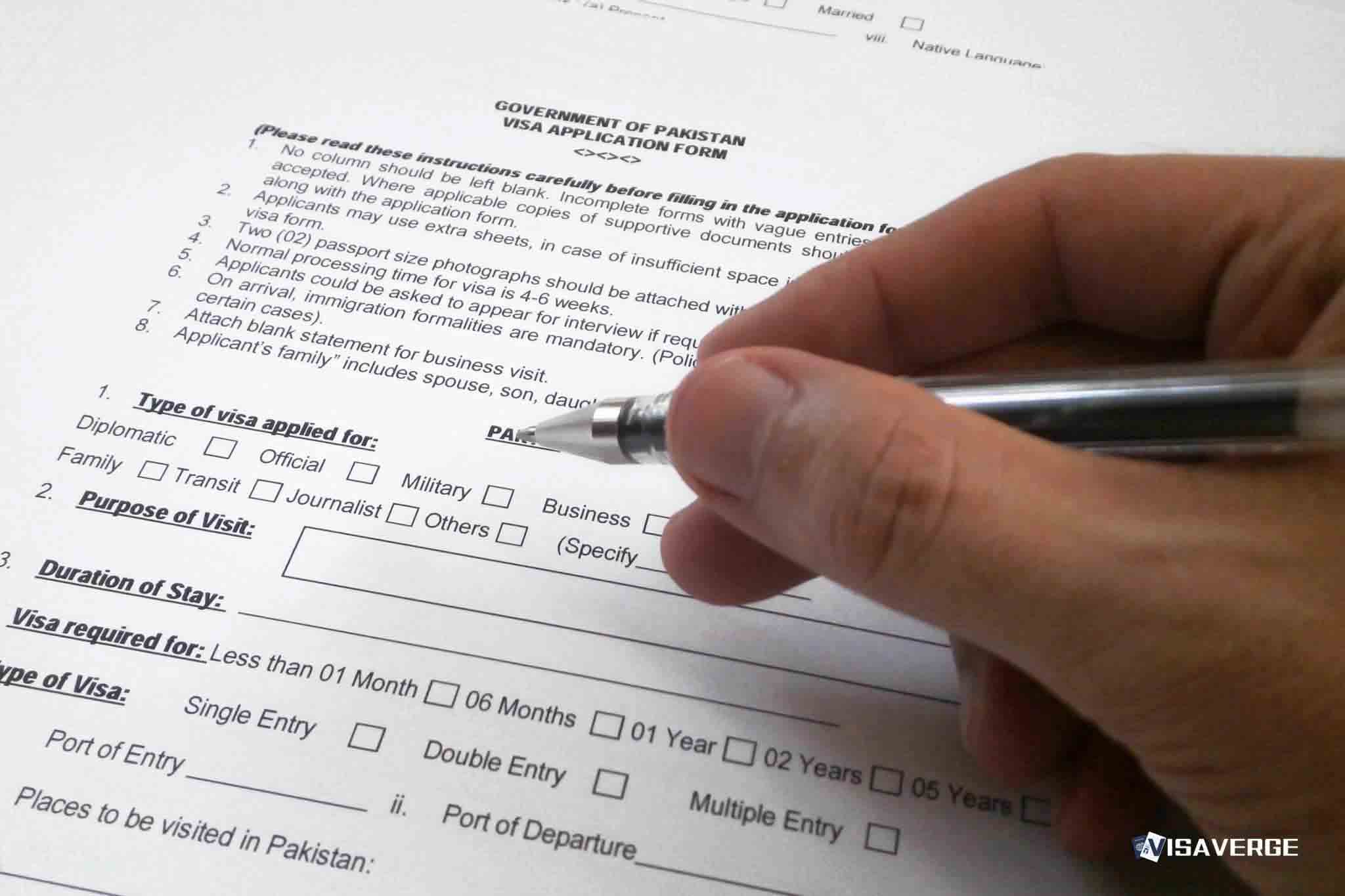
China’s embassies and visa centers ask for the same basic items first. Every applicant needs a passport valid for at least 6 months, with 2 blank pages. The online application form must be completed, printed, signed, and paired with 2 recent photos on a white background.
The rest depends on the visa type. For a Tourist trip, officers usually want a round-trip itinerary, hotel bookings, or an invitation from a host in China. For a Business trip, they want an invitation from a Chinese company or trade partner, with contact details and a travel schedule.
Students need an admission notice and the JW201 or JW202 form. Workers need a job offer, work permit notice, employment license, medical exam results, and a no-criminal-record document. Family cases need proof of relationship, such as birth or marriage certificates, plus the inviter’s ID or residence permit.
For official filing details, applicants can check the Chinese Visa Application Service Center, which lists country-specific procedures, appointment rules, and submission locations.
Validity, stay length, and the 30-day rule after entry
Validity and stay length are not the same thing. A visa can allow several entries over months or years, but each entry usually gives a separate stay of 30 to 90 days. U.S., UK, Canadian, and some other nationals often get longer multiple-entry L and M visas, including options that stretch to 10 years.
Some categories begin with a short entry period and then move to a residence permit after arrival. That applies to Z, X1, Q1, and S1 visas. In those cases, travelers must apply for conversion within 30 days of entry. That deadline matters. Missing it creates problems with legal stay.
Extensions are handled at the local Public Security Bureau before the visa expires. Fees are about 160 RMB, but approval is not automatic. Overstays are treated seriously and can lead to fines of CNY 500 per day, detention, or future entry bans.
Fees, processing times, and the 2026 reductions
Fees are lower through the end of 2026. In the United States, a single-entry, double-entry, or multiple-entry visa with a standard validity period costs $140. J1 and J2 visas cost $171. Express service adds $25. Chinese visa centers also charge service fees, which raise the final bill.
For many travelers, the full budget for a U.S. L or M application lands around $200 to $400 once service charges, shipping, and add-ons are included. The lower fee schedule runs through December 31, 2026, so applicants who already plan a trip have a clear reason to file sooner rather than later.
Processing is often 4 days for regular service. Express service takes 2 to 3 days, and rush service can return a passport the same day or the next day. Peak travel seasons still bring backlogs, so early filing remains the safer choice.
Transit, visa-free entry, and where short trips fit
China also offers several short-stay alternatives. The 24-hour and 144-hour visa-free transit rules cover more than 60 nationalities in more than 20 cities, including Beijing, Shanghai, and Guangzhou. Travelers need an onward ticket to a third country and must stay within the permitted zone.
Hainan also has a 30-day visa-free option for 59 countries for tourism, business, and medical visits. Some travelers qualify for bilateral visa-free stays, including periods of 15 to 90 days for selected nationalities such as Australia, Japan, Singapore, and some European states.
For the latest official rules, the Ministry of Foreign Affairs of China and local embassies publish updates on transit and entry policies.
Why the purpose of the trip matters so much
China’s system leaves little room for improvisation. A Tourist visitor cannot work, and a Business traveler cannot use the wrong visa type for paid activity. Officials look closely at invitation letters, employer papers, school records, and family proof. Weak paperwork often causes delays. False statements can trigger rejection or blacklisting.
That scrutiny is especially tight for Z and R visas in 2026. Employers need to show the role, the permit track, and the reason the worker belongs in China. Business travelers benefit from more flexible multiple-entry options, but they still need clean corporate documents. Families using Q or S visas need relationship proof that is clear and consistent.
The system is not designed to be simple. It is designed to match the right person to the right entry path, and it rewards preparation, accurate forms, and timely filing.