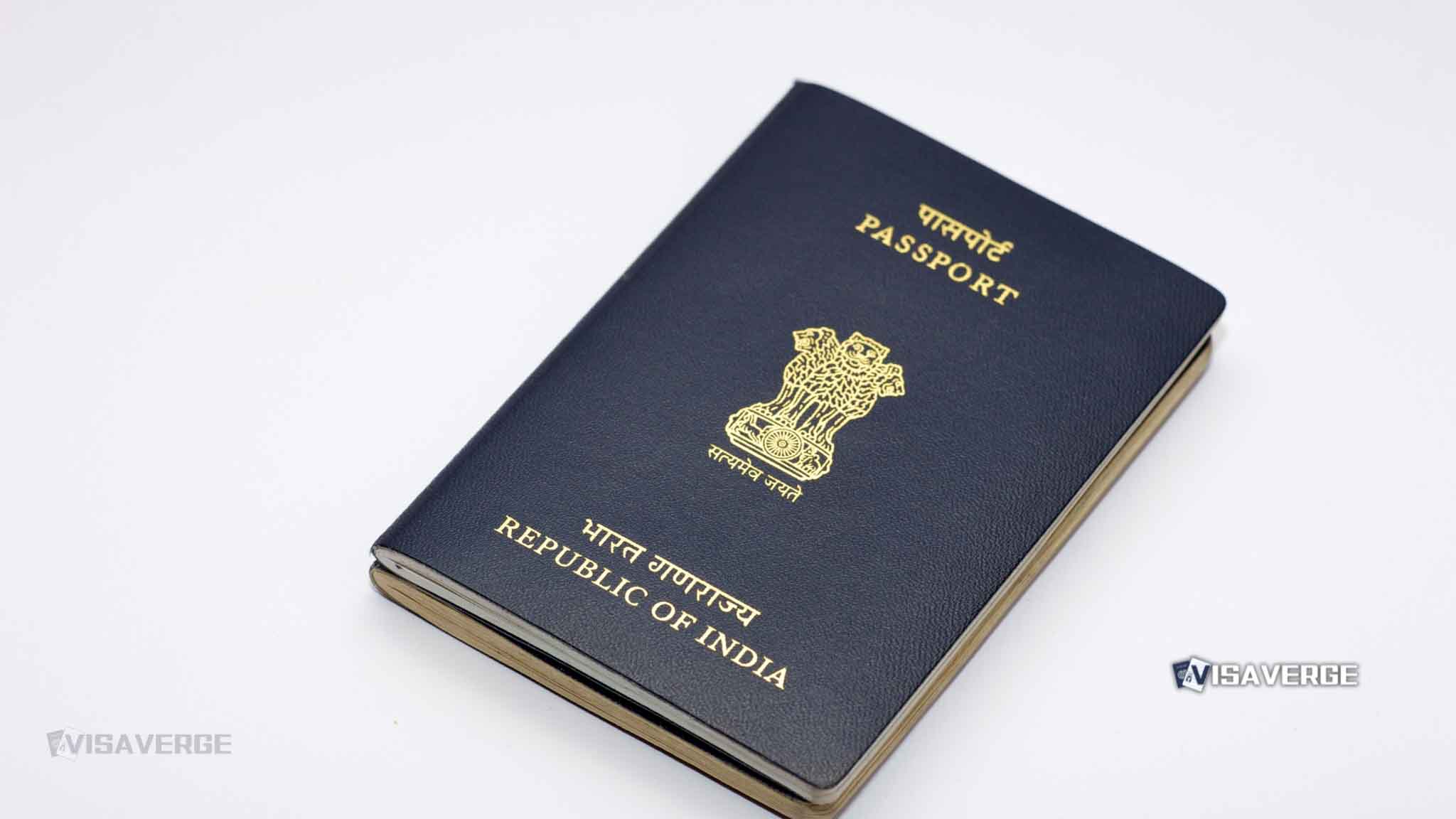
- Karnataka will accept applications Friday for a Permanent Resident Certificate from people with 10 years of continuous residence.
- Officials must verify requests within seven days under the Karnataka Sakala Services Act, 2011.
- Leaders say the certificate supports electoral-roll checks, while critics warn it could affect voting rights and residency.
Karnataka will begin accepting applications Friday for a Permanent Resident Certificate, a state document for people who can show at least 10 years of continuous residence in the state. The State Government of Karnataka issued the guidelines on June 29, 2026.
The certificate is a local Indian document, not a U.S. immigration status. It does not come from U.S. Citizenship and Immigration Services, the Department of Homeland Security or any U.S. agency.
Free toolCSPA Age-Out Calculator Online
Applicants can submit requests through the Seva Sindhu portal or at Grama One, Bengaluru One and Karnataka One centers. A Tahsildar will decide whether to issue the document.
Officials must verify applications within seven days of submission. The process falls under the Karnataka Sakala Services Act, 2011, which provides a legal framework for time-bound delivery of public services.
Ten years of residence sets the main eligibility test
An applicant must have lived in Karnataka continuously for at least 10 years. The rule also provides an alternative for minors.
A minor can qualify when the child’s parents or legal guardians have held permanent residence in Karnataka for a minimum of 10 consecutive years. Applicants may use Aadhaar cards, electoral-roll records, educational documents or other government databases notified for the process.
The certificate is intended to establish residence for state-level purposes. Those purposes include the Special Intensive Revision of electoral rolls, state quotas, scholarships and welfare programs.
The application route is designed to combine online access with neighborhood service centers. Seva Sindhu will handle digital submissions, while Grama One, Bengaluru One and Karnataka One will accept applications in person.
Karnataka links the certificate to electoral-roll verification
Chief Minister D.K. Shivakumar said on June 30, 2026, that the measure would help eligible citizens protect their voting rights during house-to-house enumeration.
That electoral connection has driven the political dispute around the rollout. The certificate is being introduced as officials prepare to verify residents and update electoral records through the Special Intensive Revision process.
Union Minister Shobha Karandlaje called for a halt on July 10, 2026. She alleged that illegal immigrants, specifically people from Bangladesh, could use the process to obtain official residential status and fraudulent voting rights.
Opposition BJP leaders petitioned Governor Thaawarchand Gehlot on July 15, 2026. They argued that the initiative raises national-security concerns and violates constitutional principles by creating a separate category of “permanent residents” within India’s single-citizenship framework.
The competing claims place the certificate at the center of a dispute over residence verification, electoral eligibility and the division of authority between Karnataka and the Union government.
Karnataka’s seven-day process differs from U.S. residency rules
The word “permanent” does not make the Karnataka certificate equivalent to a U.S. green card. Karnataka’s document verifies long-term residence for state purposes, while U.S. immigration benefits follow federal rules and separate application systems.
A May and June 2026 policy memo from the U.S. agency reiterated that people seeking a Green Card generally must use consular processing from their home country rather than adjust status inside the United States, except in “extraordinary circumstances.”
USCIS spokesman Zach Kahler described the policy this way:
"We're returning to the original intent of the law to ensure aliens navigate our nation's immigration system properly. their visit should not function as the first step in the Green Card process."
The U.S. policy concerns how applicants pursue federal immigration status. Karnataka’s process concerns proof of residence inside one Indian state. The two systems have different authorities, purposes and legal frameworks.
July visa filings use the Final Action Dates chart
A separate July 2026 U.S. immigration update requires adjustment-of-status applicants to use the “Final Action Dates” chart for July 2026 filings unless the official website says otherwise.
That bulletin applies to U.S. immigration cases, not Karnataka residence applications. The Karnataka certificate therefore does not change eligibility for a U.S. Green Card, adjustment of status or consular processing.
Applications in Karnataka will open Friday through the state’s digital and physical service channels. Tahsildars will then begin the seven-day verification process under the state services law.