- USCIS officers can now immediately deny adjustment applications that omit required initial evidence without warning.
- The policy change took effect August 5, 2026, applying to all new and pending I-485 filings.
- Applicants risk losing filing fees exceeding $1,440 and potentially facing deportation proceedings upon immediate denial.
U.S. Citizenship and Immigration Services has authorized officers to deny adjustment applications immediately when applicants omit required initial evidence, without first sending a Request for Evidence or a Notice of Intent to Deny. The policy took effect August 5, 2026, and covers cases filed or pending on that date.
The agency announced the change in a news release and Policy Alert PA-2026-05, titled “USCIS to Reduce Frivolous Immigration Benefits Requests by Reinforcing Evidence Standards.” The update applies to Form I-485, Application to Register Permanent Residence or Adjust Status.
Free toolI-94 Expiration Calculator Online
USCIS said applicants must establish eligibility when they file. Its notice states:
“Generally, if a benefit requestor fails to demonstrate eligibility for a benefit or fails to provide all required initial evidence when filing an application, USCIS may deny their immigration benefit request without first issuing a Request for Evidence (RFE) or a Notice of Intent to Deny (NOID).”
The agency said the move aligns its procedures with long-standing Department of Homeland Security regulatory authority. It also criticized a previous “Biden-era policy” that, in USCIS’s description, allowed applicants to submit “placeholder” filings to seek related benefits such as employment authorization.
Incomplete filings now carry a direct denial risk. Filing fees can also be lost.
The change affects cases already awaiting adjudication as well as applications submitted on or after August 5. Officers no longer have a suggestion to issue a warning when the record lacks required initial evidence or fails to show eligibility at filing.
When the agency does send an RFE, applicants may receive less time to respond. USCIS has removed the standard 12-week response period as an automatic deadline, although 12 weeks remains the maximum. Adjudicators can set a shorter period based on the case.
The medical exam must travel with the filing
USCIS has strictly enforced the requirement since late 2024 that applicants submit Form I-693, Report of Immigration Medical Examination, with the initial adjustment filing. A civil surgeon must sign the examination, which must arrive in a sealed envelope.
Under rules in effect since 2025, the medical examination remains valid only for the specific adjustment application filed with it. Applicants should therefore match the sealed medical packet to the filing it supports.
The payment method can also determine whether a paper filing moves forward. Since late 2025, USCIS has generally required electronic payment for paper-filed applications through Form G-1450 or Form G-1650. An incorrect payment method can result in immediate rejection or denial.
The agency’s checklist calls for the following initial evidence:
| Document | What to include |
|---|---|
| Form I-693 | A civil surgeon’s signed medical examination in a sealed envelope, submitted with the filing |
| Lawful-entry records | The most recent Form I-94, Arrival/Departure Record, plus passport pages showing entry stamps |
| Status history | Prior approval notices, Form I-797, along with Form I-20 records for students or Form DS-2019 records where applicable |
| Financial sponsorship | Form I-864, Affidavit of Support, the sponsor’s IRS tax transcript for the most recent year, 2025 or 2024, and current employment evidence |
| Civil documents | Certified birth and marriage certificates when applicable; non-English documents require certified English translations |
| Identity document | A valid passport biographical page or driver’s license |
| Photographs | Two passport-style photographs taken within 30 days of filing, with no glasses and a white background |
| Eligibility evidence | The receipt or approval notice, Form I-797, for the underlying petition, such as Form I-130 or Form I-140 |
Missing translations and status records can decide the filing
Civil documents that are not in English need more than a basic translation. The certification must include the translator’s signature, printed name and contact information.
Applicants also need to show the path that led to the filing. That can include every relevant Form I-797 approval notice, student Form I-20, or exchange-visitor Form DS-2019. The records are used to demonstrate continuous lawful status.
Evidence of entry serves a separate purpose. A recent Form I-94 paired with passport pages and entry stamps documents the applicant’s admission history.
The financial package must cover both the sponsor’s tax history and current work. USCIS identifies the most recent tax year as 2025 or 2024, depending on the filing circumstances reflected in the submission.
The underlying immigrant petition must also connect to the adjustment filing. Applicants should include the Form I-797 receipt or approval notice for the qualifying petition, including an I-130 or I-140 when that is the basis of eligibility.
An incomplete filing can affect more than the green-card case
USCIS said the policy is intended to end filings made primarily to stop the clock or obtain an Employment Authorization Document while postponing missing evidence, such as a medical examination or birth certificate. Under the new approach, those filings face immediate denial rather than an opportunity to complete the record through a warning.
The financial exposure is substantial. Denied applications generally do not return filing fees because the denial is a merits-based decision, and fees often exceed $1,440 per person.
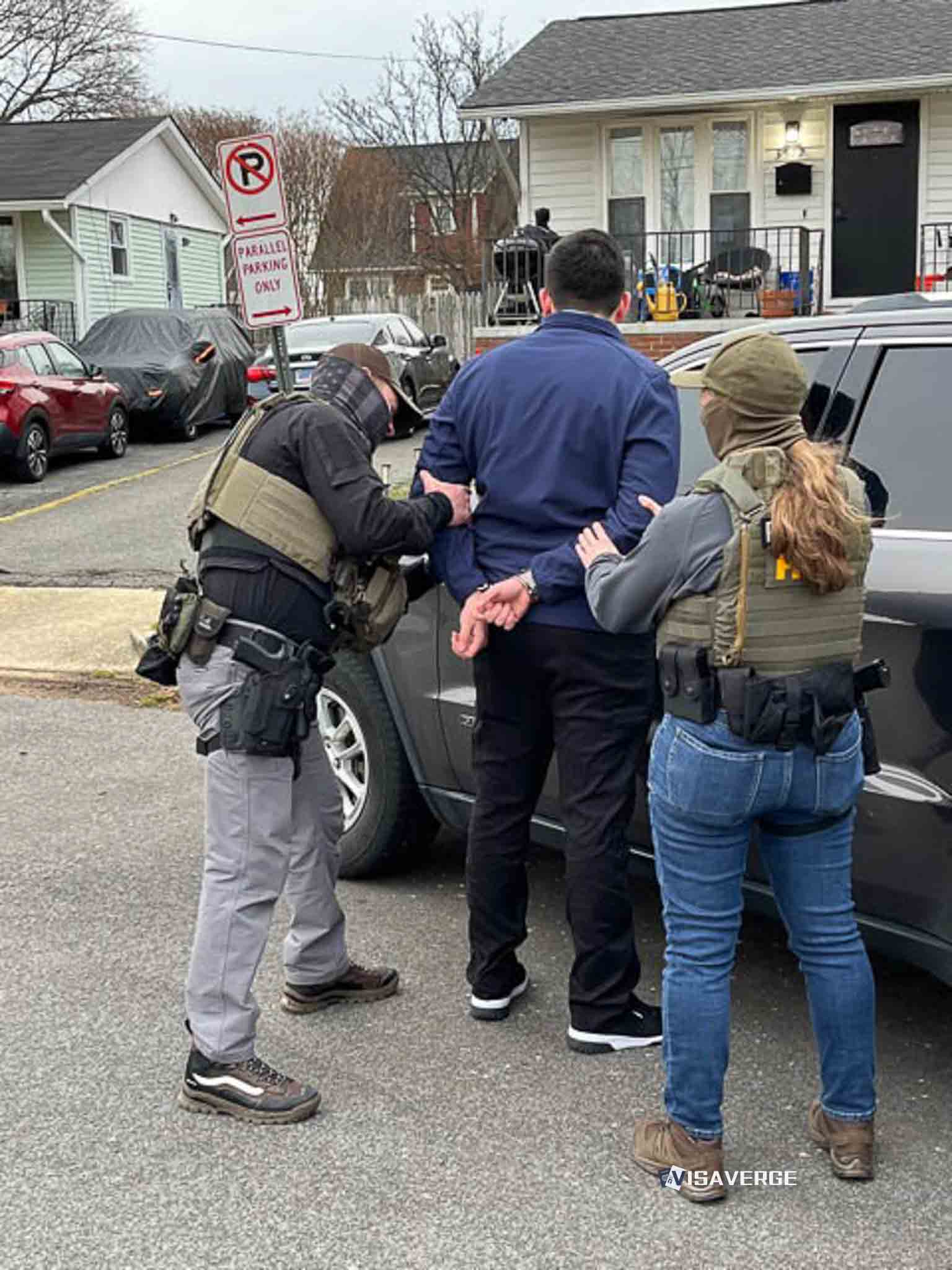
A denied adjustment application can also create immigration-enforcement consequences. USCIS has increased issuance of Notices to Appear after adjustment denials, and the research describes a denied application in 2026 as significantly more likely to lead to removal proceedings than in earlier years.
Applicants preparing a filing should assemble the complete packet before submission, verify the payment method, place the signed medical examination in its sealed envelope, and check every translation and status record. They should review the official adjustment filing instructions, the USCIS Policy Manual, and the agency’s newsroom before filing. Fees and procedures can change, so applicants should verify current requirements at uscis.gov.