- USCIS officers can now deny incomplete applications without first issuing a Request for Evidence or a preliminary notice.
- The policy change reverses previous guidance that encouraged officers to allow applicants to correct errors before a denial.
- Applicants risk losing filing fees and legal status if their initial submission lacks required documentation or signatures.
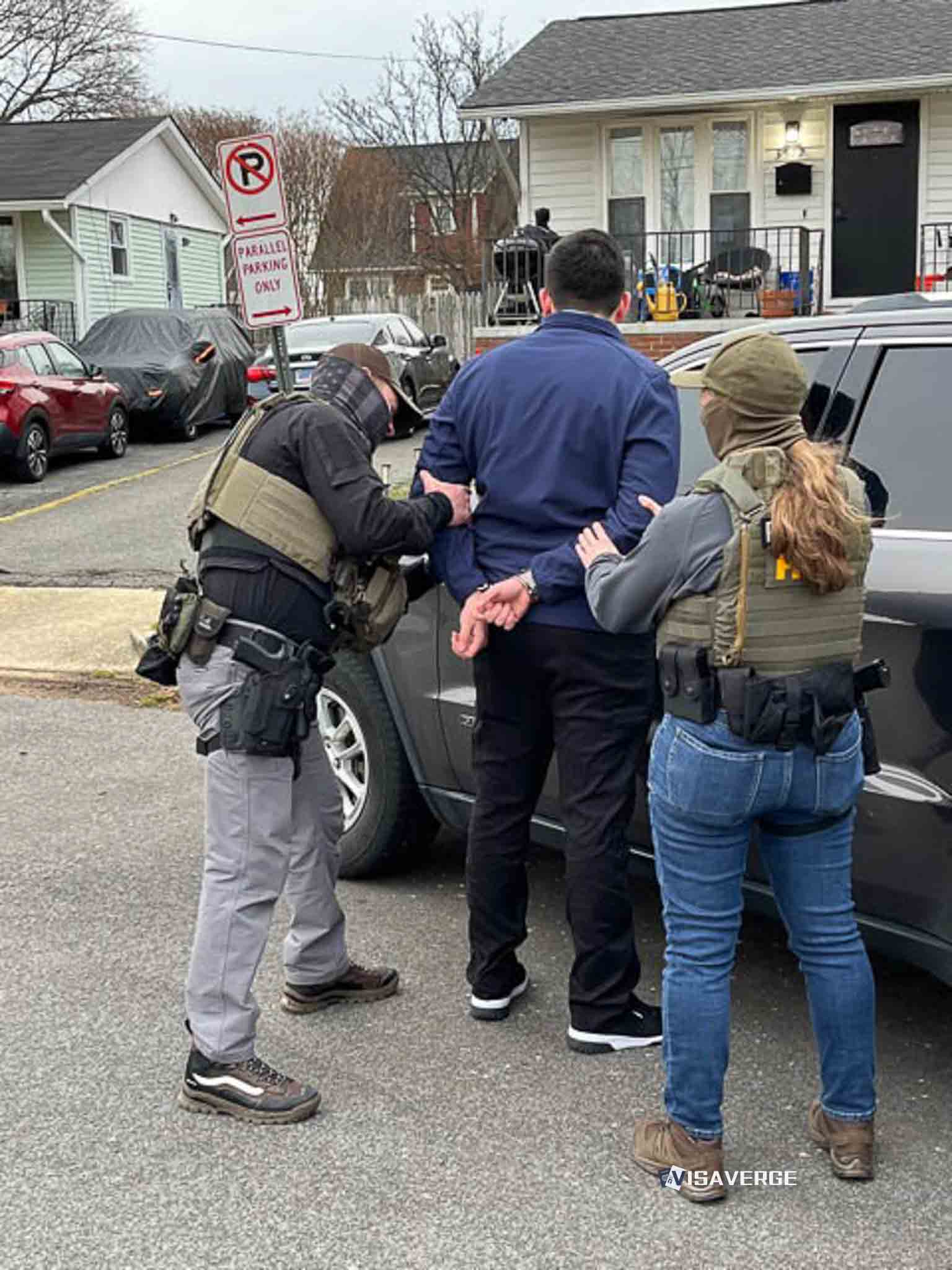
U.S. Citizenship and Immigration Services issued Policy Alert PA-2026-05 on August 5, 2026, giving officers broader authority to deny incomplete or legally unsupported immigration benefit requests without first seeking more evidence. The change applies immediately to applications and petitions filed on or after that date, as well as those already pending.
The update ends the expectation of automatic RFEs before a denial. Officers may still request additional evidence when they believe a case can be salvaged, but the agency no longer encourages or requires that step as the default response.
Free toolCSPA Age-Out Calculator Online
USCIS said applicants must prove eligibility when they file and maintain that eligibility through adjudication. The agency stated:
“Generally, if a benefit requestor fails to demonstrate eligibility for a benefit or fails to provide all required initial evidence when filing an application, USCIS may deny their immigration benefit request without first issuing a Request for Evidence (RFE) or a Notice of Intent to Deny (NOID).”
The policy takes effect now. A missing document can carry an immediate consequence.
The agency also said adjudicators may set shorter, case-specific deadlines when they issue RFEs. That replaces the standard 87-day/12-week response window with greater flexibility, according to the policy update.
USCIS now puts the initial evidence burden on the person filing
The policy update, titled “Evidence, Requests for Evidence, and Notices of Intent to Deny,” says the person seeking an immigration benefit carries the proof burden throughout the case. USCIS wrote:
“The burden is on the requestor to establish that he or she is eligible for the requested benefit at the time of filing the benefit request and that he or she continues to be eligible through adjudication.”
That standard covers all immigration benefit requests, including applications and petitions. It also reaches matters that were pending on August 5, 2026.
An officer can now deny a filing that lacks required initial evidence or a legal basis for approval without sending a preliminary notice. The agency described the change as a restoration of “full discretion” for officers handling substantially incomplete cases.
A filing may therefore fail before the applicant gets another opportunity to add material. USCIS identified documents such as a birth certificate, translation or signature as examples of evidence that can be missing at filing.
A denial can create new financial and immigration risks
Applicants should not assume that an incomplete package will receive a second chance. A denial generally means losing the filing fee, and correcting the problem may require paying new fees to file again.
The amounts can reach hundreds or thousands of dollars. The cost depends on the benefit request and the need to submit a new filing.
A denial can also affect people who rely on a pending application for related protection or authorization. The research identifies possible consequences including a lapse in legal status, the end of a stay of removal, or immediate termination of work authorization.
Employment Authorization Documents, or EADs, were among the ancillary benefits the agency associated with the earlier filing approach. A person whose underlying case is denied could lose access to that related work authorization.
Refiling creates another risk for green card applicants in backlogged categories. A new application after denial can lose the original priority date, potentially delaying eligibility by years.
The agency says the old approach encouraged placeholder filings
USCIS characterized the policy as a reversal of Biden-era guidance under which officers “should” issue RFEs or NOIDs to give applicants an opportunity to correct errors. The earlier approach, according to the agency’s explanation, encouraged some incomplete or “placeholder” filings.
Those submissions could be filed primarily to obtain an ancillary benefit, such as an Employment Authorization Document, while the underlying case remained in the backlog. USCIS described some of those filings as “frivolous.”
The agency said immediate denials for missing evidence will help “restore integrity” and move more quickly through a backlog of millions of pending cases. It intends to prioritize packages that are complete and ready for adjudication.
That rationale does not change the filing standard for an individual case. The applicant must still establish eligibility at filing and maintain it during adjudication.
The policy documents are available through USCIS
USCIS published the announcement, the policy manual update and the policy alert on its website. The USCIS newsroom announcement describes the agency’s evidence standards and its stated goal of reducing frivolous immigration benefits requests.
The USCIS Policy Manual, Volume 1, Part E, Chapter 6 contains the agency’s evidence guidance. The policy alert PDF sets out the update on evidence, RFEs and NOIDs.
Applicants preparing a filing should compare the submission with the relevant form instructions before sending it. Fees and processing times are subject to change, so applicants should verify current information at uscis.gov.