- Rule 14A registrants can now withdraw online via Form REG-32 through the GST Portal.
- Mandatory Aadhaar authentication is required for the primary signatory and one promoter within 15 days.
- Applicants must have filed all past returns from their effective registration date to be eligible.
(INDIA) — If you’re an NRI or U.S.-based business owner with an Indian GST registration under Rule 14A, you can now withdraw (opt out) online through the GST Portal, but only if you meet strict return-filing and Aadhaar authentication requirements.
This guide explains who can apply, the eligibility rules, the step-by-step filing path on the portal, and what changes after approval. It also flags U.S. tax and reporting items that often apply to NRIs and cross-border founders for tax year 2026 (returns filed in 2027).
Overview: GSTN’s Rule 14A withdrawal facility (and the one requirement that trips people up)
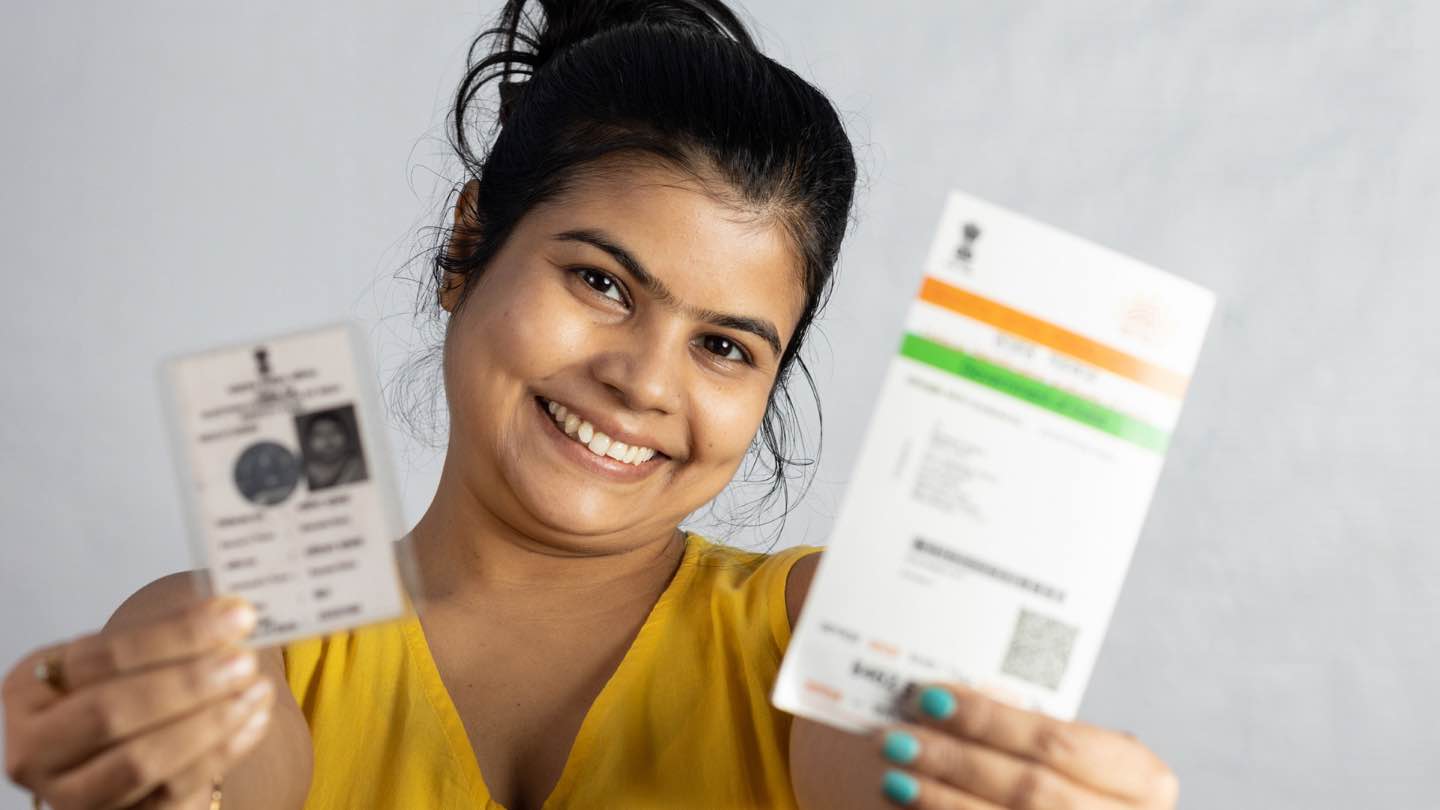
On February 21, 2026, GSTN enabled an online facility for active taxpayers registered under Rule 14A of the CGST Rules to withdraw by filing Form GST REG-32 on the GST Portal. The critical compliance point is identity verification: Aadhaar authentication is mandatory for the Primary Authorised Signatory and at least one Promoter/Partner.
Free toolSubstantial Presence Test CalculatorThe portal submission is not “just a click-through.” If Aadhaar authentication is not completed in time, the system will not generate an ARN. That means your withdrawal request effectively does not move forward.
? Deadline Alert: After submitting the draft REG-32, you must complete the required Aadhaar authentication within 15 days, or no ARN is generated.
Eligibility and preconditions (quick checklist)
The withdrawal facility is visible only to eligible, active Rule 14A registrants on the GST Portal. The biggest eligibility filter is your return-filing history.
Eligibility checklist table
| Requirement area | What you must meet | Practical note |
|---|---|---|
| Status | Must be an active registrant under Rule 14A | Inactive/cancelled GSTINs generally won’t see the withdrawal link. |
| Minimum return filing (timing-based) | If filing before April 1, 2026: at least 3 months’ returns filed | “Three months” is a minimum filter, not a safe harbor. |
| Minimum return filing (timing-based) | If filing on/after April 1, 2026: at least 1 tax period’s returns filed | “Tax period” depends on your filing frequency under GST. |
| All returns from effective date | All returns due from the effective registration date up to the REG-32 filing date must be filed | Any gap can block submission or processing. |
| No competing requests | No core/non-core amendments and no self-cancellation request during processing | Plan sequencing before you start REG-32. |
| Aadhaar authentication | Mandatory for Primary Authorised Signatory and one Promoter/Partner | Without it, there is no ARN. |
⚠️ Warning: Do not start REG-32 if you also need a core amendment, non-core amendment, or self-cancellation. One request can stall the other.
Why this matters for NRIs and overseas founders
Many NRIs manage GST compliance remotely. In practice, the Aadhaar step can be the bottleneck because it relies on OTP or biometric flows tied to Aadhaar-linked contact details. If your authorized signatory is abroad, build time for coordination.
Documents you’ll need (before you click “Start”)
Have these items ready so you do not lose the 15‑day window:
- GSTIN credentials for the GST Portal login.
- Your current Rule 14A registration details and effective registration date.
- A list of all GST returns due from the effective date through your planned REG‑32 filing date, plus proof of filing.
- Reason for withdrawal text (keep it factual and consistent with your records).
- Aadhaar details for:
- the Primary Authorised Signatory, and
- at least one Promoter/Partner (as applicable).
- Access to Aadhaar-linked mobile/email for OTP, or ability to complete biometric authentication if required.
Step-by-step: how to file the withdrawal request on the GST Portal (Form GST REG-32)
This is the portal path and timing sequence that matters.
Step 1: Log in and find the withdrawal application
- Log in to the GST Portal using your GSTIN credentials.
- Navigate to: Services > Registration > Application for Withdrawal from Rule 14A.
This link is visible only to eligible, active Rule 14A taxpayers.
Step 2: Confirm the default selection and add your reason
- Inside the application:
- The field “Option for registration under Rule 14A” defaults to “No.”
- Enter a clear reason for withdrawal.
Use plain language. Avoid contradictions with your earlier filings.
Step 3: Complete Aadhaar authentication (mandatory)
You must complete Aadhaar authentication for:
- the Primary Authorised Signatory, and
- at least one Promoter/Partner.
Authentication is performed through UIDAI’s CIDR using OTP and/or biometrics. The method can vary based on system checks. The key operational point is timing.
Step 4: Submit the draft within 15 days
- The system allows you to save a draft, but:
- You must submit the draft application within 15 days.
Treat this as a real deadline. If you miss it, you may need to restart.
Step 5: Complete Aadhaar authentication within 15 days after submission
- After submission:
- Aadhaar authentication must be completed within 15 days of submission.
- If authentication is not completed in time, no ARN is generated.
No ARN generally means no trackable filing in the workflow.
What happens after approval (Form GST REG-33 and the Rs. 2.5 lakh rule)
When the withdrawal is approved, the order is issued in Form GST REG-33.
A notable operational change follows. After the order:
- Taxpayers can declare output tax liabilities exceeding Rs. 2.5 lakhs on supplies to registered persons starting the first day of the succeeding month after the order.
In other words, the effective “switch” for that outcome is tied to the month following the order date, not the submission date.
Context and user experience notes (why this change matters)
Until this facility was rolled out, taxpayers often reported that online withdrawal was unavailable, including via helpdesks and public forums. The new workflow is meant to remove that friction, but it replaces it with a strict identity and timing gate.
For NRIs, the practical issue is not the portal path. It is the coordination required for Aadhaar authentication when signatories and promoters are in different countries and time zones.
U.S. tax items NRIs should check for tax year 2026 (filed in 2027)
With cross-border compliance, a GST registration change does not automatically change U.S. filing duties. Still, it can signal business changes that affect U.S. reporting, foreign tax credits, and entity classification.
Below is a practical U.S. checklist for NRIs and U.S. residents who have Indian business activity tied to a GSTIN.
U.S. eligibility checklist (common NRI scenarios)
| Your U.S. status in 2026 | Likely U.S. filing position | Forms and issues to review |
|---|---|---|
| Nonresident alien (NRA) | U.S. tax only on U.S.-source income and certain effectively connected income | Form 1040-NR; see IRS Publication 519 (U.S. Tax Guide for Aliens). |
| Resident alien (substantial presence) or green card holder | U.S. tax on worldwide income | Form 1040; foreign tax credits, foreign reporting, and entity forms may apply. |
| Dual-status year | Part-year resident rules can apply | Often dual-status return (Form 1040 with 1040‑NR statement), treaty rules may matter. |
IRS references: Publication 519 (U.S. Tax Guide for Aliens) at irs.gov/pub/irs-pdf/p519.pdf and the IRS international portal at irs.gov/individuals/international-taxpayers.
Foreign reporting triggers that often accompany Indian business accounts
If your India business activity involves foreign accounts or ownership, check these common U.S. reporting regimes:
| Reporting item | Threshold / trigger | Typical form |
|---|---|---|
| Foreign bank and financial accounts | $10,000 aggregate at any time during the year | FBAR (FinCEN Form 114) (filed separately from the tax return). |
| Specified foreign financial assets | For many U.S. residents: $50,000 end of year / $75,000 any time (single); higher for MFJ | Form 8938 (FATCA) attached to Form 1040. |
| Ownership in foreign corporations/partnerships | Depends on ownership and control | Often Form 5471 (corporations) or Form 8865 (partnerships). |
| Certain foreign gifts/trust transactions | Various triggers | Form 3520 and related filings. |
FBAR is administered by FinCEN, not the IRS, but IRS penalty enforcement is a real risk area. If your Indian GST operations use multiple accounts, aggregate balances matter.
Deadlines and extension options (India workflow + U.S. tax year 2026)
This section is meant to prevent missed dates. India’s REG‑32 window and U.S. return deadlines are separate calendars.
Key timeline table (what to diarize)
| Event | Date / rule | Extension option |
|---|---|---|
| REG‑32 availability announced | February 21, 2026 | Not an extension item, but it marks when the online path went live. |
| Minimum return requirement changes | April 1, 2026 | Filing before vs. after changes the minimum returns filter. |
| Submit REG‑32 draft | Within 15 days of saving the draft | No published extension in the workflow described. |
| Complete Aadhaar authentication after submission | Within 15 days of submission, or no ARN | No published extension in the workflow described. |
| U.S. individual return for tax year 2026 | Generally April 15, 2027 | Extension to October 15, 2027 via Form 4868. |
| FBAR for calendar year 2026 | April 15, 2027 | Automatic extension to October 15, 2027. |
For U.S. filing mechanics and residency rules, rely on IRS Publication 519 and IRS forms guidance at irs.gov/forms-pubs.
Common compliance mistakes (and how to avoid them)
- Assuming portal visibility means eligibility. The system may show the link, but processing can still fail if returns are missing.
- Starting REG‑32 while an amendment is pending. The rule against core/non-core amendments and self-cancellation during processing can stall your request.
- Missing the Aadhaar window. Without timely authentication, no ARN is generated. Treat this as a hard stop.
- Ignoring U.S. reporting because “it’s only India GST.” A GST-linked business often means foreign accounts, foreign taxes, and possibly foreign entity filings.
IRS resources and when to get professional help
For U.S. tax year 2026 (filed in 2027), the most reliable starting points are:
- IRS International Taxpayers portal: irs.gov/individuals/international-taxpayers
- IRS Publication 519 (U.S. Tax Guide for Aliens): irs.gov/pub/irs-pdf/p519.pdf
- IRS forms and instructions (Form 1040, 1040‑NR, 4868, 8938): irs.gov/forms-pubs
Professional help is worth considering if any of these apply:
- You moved in or out of the U.S. during 2026 and may be dual-status.
- You have Indian business ownership that could trigger Form 5471, 8865, or 3520.
- Your foreign accounts may require FBAR and Form 8938, and you are unsure about thresholds.
- You need to align India indirect tax actions with U.S. income tax reporting and foreign tax credits.
Action items to finish strong:
- Confirm all GST returns from the effective registration date through the REG‑32 filing date are filed.
- Coordinate Aadhaar authentication for the Primary Authorised Signatory and one Promoter/Partner before you submit.
- Diary the two 15‑day windows so your application generates an ARN.
- For U.S. tax year 2026, confirm your residency status and whether FBAR/FATCA or foreign entity forms apply.
⚠️ Disclaimer: This article is for informational purposes only and does not constitute tax, legal, or financial advice. Tax situations vary based on individual circumstances. Consult a qualified tax professional or CPA for guidance specific to your situation.