- Home Minister Amit Shah promised citizenship within six months for eligible refugees in West Bengal.
- The policy focuses on Hindu, Sikh, and Jain refugees who fled religious persecution in Bangladesh.
- Authority has been granted to eight district collectors in West Bengal to finalize applications locally.
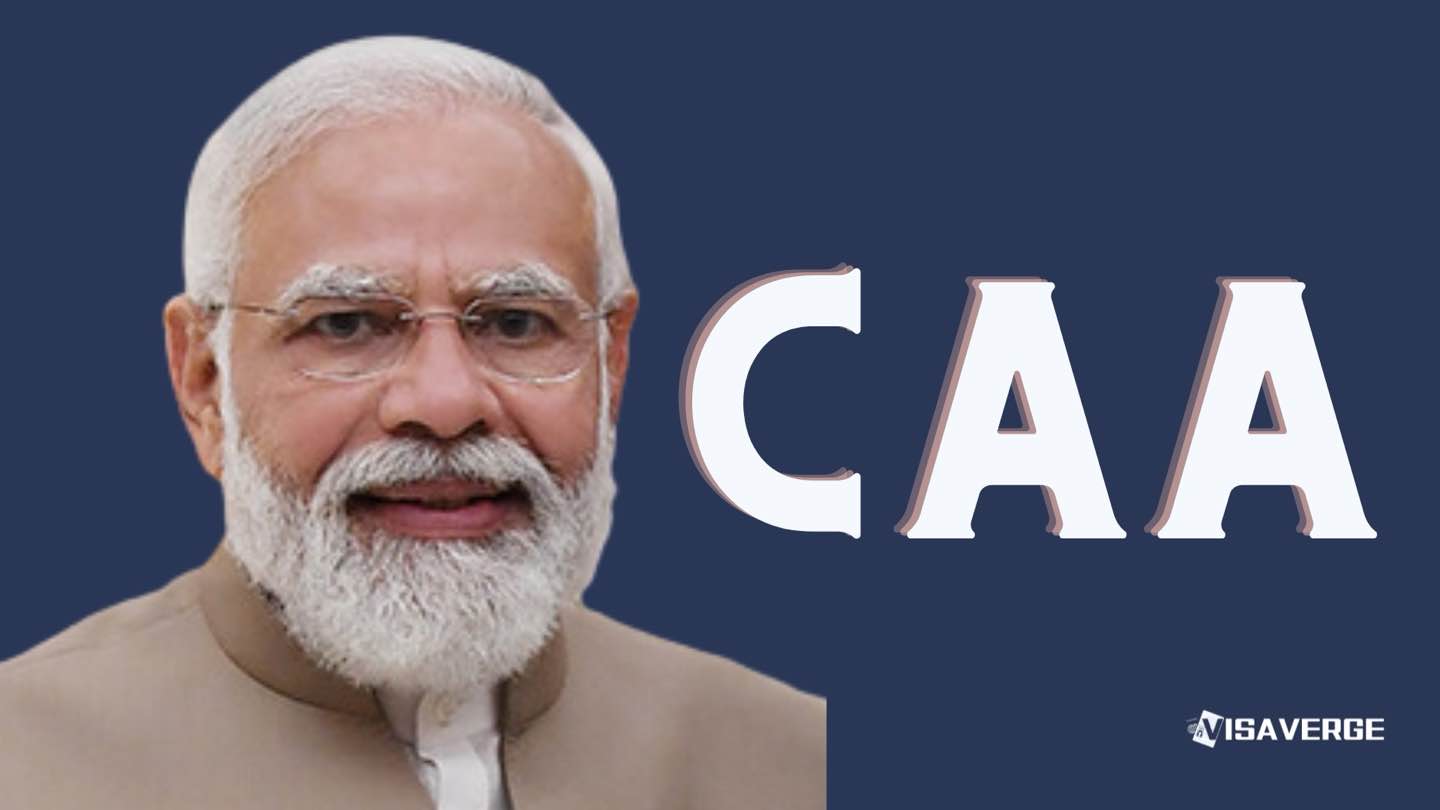
Amit Shah said Hindu, Sikh, and Jain refugees who fled Bangladesh because of religious persecution will receive Indian citizenship within six months, setting a deadline for the policy in West Bengal.
The Indian home minister made the announcement on August 21–22, 2026, while outlining how authorities would implement the Citizenship Amendment Act for people who sought refuge in the state.
Free toolSubstantial Presence Test Calculator
Shah delivered the pledge in Siliguri. He presented citizenship as a recognition of the refugees’ treatment and flight from religious persecution.
"All Hindu, Sikh and Jain refugees who were forced to flee Bangladesh will certainly be granted Indian citizenship here, with dignity. That is my promise."
Shah made that statement on August 21, 2026, in Siliguri. The pledge places the next stage of the process with officials in West Bengal.
The Union Home Ministry has given eight district collectors in West Bengal authority to handle the applications. They will process and finalize the cases locally.
The administrative change gives district-level officials a direct role in deciding citizenship claims. It also places the six-month timeline against a defined group of applicants and a specific state-level processing structure.
The citizenship route covers six religious minorities from three countries
The law creates an expedited path for six non-Muslim minority communities from Afghanistan, Bangladesh, and Pakistan. Applicants must have entered India on or before December 31, 2014.
| Covered religious communities | Countries named in the policy | Entry deadline |
|---|---|---|
| Hindu, Sikh, Buddhist, Jain, Parsi, and Christian | Afghanistan, Bangladesh, and Pakistan | December 31, 2014 |
The categories include Hindus, Sikhs, Buddhists, Jains, Parsis, and Christians. Shah’s latest promise specifically names Hindu, Sikh, and Jain applicants who fled Bangladesh.
The cutoff date limits the expedited route to people who entered India by the end of 2014. The six-month pledge concerns the processing of eligible applications, rather than a new expansion of the listed communities or countries.
Shah pairs the citizenship pledge with a removal warning
Alongside the promise, Shah repeated the government’s “detect, delete, and deport” policy. The language targets people officials identify as “infiltrators” or illegal immigrants.
That message draws a line between refugees who fit the law’s religious and nationality criteria and people the government places outside those categories. The two positions appeared together in Shah’s remarks: one promises citizenship, while the other threatens removal.
Eligible refugees may gain legal status after decades of waiting. The enforcement rhetoric has also created fear among people who do not meet the CAA’s religious criteria.
The distinction affects the broader refugee population in India. A person’s religion, country of origin, and date of entry determine whether the expedited citizenship route applies.
The pledge follows years of debate over equal treatment
The policy has drawn scrutiny beyond India. In March 2024, the U.S. State Department expressed “concern” that implementation should respect “religious freedom and equal treatment under the law.”
The U.S. Commission on International Religious Freedom has also called in 2026 for sanctions against certain members of the RSS and officials involved in religious-freedom violations.
Those positions form part of continuing international criticism of religious-freedom conditions connected to the citizenship policy. Shah’s announcement instead emphasized a deadline and local administration.
For people who qualify, the immediate process now runs through the eight district collectors authorized by the Union Home Ministry. Their offices must process and finalize the applications locally within the timeline Shah announced.
The six-month period gives the pledge a measurable test. Its practical implementation will depend on how those district officials handle the pending claims and apply the eligibility rules tied to religion, nationality, and entry date.