Understanding the J1 Visa Waiver
If you’re an international visitor in the United States on a J1 visa, and you’re looking to change your status or potentially remain in the U.S. beyond your exchange program, you might be considering a J1 visa waiver. Ever since the U.S. established the J1 visa waiver program, it has been a beacon of hope for many who wish to waive the two-year home-country physical presence requirement.
What Is a J1 Visa?
Before taking a deep dive into the waiver application process, it’s vital to understand what a J1 visa is. The J1 visa is a non-immigrant visa issued by the United States to research scholars, professors, and exchange visitors participating in programs that promote cultural exchange, especially to obtain medical or business training within the U.S.
Free toolDS-160 Form Filling Online Helper ToolThe Two-Year Home-Country Physical Presence Requirement
As a J1 visa holder, you generally have to return to your home country for at least two years after your exchange program ends. This requirement ensures that you’ll share the knowledge and experience you gained in the U.S. with people in your home country.
However, some J1 visa holders may qualify for a waiver of this requirement if they can demonstrate that leaving the U.S. would cause exceptional hardship.
Who Qualifies for a J1 Visa Waiver?
There are several circumstances in which you might be eligible for a waiver:
- Exceptional Hardship: If you can show that returning to your home country would cause exceptional hardship to your U.S. citizen or lawful permanent resident dependents.
- Persecution: If you believe you will face persecution based on your race, religion, or political opinion in your home country.
- Request by a U.S. Federal Government Agency: If a U.S. federal government agency requests that you stay in the U.S. because you work on a project for or of interest to the government.
- Request by a Designated State Public Health Department or its Equivalent (Conrad State 30 Program): Especially for medical professionals, if a state health department requests for you to stay in the U.S. to work in a healthcare facility in a designated health care professional shortage area or a medically underserved area.
- No Objection Statement: If your home government issues a statement that they have no objection to you not returning home.
How to Apply for a J1 Visa Waiver
Here’s a straightforward process that you can expect when applying for a J1 visa waiver:
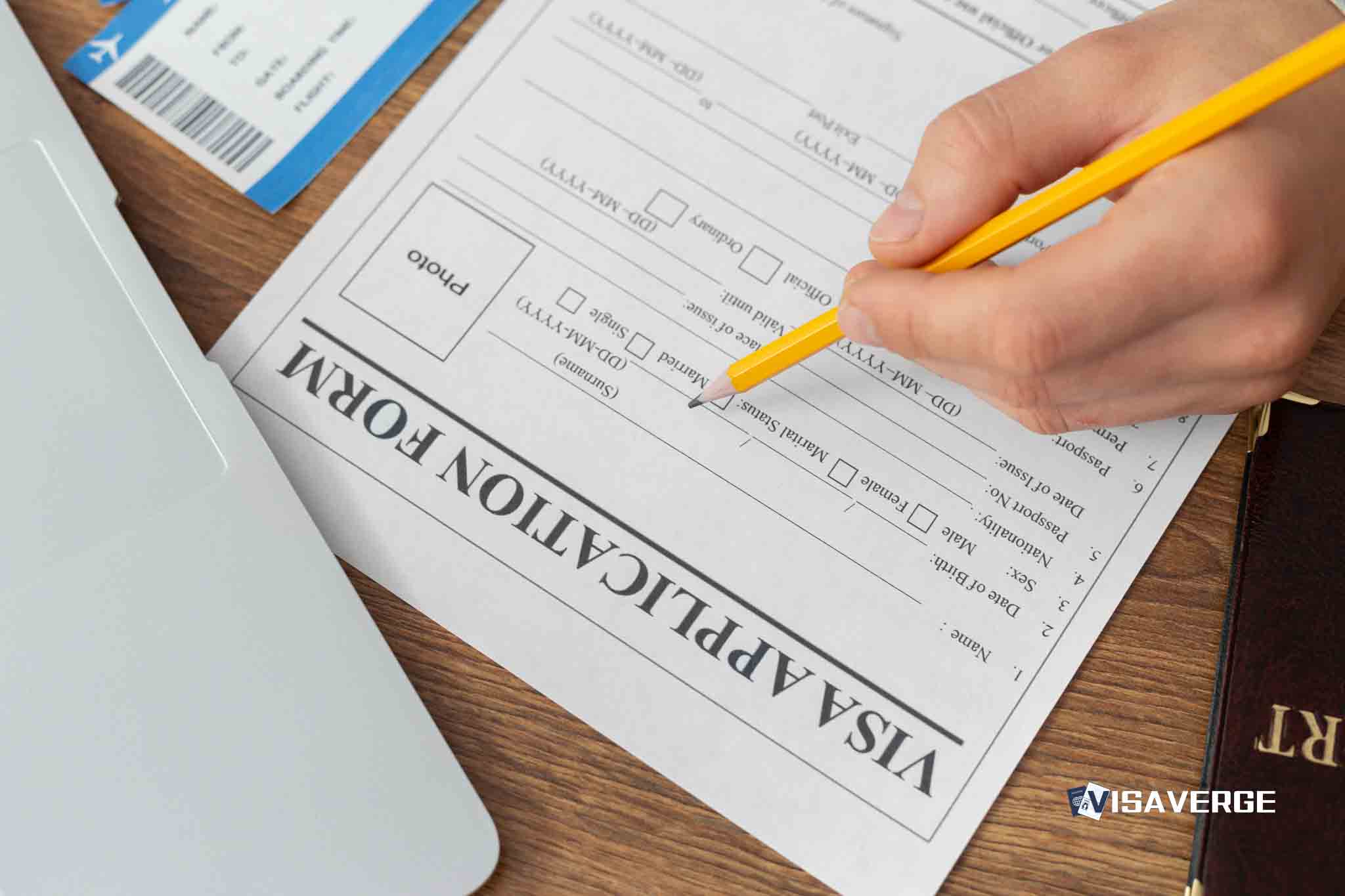
- Online DS-3035 Application: Fill out the J1 Visa Waiver Recommendation Application (DS-3035) online.
- Mail Your Documents: Print out the DS-3035 form bar code and mail it along with other required documents to the Waiver Review Division. The documents typically include a statement of reason, copies of your J1 visa, and your I-94 arrival/departure record.
- Case Number: After processing your application, you will receive a case number which you can use to check the status of your waiver application.
- Fees: Pay the required processing fee which is non-refundable.
- No Objection Statement: If you are applying based on a ‘no objection’ statement, you must get this from your home country’s government.
- Follow Up: For updates and next steps, you will need to check your case status online by entering your case number.
Final Thoughts
Securing a J1 visa waiver can be a lifeline for many who want to extend their stay in the U.S. without the constraint of the two-year home-country physical presence requirement. It’s a process that requires attention to detail and a clear understanding of the eligibility requirements. The U.S. Department of State offers valuable resources and information that can guide you through the application process. And remember, it always helps to seek the advice of an immigration attorney to navigate this complex field effectively.
For further guidance, visit the official U.S. Department of State J1 Visa Waiver page.
By carefully following the steps outlined and being thoroughly prepared with your documentation, you can make your case for a waiver as strong as possible. Good luck!
So there you have it, my friends! Understanding the J1 Visa Waiver doesn’t have to be as tricky as figuring out how to untangle your earphones. Remember, if you’re an exchange visitor thinking of extending your stay in the U.S., a J1 visa waiver might be the way to go. But don’t take my word for it – head over to visaverge.com for more on this fascinating topic! Happy exploring!
FAQ’s to know:
FAQ 1: What is the purpose of a J1 visa?
A J1 visa is a non-immigrant visa issued by the United States to research scholars, professors, and exchange visitors participating in programs that promote cultural exchange, especially to obtain medical or business training within the U.S.
FAQ 2: Who qualifies for a J1 visa waiver?
Several circumstances make a person eligible for a J1 visa waiver, including:
- Exceptional hardship to U.S. citizen or lawful permanent resident dependents
- Fear of persecution based on race, religion, or political opinion in the home country
- Request by a U.S. federal government agency for project work
- Request by state public health departments under the Conrad State 30 Program (for medical professionals)
- No objection statement issued by the home government
FAQ 3: How can I apply for a J1 visa waiver?
To apply for a J1 visa waiver, you can follow these steps: 1. Complete the online DS-3035 Application (J1 Visa Waiver Recommendation Application). 2. Print the DS-3035 form with the barcode and mail it to the Waiver Review Division, along with required documents. 3. Once your application is processed, you will receive a case number to track your application’s status. 4. Pay the non-refundable processing fee. 5. Obtain a “no objection” statement from your home country’s government if applicable. 6. Continuously check your case status online using your case number for updates and next steps.
Remember to carefully follow the instructions and gather all necessary documents while seeking guidance from official resources like the U.S. Department of State or an immigration attorney to ensure a successful J1 visa waiver application.
What did you learn? Answer below to know:
- True or False: The J1 visa is a non-immigrant visa issued to international visitors participating in cultural exchange programs in the United States.
- What circumstances may make an individual eligible for a J1 visa waiver? a) Exceptional hardship to dependents b) Persecution based on race, religion, or political opinion c) Request by a U.S. federal government agency d) All of the above
- What is the first step in applying for a J1 visa waiver? a) Mail required documents to the Waiver Review Division b) Pay the processing fee c) Fill out the J1 Visa Waiver Recommendation Application (DS-3035) online d) Obtain a ‘no objection’ statement from the home country government