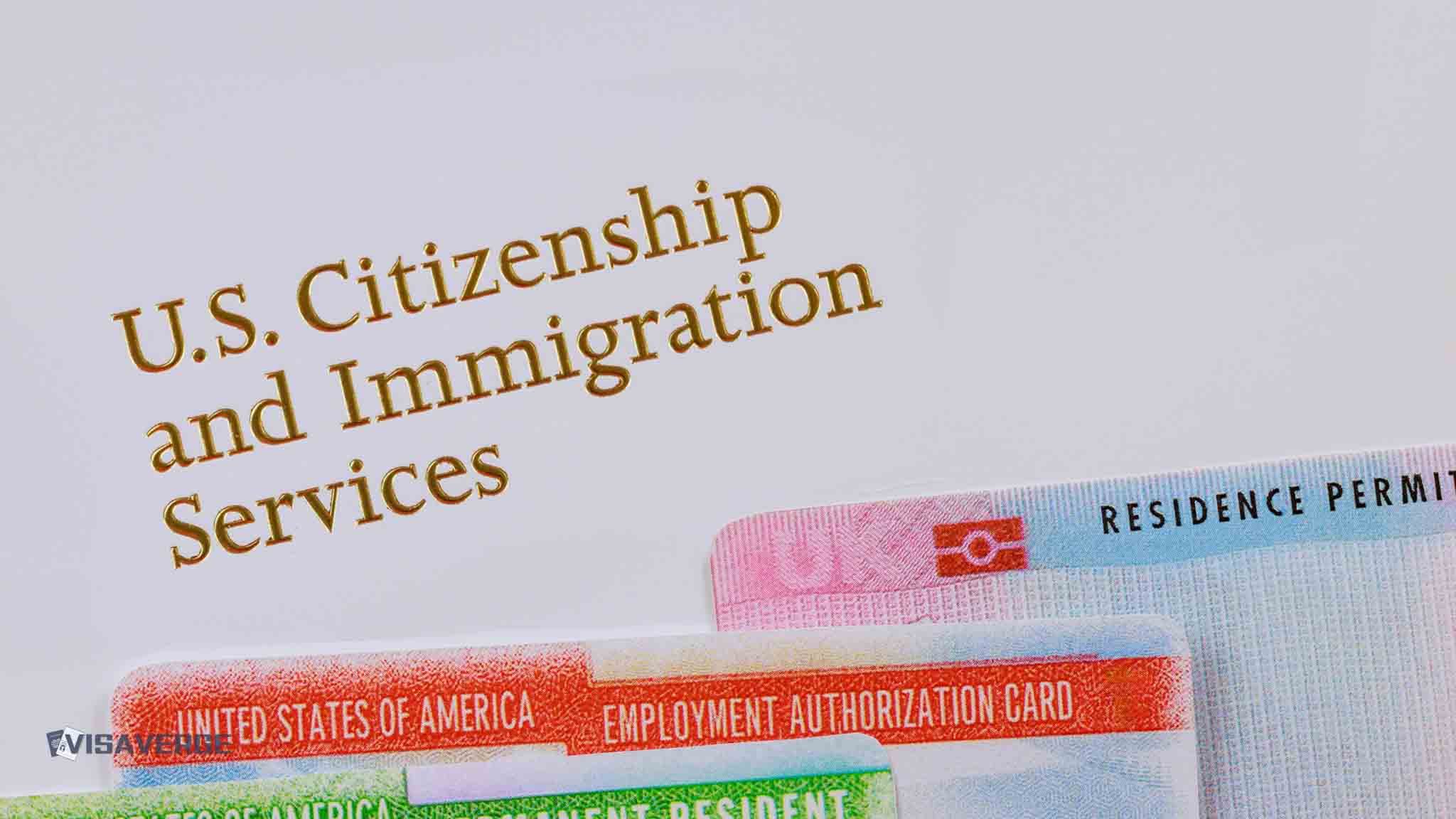
C09 is the eligibility code you write on Form I-765 when you want a work permit while your green card application sits at U.S. Citizenship and Immigration Services. It belongs to one group of people only: applicants with a pending Form I-485, Application to Register Permanent Residence or Adjust Status. If USCIS has your I-485 and has not decided it yet, C09 is your route to a legal job.
Two things about C09 changed in late 2025, and both of them cost applicants money and job security. On October 30, 2025, the Department of Homeland Security ended the automatic extension of work authorization for people who file renewal applications. On December 5, 2025, USCIS cut the maximum validity of a new C09 card from five years to 18 months. Together those changes mean a C09 holder now renews far more often and gets no safety net if USCIS runs late.
The fee picture changed too. A C09 work permit used to ride along free with a pending I-485. For anyone who filed the I-485 on or after April 1, 2024, it does not. The I-765 now carries its own $260 fee, and that fee comes due again on every renewal.
Free toolI-94 Expiration Calculator OnlineThis guide walks through the whole C09 process in order: confirming you qualify, filling in the eligibility code correctly on Form I-765, paying the right amount, understanding how long the card lasts, renewing before the gap opens, and traveling on Advance Parole without abandoning your green card case. Every fee and rule below was checked against USCIS sources on July 31, 2026.
C09 is easy to confuse with C08, the code for people with a pending asylum application. The distinction is simple and it matters: C08 rests on a pending Form I-589 asylum claim, while C09 rests on a pending Form I-485 adjustment application. Our complete guide to the C08 EAD category covers the asylum side in the same detail, and there is a side-by-side comparison further down this page.
One more framing point before the steps. A C09 card is not immigration status. It is permission to work, tied entirely to the life of your I-485. If your adjustment application is denied or withdrawn, the work authorization built on it ends with it. If you want the broader map of every letter-and-number code USCIS uses, see our breakdown of USCIS EAD category codes.
Confirm You Actually Qualify for C09
C09 comes from federal regulation 8 CFR 274a.12(c)(9), which authorizes work for a person whose application for adjustment of status under section 245 of the Immigration and Nationality Act is pending. The test is short. USCIS must have your Form I-485 on file, and it must still be undecided.
The underlying green card category does not matter. A family-based applicant married to a U.S. citizen, an employment-based applicant with an approved I-140, a diversity visa winner, and a special immigrant all use the same C09 code once their I-485 is pending. What matters is the pending I-485, not the path that produced it.
- You have filed Form I-485, Application to Register Permanent Residence or Adjust Status, with USCIS
- USCIS has accepted the I-485 and has not yet issued a final decision
- You are physically present in the United States
- You can document the pending I-485 with a Form I-797C receipt notice or equivalent evidence
There is no waiting period. C09 has no equivalent of the 150-day clock that asylum applicants face before they can request a C08 card. You may request the work permit the same day you file the I-485, which is why most people file the two forms in one package.
A denied or withdrawn I-485 ends the basis for a C09 EAD. USCIS can revoke work authorization that rests on an adjustment application that is no longer pending.
A handful of applicants use the C09 code but sit in special subcategories with their own rules and their own fee treatment: Special Immigrant Juveniles, T nonimmigrants adjusting under INA 245(l), U nonimmigrants adjusting under INA 245(m), Iraqi and Afghan special immigrants, abused spouses and children under the Cuban Adjustment Act or the Haitian Refugee Immigration Fairness Act, and VAWA self-petitioners. They still write (c)(9), but they file at no cost. Step 3 covers that.
Request C09 on Form I-765
The request itself is one line on one form. On Form I-765, Part 2, Item Number 27, you write your eligibility category in three boxes: (c), 9. Get that entry wrong and USCIS may reject the filing or adjudicate it under a category you do not qualify for.
USCIS gives C09 applicants two filing routes, and its instruction on the Form I-765 page is explicit: file Form I-765 together with Form I-485, or, if filing separately, submit a copy of your I-485 receipt notice or other evidence showing that your Form I-485 is pending.
Filing concurrently is the stronger move for most people. It starts the work permit clock on day one instead of months later, and it keeps one receipt number family together. Filing separately makes sense mainly when you did not need a work permit at first and your circumstances changed, for example a job offer arriving a year into the wait.
- Copy of the Form I-797C receipt notice for your pending Form I-485, if filing separately
- Two identical passport-style color photographs taken within 30 days
- Copy of your passport biographic page, birth certificate with certified translation, or other government-issued photo identity document
- Copy of your most recent Form I-94 arrival and departure record
- Copy of the front and back of any previously issued EAD, for a renewal or replacement
- Correct fee payment, or Form I-912 fee waiver request if you qualify
Your name and date of birth on the I-765 must match the I-485 exactly. Mismatched biographic data is a routine cause of Requests for Evidence that add months to a case.
For a walkthrough of the concurrent filing package and the payment mechanics that trip people up, see our guide to correct filing fees and payment methods for I-130, I-485, and I-765 concurrent filing.
Pay the Right Fee
This is where old advice does the most damage. For nearly two decades, an adjustment applicant who had paid the I-485 fee could request an EAD, and later renew it, at no charge. The fee rule that took effect on April 1, 2024 ended that for new filers, and USCIS Form G-1055 still reflects it in the edition dated May 29, 2026.
Which line you fall on depends entirely on the date you filed your I-485.
| I-485 filed with a fee on or after April 1, 2024, and still pending | $260 |
| I-485 filed on or after July 30, 2007 and before April 1, 2024, with the I-485 fee paid | $0 |
| General filing, online, where no fee-paid I-485 exception applies | $470 |
| General filing, paper, where no fee-paid I-485 exception applies | $520 |
| Special (c)(9) subcategories: SIJ, T and U adjusters, Iraqi and Afghan special immigrants, CAA and HRIFA abused spouses and children, VAWA self-petitioners | $0 |
| Typical new C09 applicant, initial or renewal | $260 |
Two details are worth pinning down. First, the $260 rate is the same whether you file on paper or online, unlike the general I-765 fee, which is $50 cheaper online. Second, the $260 is not a one-time charge. It applies to the initial card and to every renewal while the I-485 stays pending, so an applicant who now receives 18-month cards should budget for it roughly every year and a half.
Applicants who cannot afford the fee may request a waiver on Form I-912. Approval is based on documented household income, means-tested benefits, or financial hardship.
The additional non-waivable fees created by Public Law 119-21 apply to parole, TPS, and asylum-based EAD categories. They are not charged on a standard C09 filing, but check the current G-1055 before you write the check.
Know How Long the Card Lasts: 18 Months
USCIS Policy Alert PA-2025-27, issued December 4, 2025, cut the maximum validity period for initial and renewal EADs in the C09 category from five years to 18 months. The guidance took effect December 5, 2025 and applies to any I-765 request pending on that date or filed after it.
The same alert applies the 18-month cap to refugees under (a)(3), asylees under (a)(5), people granted withholding of removal under (a)(10), pending asylum applicants under (c)(8), and suspension of deportation and cancellation of removal applicants under (c)(10). It expressly rescinds the September 27, 2023 guidance that had created five-year cards.
USCIS explained the reasoning in the alert: shorter cards let the agency review an applicant’s background more frequently. The practical effect for a C09 holder is a shorter runway and more renewal cycles across the life of a green card case that often runs several years.
| Before | Now | |
|---|---|---|
| Maximum card validity | Up to 5 years | Up to 18 months |
| Automatic extension on timely renewal | Up to 540 days | None |
| Fee if I-485 filed on or after April 1, 2024 | $0 under pre-2024 rules | $260 each filing |
| Effective date of change | Sept. 27, 2023 guidance | Dec. 5, 2025 and Oct. 30, 2025 |
Cards already in your hand keep the expiration date printed on them. The reduction bites on the next card USCIS prints, not on the one you are carrying.
Renew Early, Because the Automatic Extension Is Gone
This is the single most important operational change for C09 holders, and the one most likely to cost someone a job.
DHS published an interim final rule at 90 FR 48799 on October 30, 2025, removing the automatic extension of Employment Authorization Documents. Effective that day, unless a statute or a Federal Register notice says otherwise, timely filing a renewal Form I-765 no longer extends the validity of an expiring EAD. C09 is not on the short list of exceptions, which covers TPS-related documentation under (a)(12) and (c)(19) and extensions granted by law such as STEM OPT.
USCIS confirmed the rule was still operative in the Handbook for Employers, M-274, sections 5.0 and 5.1, which the agency last reviewed on July 7, 2026. Those sections state plainly that the majority of people who file EAD renewals on or after October 30, 2025 are not eligible for an automatic extension. The 540-day grace period survives only for renewals that were timely filed before October 30, 2025 under 8 CFR 274a.13(d).
When a C09 card expires with the renewal still pending, work authorization stops on the expiration date. An employer running Form I-9 reverification has no lawful basis to keep you working until the new card arrives.
The defense is calendar discipline. USCIS recommends filing the renewal up to 180 days before the card expires, and states directly that the longer an applicant waits, the more likely a lapse becomes. With 18-month cards and no extension, the filing window is now the only buffer that exists.
- Day 1: write the card’s expiration date and the date 180 days before it into your calendar the day the card arrives
- 180 days out: file the renewal I-765 with the (c)(9) code and the $260 fee, the earliest USCIS accepts it
- Same week: confirm your I-485 is still pending, since a decided I-485 removes the basis for renewal
- On receipt: save the Form I-797C notice and check that the eligibility code on it reads (c)(9)
- 60 days out: if no card has arrived, contact USCIS and tell your employer a reverification date is approaching
VisaVerge covered the rulemaking and the reaction to it when DHS ended automatic EAD renewals. For tactics on compressing the renewal timeline, see our guide on how to fast-track your EAD renewal before expiration.
Travel: Advance Parole and the Combo Card
A C09 EAD lets you work. It does not let you travel. Leaving the United States while your I-485 is pending, without a valid travel document, is generally treated as abandonment of the adjustment application. The work permit does nothing to prevent that outcome.
The travel document is Advance Parole, requested on Form I-131. Adjustment applicants file it concurrently with the I-485 and the I-765, or separately at any point while the I-485 is pending.
The combo card is the item readers ask about most. USCIS designed it as a single card carrying the EAD data plus the words “Serves as I-512 Advance Parole,” so an adjustment applicant would not have to carry a card and a separate paper document. To be considered for one, you must file Forms I-765 and I-131 at the same time.
Do not plan around receiving one. USCIS has always reserved the right to issue separate employment authorization and Advance Parole documents when it cannot adjudicate both applications together, and the agency’s own combo card question-and-answer pages now sit in the USCIS archive rather than its active guidance. Assume two documents, and treat a single card as a convenience if it shows up.
Advance Parole permits you to request parole at a port of entry. It is not a guaranteed admission. A Customs and Border Protection officer makes the final call when you arrive.
Applicants in H-1B or L-1 status have a second option worth weighing. They can travel on the valid H-1B or L-1 visa and reenter in that status instead of using Advance Parole, which preserves the underlying nonimmigrant status rather than converting the trip into a parole entry.
What Happens When the I-485 Is Decided
C09 authorization exists only while the adjustment application is pending, so the green card decision ends it either way.
If USCIS approves the I-485, you become a lawful permanent resident. Your green card itself proves work authorization for Form I-9 purposes, and the C09 EAD becomes unnecessary. There is no renewal to file and no reason to file one.
If USCIS denies the I-485, the basis for the C09 card disappears. USCIS may revoke the document, and continuing to work on a card whose foundation is gone creates real exposure. What follows depends on your situation: a motion to reopen or reconsider, an appeal where one is available, removal proceedings where the underlying status has also lapsed, or a different work authorization category if you hold one independently.
If you hold H-1B or L-1 status alongside a pending I-485, maintaining that status gives you work authorization that survives an adjustment denial. Many applicants keep both deliberately.
C08 vs C09: The Difference in One Table
The two codes sit next to each other in the regulation and get mixed up constantly. They serve different populations and run on different rules.
| C08 | C09 | |
|---|---|---|
| Underlying application | Pending Form I-589 asylum | Pending Form I-485 adjustment |
| Regulation | 8 CFR 274a.12(c)(8) | 8 CFR 274a.12(c)(9) |
| Waiting period before filing | 150 days pending, no applicant-caused delay | None, file with the I-485 |
| Maximum validity since Dec. 5, 2025 | 18 months | 18 months |
| Automatic extension on renewal | None after Oct. 30, 2025 | None after Oct. 30, 2025 |
| Typical fee | $0 initial, plus applicable H.R. 1 fee | $260 with a fee-paid I-485 filed after April 1, 2024 |
| Ends when | Asylum case is finally decided | I-485 is approved or denied |
A person can hold both over time. Someone granted asylum on a C08 card who later files an I-485 to adjust from asylee to permanent resident moves into C09 territory for the work permit tied to that new application.
Common C09 Mistakes
Guides written before October 30, 2025 still describe the 540-day cushion as permanent. It is not. Renewals filed on or after that date get nothing, and an expired card means work stops on the expiration date.
The free EAD applies only to applicants whose I-485 was filed before April 1, 2024 with the fee paid. Anyone who filed later owes $260 on every I-765, and USCIS rejects underpaid filings outright.
Part 2, Item 27 takes (c) and 9. Entering C9, C-09, or an unrelated category invites a rejection or an adjudication under rules that do not fit your case.
A C09 card is not a travel document. Departing the United States without Advance Parole, and without valid H-1B or L-1 status to reenter on, generally abandons the pending I-485.
USCIS accepts renewals up to 180 days early and warns that late filers are the ones who lapse. With 18-month cards and no automatic extension, the early window is the entire safety margin.
After You Have the Card
Give your employer the physical EAD for Form I-9. A C09 card is a List A document, meaning it establishes both identity and work authorization on its own, so no additional document is required. Record the expiration date, because the employer must reverify on that date and now has no automatic extension to fall back on.
Keep every Form I-797C receipt notice USCIS sends. The receipt numbers on them are how you track the case, respond to a Request for Evidence, and prove a timely filing later.
Then set the renewal reminder immediately. The 18-month card and the end of automatic extensions have turned C09 from a set-and-forget document into something closer to an annual obligation. Readers weighing whether to request the card at all should read our answer on applying for a work permit with a pending I-485.
Rules in this area moved three times between July 2025 and December 2025. Confirm fees on Form G-1055 and eligibility guidance on the USCIS website before you file, and consult a licensed immigration attorney for advice on your own case.
Frequently Asked Questions
What is the C09 EAD category?
C09 is the eligibility code under 8 CFR 274a.12(c)(9) for a work permit based on a pending Form I-485 adjustment of status application. You enter (c)(9) in Part 2, Item 27 of Form I-765. The card authorizes employment only while USCIS still has the I-485 undecided.
Does the 540-day automatic extension still apply to C09?
No. DHS published an interim final rule at 90 FR 48799 effective October 30, 2025 that removed automatic EAD extensions. Renewals filed on or after that date receive no extension, and C09 is not among the exceptions. Only renewals timely filed before October 30, 2025 can still use the 540-day period.
How much does a C09 EAD cost in 2026?
Most applicants pay $260, the rate on Form G-1055 for anyone who filed the I-485 with a fee on or after April 1, 2024 while it remains pending. That $260 is identical on paper and online, and it applies to renewals as well as the initial card. Applicants who filed the I-485 before April 1, 2024 and paid its fee pay $0.
How long is a C09 EAD valid?
Up to 18 months. USCIS Policy Alert PA-2025-27, effective December 5, 2025, cut the maximum validity for initial and renewal C09 cards from five years to 18 months. Cards already issued keep the expiration date printed on them, so the reduction applies to the next card USCIS prints.
When should I file my C09 EAD renewal?
USCIS accepts renewal applications up to 180 days before the card expires and recommends filing at that point. Because no automatic extension exists for renewals filed on or after October 30, 2025, work authorization stops the day the card expires if the new one has not arrived. The 180-day window is the only buffer available.
What is the difference between C08 and C09?
C08 rests on a pending Form I-589 asylum application and requires 150 days of pending time before you can file. C09 rests on a pending Form I-485 adjustment application and has no waiting period, so you can file with the I-485 itself. Both now carry an 18-month validity cap and no automatic renewal extension.
Can I travel outside the United States with a C09 EAD?
Not on the EAD alone. A C09 card authorizes work, not travel. Leaving the country while the I-485 is pending without Advance Parole on Form I-131 generally abandons the adjustment application. Applicants holding valid H-1B or L-1 status can instead reenter in that status.
Will I get an EAD and Advance Parole combo card?
Only if you file Forms I-765 and I-131 at the same time, and even then it is not guaranteed. USCIS issues separate employment authorization and Advance Parole documents when it cannot adjudicate both applications together, and its combo card guidance pages now sit in the USCIS archive. Plan on two documents.