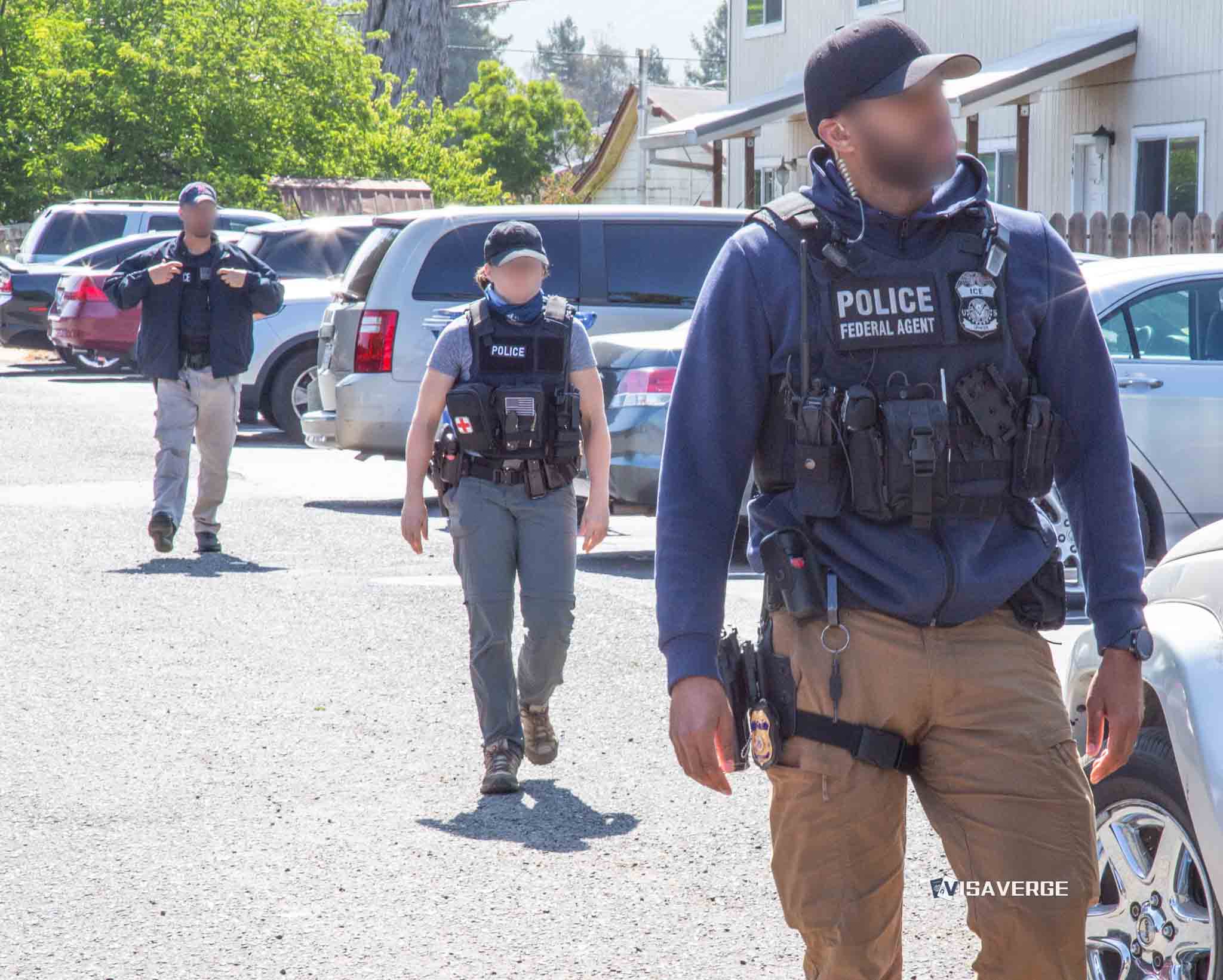
- ICE seeks OMB approval for a Boeing 737 Max 8 for dual-use deportation and senior official travel.
- The $70 million acquisition faces intense oversight scrutiny due to its luxury configuration and high-end amenities.
- A planned retrofit will convert interior cabins to accommodate seating for deportation missions while maintaining executive functions.
(UNITED STATES) — ICE has requested White House approval to acquire a high-end Boeing 737 Max 8 jet for deportations and senior official travel, a move that has drawn scrutiny over cost, mission fit, and transparency in federal procurement.
Section 1: Overview of DHS jet purchase proposal
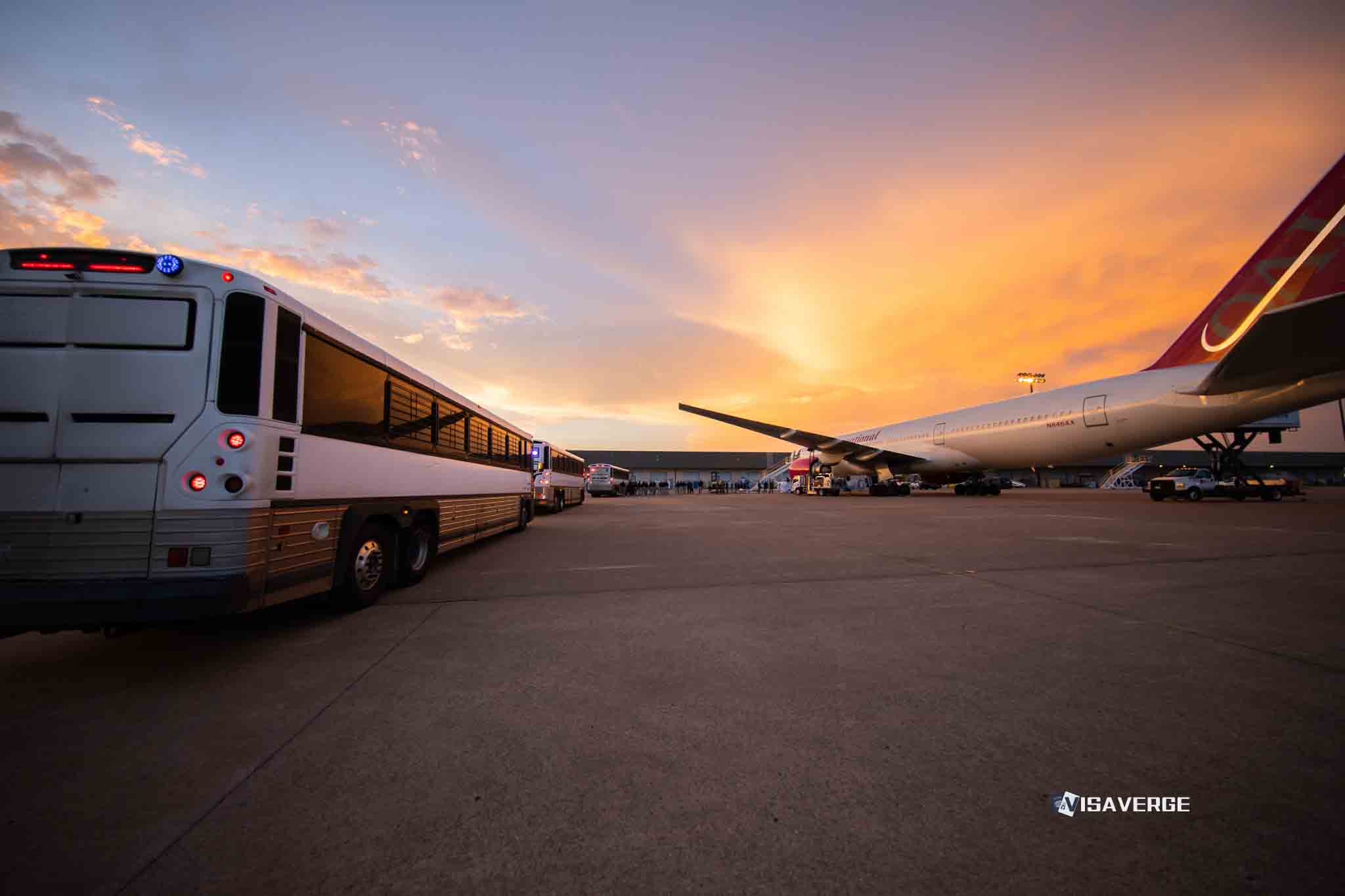
DHS/ICE is seeking Office of Management and Budget (OMB) approval to acquire a Boeing 737 Max 8 that DHS has recently leased and that has been described as a luxury jet. The request is notable because it ties a high-end cabin configuration to two very different missions: removal flights for immigration enforcement and travel for Cabinet or other senior officials.
OMB approval matters because large federal purchases typically require centralized budget review and sign-off. That process can test whether an acquisition fits the agency’s stated mission, whether the costs are justified against alternatives, and whether planned use matches appropriations expectations.
Secretary Kristi Noem has framed the acquisition as part of an “efficiency” push. Within DHS/ICE, the dual-use rationale is central: the same aircraft would support deportation operations and also serve as a senior-official travel platform. That combination is where oversight questions tend to form. Mission fit becomes harder to evaluate when requirements for detainee transport (custody, security layout, medical contingencies) sit alongside premium executive travel features.
Reports describe the cabin as unusually upscale for enforcement flying, with amenities associated with long-range executive configurations. DHS, for its part, has described the aircraft as intended for deportations after modifications and for senior travel as needed. Confirmed elements include the request for OMB approval and the stated dual-use purpose. The final operational configuration for detainee transport is the core open question.
Section 2: Aircraft details and retrofit plans
Retrofitting an aircraft for deportations usually implies changes that go beyond adding seats. Interior work often touches sightlines for escort staff, separation between groups, secure stowage, lavatory access protocols, and space for medical response. Safety and compliance also shape layout choices, including how many personnel fly relative to people in custody. None of those features can be inferred from a luxury layout alone.
DHS has said the aircraft is being retrofitted for deportations, including a plan to convert at least one bedroom into seating. That detail signals broader interior reconfiguration. A bedroom conversion is not just cosmetic; it can affect weight and balance, egress planning, and where escorts can position themselves during taxi, takeoff, and landing.
Cost comparisons can also mislead without consistent baselines. A claim that a civilian jet is cheaper than military aircraft can hinge on what is counted. Acquisition, retrofit, maintenance reserves, crew training, fuel, hangarage, and security costs can be included or excluded in different ways. For deportation flights, the escort staffing model and medical contingencies can change trip costs as much as the airframe.
One operational fact drives the rest: detainee capacity after retrofit. That figure affects how many flights are needed, how escorts are allocated, and whether the aircraft supports the stated enforcement purpose at scale.
Table 1: Structured comparison of reported metrics and unknowns| Metric | Reported Value/Claim | Notes on Scope (what is known/unknown) |
|---|---|---|
| Acquisition request | $70 million | Reported as the sought purchase amount; contract structure and full life-cycle cost remain separate questions. |
| Aircraft type | Boeing 737 Max 8 | Airframe is identified; final mission equipment package is not fully described publicly. |
| Luxury configuration (as described) | 18 passengers | Reported for the luxury layout; not the post-retrofit detainee capacity. |
| Sleeping capacity (as described) | 14 sleepers | Relevant to executive configuration; unclear what remains after interior changes. |
| Retrofit step cited | Convert at least one bedroom to seating | Confirms interior changes; does not establish final seating/custody arrangement. |
| Operating-cost comparison claim | 40% cheaper | Baseline is not fully specified; methodology may depend on included cost categories. |
| Savings framing | hundreds of millions | Claimed savings depend on utilization, avoided charters, and full cost accounting over time. |
| Key unknown | Final detainee capacity post-retrofit | Central metric for mission fit, staffing ratios, and flight frequency planning. |
Section 3: Context and prior spending scrutiny
October 2025 became a flashpoint for DHS aviation spending when the U.S. Coast Guard purchased Gulfstream G700 aircraft during a government shutdown period for senior leadership travel. Rosa DeLauro and Lauren Underwood, both House Appropriations Democrats, questioned the procurement approach and raised concerns that a sole-source path and spending choices were out of step with other priorities.
House Appropriations oversight can shape procurement in several ways. Report language can direct DHS to produce spending plans or limit how funds are used. Hearings can force the agency to explain why an aircraft is required, how many hours it will fly, and what alternatives were considered. Members can also ask for documentation on contracting routes, including whether competition was feasible.
Parallel to the luxury-jet request, ICE has been building an “own versus charter” strategy. The agency has acquired five non-luxury 737s and described an intent to own eight deportation planes. That shift can reduce reliance on charter brokers, but it also increases the need for clear utilization plans. Owning aircraft only pays off if the fleet flies enough missions to offset fixed costs, staffing, and maintenance cycles.
⚠️ Be mindful of potential conflicts of interest and sole-source concerns; ensure procurement decisions are justified with side-by-side baselines (like-for-like analyses) and documented need.
Table 2: Oversight context snapshot| Entity | Role | Relevance to Procurement |
|---|---|---|
| DHS | Cabinet department | Seeks OMB approval; sets mission requirements and acquisition rationale. |
| ICE | Operational component | Runs deportation flights; must align retrofit, staffing, and custody procedures with aviation choices. |
| Office of Management and Budget (OMB) | White House budget office | Reviews and approves major purchases; can press for justification and life-cycle cost clarity. |
| U.S. Coast Guard | DHS component | Prior aviation purchases drew scrutiny; a reference point for how DHS handles high-end aircraft. |
| Rosa DeLauro | House Appropriations Democrat | Raised concerns on DHS aviation spending and contracting approach. |
| Lauren Underwood | House Appropriations Democrat | Pressed DHS on justification and procurement route tied to senior travel aircraft. |
Section 4: Key figures and political context
Secretary Kristi Noem is closely associated with the efficiency framing around DHS aviation choices, including the deportation fleet buildout. Donald Trump’s mass-deportation agenda, as described politically, intensifies the question of aircraft utilization. Fleet planning becomes a math problem. Aircraft type, seating configuration, and turnaround time determine how many flights are needed to meet operational targets.
DHS has described the Boeing 737 Max 8 request as supporting deportations and Cabinet-level travel, with the aircraft’s luxury configuration reported to include features such as sleeping arrangements and amenities. Reports have also cited headline figures tied to the request—$70 million, 18 passengers, 14 sleepers—and a claim of being 40% cheaper than military aircraft used for ICE flights. Those numbers drive attention, but they do not resolve the central operational issue: how the post-retrofit layout supports detainee transport at scale.
Approval “despite concerns” usually signals a predictable set of pressure points rather than a foregone policy outcome. Budget reviewers may probe whether the aircraft’s executive configuration conflicts with removal-flight needs. Procurement staff may face questions about contracting routes and whether the government is buying the right tool for the job. Public scrutiny can also rise when senior travel and enforcement operations share a single platform.
USCIS is not a deportation-flight operator, but the precedent can still matter. If DHS adopts a broader logic that premium aircraft can serve mixed missions, internal controls for “agency travel for officials” may draw more attention across components. USCIS typically relies on formal interagency coordination for transport-related needs rather than maintaining aviation assets, so oversight expectations around documentation and mission fit can carry over even without a direct operational role.
Section 5: Data points and metrics to track
Cost debates tend to stay abstract until DHS/ICE provides measurable baselines. Readers tracking this proposal can focus on a short list of metrics that convert talking points into testable claims.
Start with acquisition cost justification. That means the operational requirement : expected annual flight hours, mission mix split between deportations and senior travel, and the planned schedule for maintenance downtime.
Next comes retrofit cost and scope. Interior rework, security-related modifications, and certification steps can materially change the total cost of ownership. Retrofit details also determine whether the aircraft is optimized for executive travel, detainee transport, or an uneasy compromise between the two.
Per-flight operating cost methodology is another key item. The most meaningful comparisons align like-for-like categories: fuel, crew, maintenance reserves, landing fees, security, and escort staffing. Charter comparisons should specify whether the charter price includes similar custody staffing and contingency planning. Military versus civilian comparisons should clarify which overhead buckets are being counted.
Utilization rate is where the “own versus charter” strategy succeeds or fails. Even with a fleet of eight deportation planes in view, the question remains whether each airframe will fly enough missions to justify fixed costs. Underuse is expensive. Overuse can shorten maintenance intervals and reduce availability.
Final detainee seating and custody configuration is the hinge point. Detainee capacity post-retrofit shapes flight frequency, escort staffing, and the extent to which the aircraft supports large-scale removals rather than niche missions. Without that figure, it is hard to evaluate mission fit.
✅ What ICE/ DHS officials should provide to support oversight: final detainee capacity post-retrofit, full cost breakdown (acquisition, retrofit, operating), and justification of mission fit versus alternatives.
This article discusses ongoing government procurement and budgetary decisions that may affect immigration enforcement. Readers should not construe this as policy endorsement or legal advice.
Treat all figures as reported in the source; for legal/financial implications, consult official DHS/OMB releases and corresponding fiscal documents.
A single document set would answer most of the controversy: DHS/ICE’s final post-retrofit layout, plus a like-for-like cost model comparing owned aircraft to charters and other federal options.