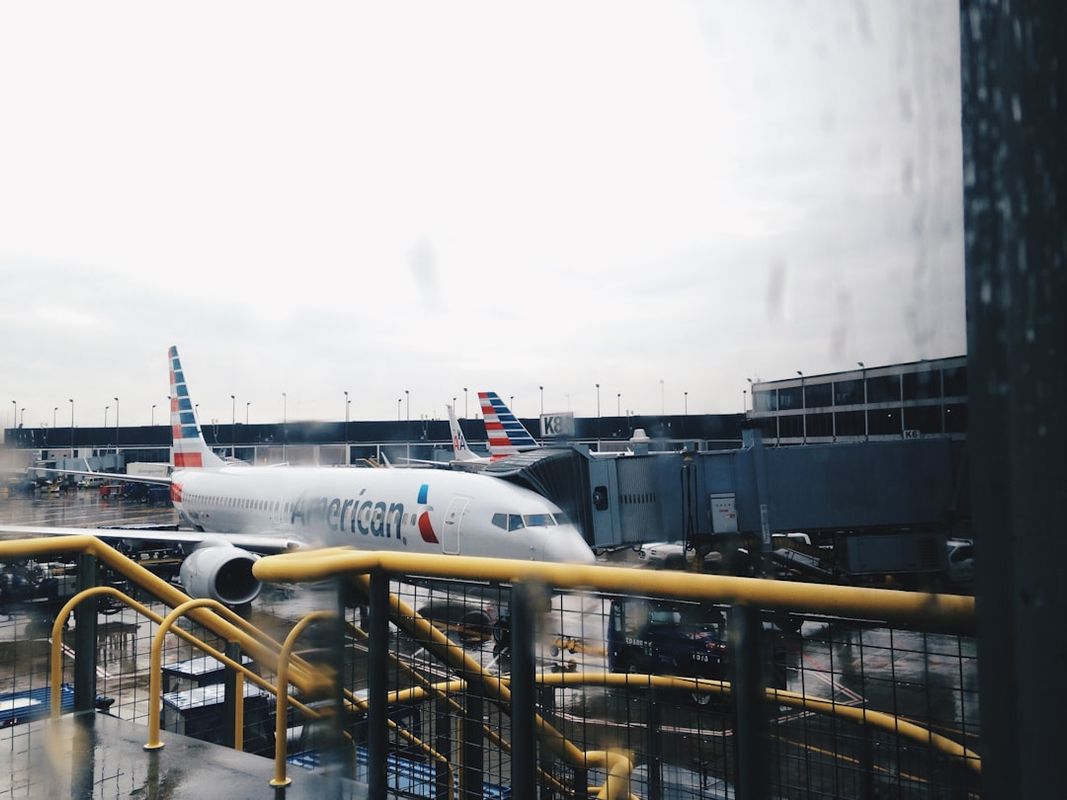
- Global pilots demand absolute authority to reroute flights away from dangerous conflict zones and navigation-spoofing risks.
- Middle East tensions and GPS interference are forcing crews to prioritize safety over commercial pressures and airline schedules.
- U.S. aviation faces severe DHS shutdown strains, with TSA staffing shortages causing four-hour wait times at major airports.
(MONTREAL, CANADA) — The International Federation of Air Line Pilots’ Associations demanded on April 7, 2026, that pilots have the final say over whether to fly through conflict zones, as war in the Middle East and a prolonged Department of Homeland Security shutdown added new pressure to global aviation.
The Montreal-based pilots’ group said commercial pressures must not override cockpit decisions when aircraft face risks from missiles, drones or disrupted navigation systems. Its call came as airlines kept operating through contested airspace and U.S. airport screening lines stretched under staffing strains.
Free toolUSCIS Receipt Number Decoder
In a position paper released in Montreal, the global union group said: “The Commander’s decision regarding the conduct or rerouting of a flight, including refusal to overfly a conflict zone, must be final and non-negotiable. Additionally, this decision must not be influenced by financial or other incentives, career repercussions or other penalties, or commercial pressures.”
That intervention landed during a period of elevated risk. As of April 7, 2026, the aviation industry was contending with an escalating conflict in the Middle East and a domestic funding crisis that had partially shut down DHS for more than 47 days.
The standoff has reached well beyond Washington. Approximately 50,000 TSA officers are working without pay, more than 500 have resigned, and security wait times have exceeded four hours at major hubs like Houston and Atlanta.
Pilots’ concerns center on who decides whether an aircraft should continue on a route when threats shift quickly. Airlines have long relied on government-issued risk assessments, but recent incidents and the spread of electronic interference have pushed crews to seek authority that cannot be overruled by commercial considerations.
The International Federation of Air Line Pilots’ Associations, or IFALPA, framed the issue as one of command responsibility. Its language drew a bright line between operational safety and airline business demands at a time when flights still cross corridors exposed to military activity.
Government agencies have issued warnings on multiple fronts. The FAA and DHS put out multiple Notices to Airmen, or NOTAMs, in early 2026 for Mexico, Central America, and South America, citing “military activities” and GPS (GNSS) interference after U.S. military operations against drug cartels and the seizure of Venezuelan President Nicolás Maduro in January 2026.
Those alerts reflected how rapidly aviation hazards can spread beyond active war zones. A pilot may face a route that remains technically open but carries degraded navigation, uncertain military traffic or changing threat assessments.
The Middle East conflict has sharpened that debate. A six-week-long conflict in the region has reshaped airspace, with Flightradar24 data showing Dubai-based Emirates operating at 69% capacity and Qatar Airways at 26%, even as hundreds of flights daily traverse airspace targeted by missiles and drones.
That has widened a rift between commercial imperatives and crew safety. For carriers, keeping flights moving protects schedules and revenue. For crews, the question is whether available intelligence and onboard conditions support a safe passage.
Recent events have strengthened pilots’ demands. A JetBlue flight had to take evasive action to avoid a U.S. Air Force tanker near Venezuela in December 2025, a near-miss that became part of the case for giving the cockpit the last word.
Flight crews have also reported “mental and emotional strain” when they are pressured to fly near active combat areas. The rise of “GPS spoofing” has added to that burden by degrading navigation integrity and raising doubts over what crews can trust in the cockpit.
Transportation Secretary Sean P. Duffy cast aviation safety in broader terms earlier this year. “Safety remains the FAA’s highest priority. When families board their aircraft, they should fly with confidence knowing the pilot behind the controls is the best of the best,” Duffy said on January 22, 2026, in a statement carried on the FAA newsroom.
His remarks underscored a point now at the center of the pilots’ argument. If the pilot behind the controls bears responsibility for the outcome, IFALPA argues, that pilot must also hold final authority to refuse a route through a conflict zone.
The pressure on aviation is not confined to the air. Travelers face record-breaking volumes, with 171 million projected for the spring season, at the same time that the closure of the Strait of Hormuz has pushed jet fuel prices from $2.17 to $4.57 per gallon.
That combination threatens airlines and passengers alike. Higher fuel bills can intensify pressure to preserve efficient routings, while packed terminals leave little room for operational disruption when weather, staffing or security problems pile up.
At U.S. airports, the Department of Homeland Security shutdown has become its own aviation risk. Secretary of Homeland Security Kristi Noem said on March 17, 2026: “The Democrats’ reckless DHS shutdown is causing TSA officers to go without pay for the third time in nearly six months. these political stunts are causing unneeded financial hardship for our TSA officers and their families. [DHS] will continue to carry out its mission to keep the homeland secure despite these challenges.”
Her statement, published in the DHS Newsroom, linked the budget fight to frontline conditions during the spring travel rush. Screening officers have continued to report to work without pay as lines lengthened at some of the country’s busiest airports.
The staffing strain extends beyond TSA. TSA and CBP shortages have reached critical levels, and Acting TSA Administrator Ha Nguyen McNeill warned in a March 25 hearing that the agency may be forced to close some airports if the budget standoff continues.
That warning has raised the stakes for passengers and carriers already coping with congested skies and volatile fuel costs. Airport disruptions can ripple across international networks in hours, especially when airlines have little reserve capacity.
Against that backdrop, the pilots’ demand speaks to a long-running tension in aviation governance. Regulators issue advisories, security agencies monitor threats, and airlines weigh the economics of cancellations and reroutes, but crews increasingly want a system that lets them reject a route without fear of financial loss or career damage.
IFALPA’s wording was explicit on that point. The group said the commander’s decision must not be shaped by “financial or other incentives, career repercussions or other penalties, or commercial pressures.”
That matters most when a threat is hard to quantify. Missile launches, drone activity and military operations can close airspace outright, but GNSS interference and spoofing often create a murkier environment in which routes remain open even as confidence in navigation drops.
For pilots, that ambiguity can turn a standard flight into a high-stress judgment call. For airlines, each reroute can mean higher fuel burn, delayed arrivals and schedule disruption. The question now is whether the industry will shift authority more decisively toward the cockpit.
The debate is unfolding as governments and airlines publish a steady stream of statements and advisories. Public updates are available through the DHS Newsroom, the FAA Official Statements, the White House Briefing Room, and the USCIS Newsroom, even as the immediate pressure falls on pilots and airport workers.
For crews, the issue is personal as much as procedural. They are being asked to operate in skies altered by war and interference, while many of the workers supporting the system on the ground face unpaid shifts and rising attrition.
For travelers, the effects are already visible in the form of longer waits, higher costs and uncertainty over schedules. For pilots, IFALPA’s demand boils the issue down to a single point of authority in the cockpit.
“The Commander’s decision regarding the conduct or rerouting of a flight, including refusal to overfly a conflict zone, must be final and non-negotiable.“