- Indian Embassy ordered nationals to shelter in place for 48 hours as U.S.-Israel tensions escalate.
- Evacuation efforts have successfully moved 1,862 Indians via land routes to Armenia and Azerbaijan.
- U.S. immigration policy has indefinitely frozen visa benefits for Iranians while revoking certain green cards.
(TEHRAN, IRAN) — The Indian Embassy in Tehran issued an urgent advisory on April 7, 2026, telling Indian nationals in Iran to “remain in their current locations for at least 48 hours” and avoid “all electric, military installations, and upper floors of multi-storey buildings” as U.S.-Israel escalation intensified across the country.
The mission also told Indians that any highway movement or movement toward border crossings must be “strictly coordinated” with embassy authorities. It activated 24/7 emergency helplines at +98 912 810 9115, +98 912 810 9102, +98 912 810 9109, and +98 993 217 9359.
Roughly 8,000 Indians are in Iran. As of April 7, the embassy had facilitated the evacuation of 1,862 nationals, including 935 students and 472 fishermen, through land routes to Armenia and Azerbaijan.
The warning came as President Trump escalated pressure on Iran on April 7. He posted on Truth Social, “A whole civilization will die tonight, never to be brought back again,” and set an 8:00 p.m. ET deadline for Iran to reopen the Strait of Hormuz.
U.S. and Israeli forces have targeted Iranian power plants, bridges, and the oil hub on Kharg Island. On the same day, the IDF issued a Farsi-language alert telling civilians to avoid all trains and railways until 9:00 p.m. local time, signaling imminent strikes on transport infrastructure.
For Indians in Tehran and elsewhere in Iran, the embassy’s message was direct: stay put, avoid exposed locations and do not move toward borders without clearance. Many Indian nationals were sheltering in place in embassy-hired hotels or trying to leave by land.
The Indian Embassy advisory added to a day of sharply rising warnings from governments and militaries as Tehran faced mounting pressure from abroad and residents weighed whether roads, rail lines and border routes would remain usable.
At the same time, the U.S. government announced and enforced a series of immigration measures affecting Iranians in the United States and those seeking to travel there. On April 6, 2026, the Department of Homeland Security announced the arrest of the family of late Iranian General Qasem Soleimani in Los Angeles.
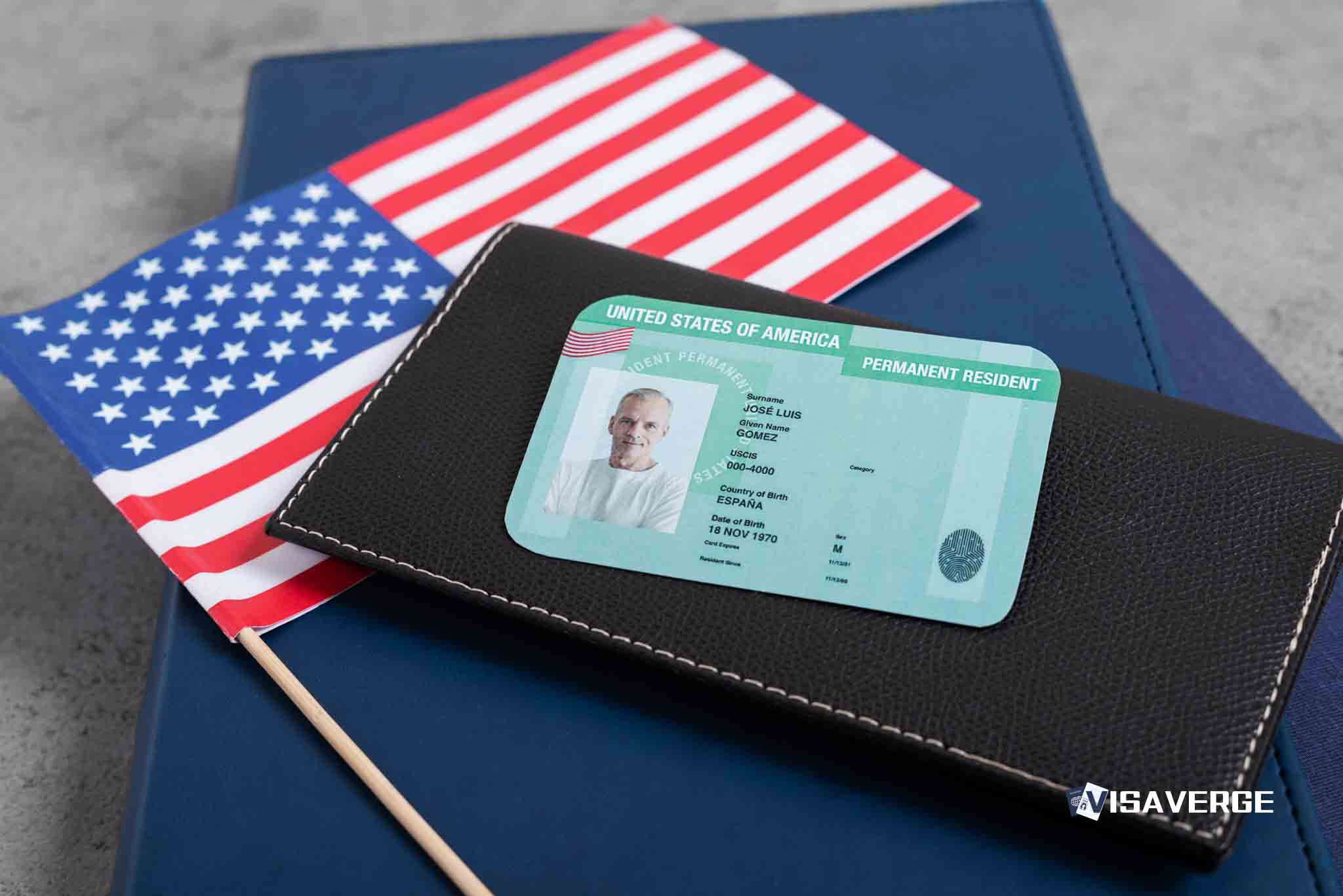
A DHS spokesperson said, “It is a privilege to be granted a green card to live in the United States of America. If we have reason to believe a green card holder poses a threat to the U.S., the green card will be revoked.”
DHS said the family’s lawful permanent resident status was terminated on the grounds of promoting “regime propaganda” and allegedly making fraudulent asylum claims. The action came one day before the Indian Embassy warning in Tehran and reflected a broader shift in U.S. enforcement during the crisis.
Separate from that case, U.S. Citizenship and Immigration Services put an indefinite hold on final decisions for pending and future immigration benefits for nationals of 39 “high-risk” countries, including Iran. The measure took effect Jan 1, 2026, under USCIS Policy Memorandum PM-602-0194.
The hold applies to benefits including H-1B, I-485, and N-400. For Iranian professionals already in the United States, it freezes the “adjustment of status” pathway.
USCIS has not limited the hold to new filings. It covers pending and future cases for anyone born in or holding citizenship from the designated countries, according to USCIS Newsroom.
Another restriction took effect on January 1, 2026, under Presidential Proclamations 10949 and 10998. The proclamations suspended all immigrant and nonimmigrant visa issuances for Iranian nationals.
Unlike earlier bans, this one includes F-1 student visas. Iranian students who might once have used that route to study in the United States now face an explicit bar.
The enforcement posture has unfolded while DHS operates under a partial shutdown that began on February 14, 2026, because of a congressional funding impasse. Even so, essential enforcement and national security operations have continued under the “One Big Beautiful Bill Act.”
During his confirmation in March 2026, Secretary of Homeland Security Markwayne Mullin said he intended to see ICE “become a transport more than the front line,” shifting focus toward high-profile removals during the conflict. That placed immigration enforcement inside the wider U.S. response to the confrontation with Iran.
Those U.S. measures have added another layer of uncertainty for Iranians far from the battlefield. In the United States, they face a freeze on green card processing and the risk of status revocation if authorities determine they are expressing support for the Iranian government.
Inside Iran, the pressure looks different. Indian nationals must weigh whether to remain indoors under embassy instructions or seek space in tightly coordinated land departures as threats expand from military sites to transport networks.
The Indian Embassy has not advised free movement. Instead, it tied border travel directly to embassy coordination, signaling concern that conditions on highways and crossing points could shift quickly.
That approach reflects the difficulty of moving civilians during an armed crisis. The IDF alert on trains and railways, combined with strikes on bridges and energy infrastructure, narrowed the routes that many foreign nationals might otherwise consider.
Tehran also remains a constrained diplomatic environment for Americans and other foreign travelers. The U.S. State Department’s Level 4: Do Not Travel advisory for Iran remains in effect, and the Swiss-led “Foreign Interests Section” in Tehran is temporarily closed, leaving no direct U.S. consular services in the country.
The advisory adds practical consequences for travelers caught in the country during the emergency. Without direct U.S. consular services in Tehran, Americans and those with U.S. immigration cases face fewer options for immediate in-country assistance as military activity intensifies.
For India, the challenge is both diplomatic and logistical. With about 8,000 citizens in Iran and 1,862 already evacuated by April 7, embassy officials must balance the risks of keeping people sheltered against the risks of moving them through border corridors exposed to changing security conditions.
The figure of 1,862 includes 935 students and 472 fishermen, showing that those affected are not limited to one group or one city. Some are likely far from Tehran, while others may be concentrated in temporary accommodations arranged by the embassy.
The embassy’s hotline numbers suggest it expects sustained demand for emergency contact, movement approvals and border coordination. Its language was unusually restrictive, instructing nationals not only to stay indoors but also to avoid upper floors of multi-storey buildings.
That warning pointed to concern over blasts, structural damage or strikes near dense urban areas. It also matched a day in which threats and military messaging moved beyond military sites alone and into civilian movement patterns.
President Trump’s deadline over the Strait of Hormuz sharpened the sense of urgency. His statement, “A whole civilization will die tonight, never to be brought back again,” came amid a campaign that already included strikes on power plants, bridges and Kharg Island.
Kharg Island is central to Iran’s oil system, and attacks on it underlined the breadth of the confrontation. Combined with warnings on railways, the strikes suggested pressure on both economic and transport lifelines.
For Indians in Iran, the immediate message was less about geopolitics than survival. Stay indoors. Avoid military areas. Do not head for the border unless the Indian Embassy approves the move.
For Iranians tied to the United States, the message from Washington was equally stark, though in a different form. Travel routes are closing, visa pathways are shut and immigration benefits can stall indefinitely under rules now in force.
The combination of battlefield pressure, transport warnings and immigration restrictions leaves civilians facing hard choices on both sides of the border. In Tehran, the Indian Embassy is urging patience and strict compliance. In Washington, agencies are tightening entry and status rules even as the conflict grows.
Official U.S. guidance on those policies appears through DHS Press Releases, while the standing U.S. warning on travel to Iran remains posted in the U.S. State Department Iran Travel Advisory. On the ground in Iran, however, the clearest instruction for thousands of Indians came from their mission in Tehran: “remain in their current locations for at least 48 hours.”