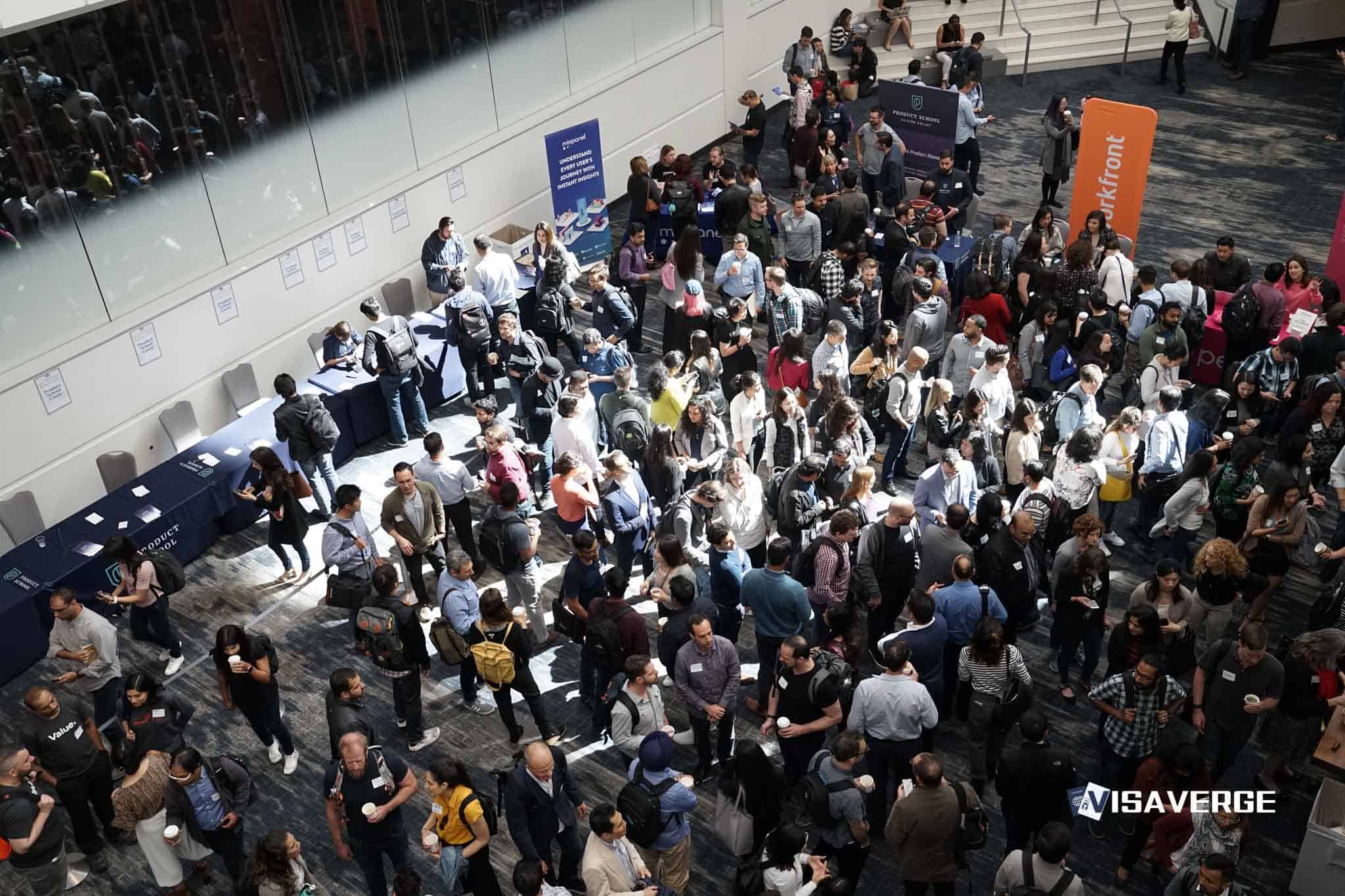
(UNITED STATES) — A poll of over 1,600 U.S.-based scientists reported that more than 75% were considering leaving the country, as recent surveys and enrollment figures feed warnings of a “brain drain” from the United States in 2024–2025.
Overview of the concern

Separate reporting and expert analysis from 2024–2025 has warned that a significant “brain drain” — especially of scientists, researchers, graduate students, and other highly skilled workers — is underway and could accelerate if current policies continue.
Key reported indicators cited in that coverage include:
– A 30–40% decline in new international students in the 2024–2025 academic year.
– A 15% drop in overall international student enrollment in the same period.
– An estimated economic loss of about $7 billion linked to reduced international enrollment.
Talent pipeline and career impacts
Commentators have linked several developments to narrower career prospects for early‑career researchers, arguing the risk extends beyond individual careers to the entire research and innovation system that depends on a steady flow of:
– Graduate students
– Postdoctoral researchers
– Highly skilled workers
Analysts point to multiple pressures on the pipeline:
– Fewer international students and cuts to graduate admissions
– Diminished postdoctoral positions
– Reduced campus research capacity and fewer future hires for labs and industry
Federal funding, institutional support, and policy uncertainty
Reported developments in federal research funding and institutional support for 2024–2025 affected agencies central to science, including:
– NSF, NIH, NASA, NOAA, CDC, EPA, and FDA
Commentators tied these developments to:
– Hiring freezes
– Rescinded fellowships
– Canceled grants
Policy and regulatory uncertainty has also been highlighted:
– Proposed DHS rules and visa-processing changes that could threaten international students’ and postdocs’ ability to maintain status for the duration of programs
– Long green-card backlogs
– H‑1B selection problems that reduce permanency prospects for skilled foreign workers
These policy frictions were described as compounding funding changes because they affect daily logistics — maintaining lawful status and planning multi-year career steps.
Concrete migration examples and global recruitment
Named departures cited in the coverage include:
– Kai Chen to Canada
– Jonathan McDowell to the U.K.
– Yi Shouliang to China
The reporting also described active recruitment of U.S. researchers by foreign universities and governments, including programs such as “Choose Europe for Science”, illustrating competitive international talent-attraction efforts.
Broader measures of exit interest
The pattern was discussed alongside broader mobility measures beyond academia:
– One news analysis reported Americans moving abroad in Q1 2025 was more than double Q1 2024.
– Polls were cited showing:
– 40% of Americans overall interested in moving abroad
– >50% of millennials
– >60% of Gen Z
Risks to innovation, industry, and national security
Analysts framed the concern as long-term losses in:
– Innovation
– Startups and high-value economic output
– High-growth startup formation (including fewer immigrant founders, historically a major source of U.S. unicorns)
Practical implications highlighted:
– Reduced competitiveness in AI, biomedical research, and climate science
– Slower rates of high-growth startups
– Gaps in defense-relevant and applied R&D talent, affecting national security and industrial capacity
How uncertainty ripples through institutions
The reporting explained how these trends can cascade:
– Reduced enrollment → fewer research assistants and lab positions
– Funding constraints → limited hiring and fewer training opportunities
– Institutional changes (dismantling or politicization of research environments) → decreased attractiveness for multi-year career commitments
Differing assessments and remaining uncertainty
Even where analysts agreed on direction, they noted variability in methods and results:
– Surveys, enrollment figures, and poll methodologies differ
– Projections beyond 2025 are uncertain and depend on:
– Policy decisions
– Global labor markets
– Demographic shifts
Summary of the 2024–2025 indicators
The principal signals cited as early signs of strain included:
– Poll: >75% of over 1,600 U.S.-based scientists considering leaving
– International student changes:
– 30–40% decline in new international students (2024–2025)
– 15% drop in overall international student enrollment (2024–2025)
– Estimated $7 billion economic loss linked to reduced enrollment
Analysts presented these as early indicators that, without policy reversals, the United States could face a sustained challenge in retaining and attracting research and high-skilled talent.
Proposed responses cited in the analysis
The reporting converged on a set of commonly proposed remedies aimed at reversing drivers of talent loss:
– Restore research funding
– Reform STEM immigration
– Modernize labs and institutional support
These prescriptions were described as intended to reduce the conditions that might push researchers, graduate students, and highly skilled workers to build their futures elsewhere.
Recent data reveals a looming crisis for U.S. innovation as scientists and international students exit the country at record rates. Driven by funding freezes and immigration hurdles, this exodus impacts critical fields like AI and defense. Analysts suggest that unless the government restores research grants and reforms the STEM visa pipeline, the long-term economic and national security of the United States will be significantly compromised.