- Vienna International Airport halted all operations Tuesday due to severe black ice on runways.
- A phased restart began midday, yet significant delays and diversions continue to plague travelers.
- January 2026 U.S. policy shifts increase scrutiny for travelers facing irregular routings and documentation gaps.
(VIENNA, AUSTRIA) — Vienna International Airport’s temporary closure on Tuesday, January 13, 2026, is the kind of winter disruption that turns a routine connection into an all-day slog.
If you’re flying through VIE today, the airport’s phased restart helps, but the passenger experience is still defined by de-icing queues, missed connections, and messy rebookings.
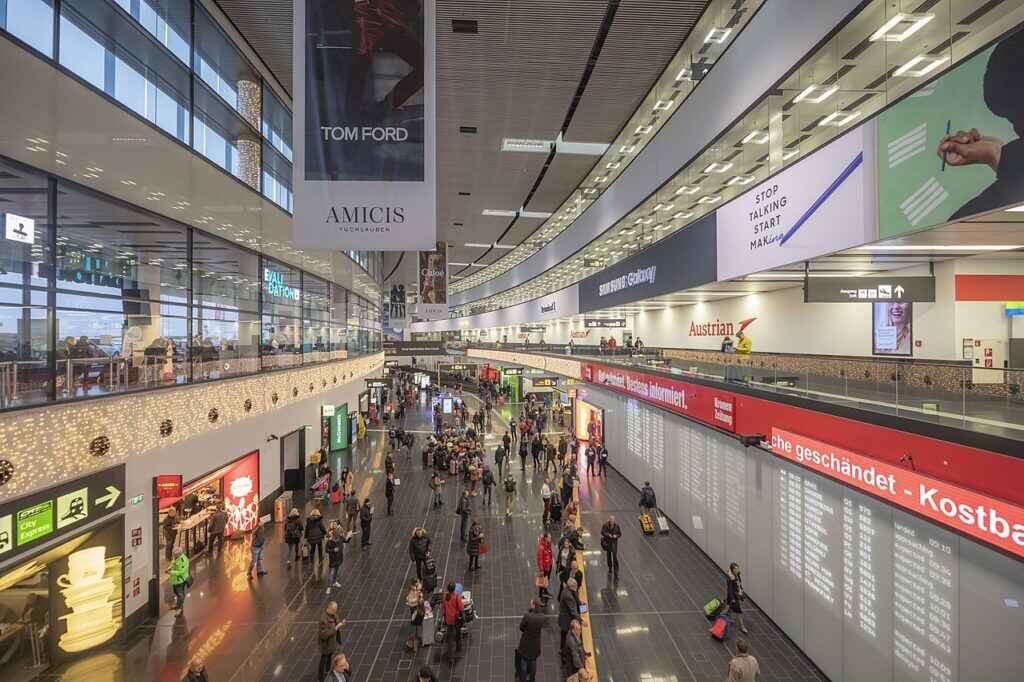
My quick verdict: If you have a choice, avoid connecting via Vienna for the next 24–48 hours. If you’re already committed, VIE can be efficient on a normal day, but during extreme icing it becomes a stress test for airlines, ground staff, and your travel documents.
What follows is a practical “review” of the Vienna experience during this event: what works, what doesn’t, and what to do if your diversion or delay intersects with schengen entry rules and the tougher U.S. immigration posture in January 2026.
1) Vienna Airport status and immediate impacts
Vienna International Airport (VIE) halted both departures and arrivals after freezing rain created black ice that repeatedly refroze on the runway.
When a runway is compromised, it’s not just “slower ops.” It’s often zero ops, because braking performance and directional control are non-negotiable.
VIE began a phased restart late morning.
| Operational step | What it meant for travelers |
|---|---|
| Runway closure | No arrivals, no departures, no “we’ll try” |
| Departures resumed at 11:00 a.m. | Long lines at de-icing pads and gates |
| Arrivals resumed at 12:00 p.m. | Backlogs hit stands, bags, and connections |
A phased restart sounds reassuring. In practice, it means you’re joining several queues at once.
- Aircraft de-icing queues grow fast when only a limited number of pads are usable.
- Slot controls tighten when the airport tries to re-sequence a day’s schedule.
- Crew duty-time limits kick in after hours of waiting at the gate.
The immediate outcomes are predictable and unpleasant.
- Diversions to Munich, Frankfurt, Cologne, and Venice
- Rolling cancellations as crews and aircraft end up “out of position”
- Missed onward connections across Central Europe
- Baggage separation, especially on forced overnights
Diversions also spread pain to nearby hubs. munich and frankfurt can absorb volume, but they also inherit stranded passengers, extra bags, and last-minute stand changes.
Cologne and Venice can be easier for parking, but harder for rebooking options.
Other regional airports reported “limited mode” operations. Budapest, Bratislava, and Prague all felt the same weather system.
That matters, because your “backup plan” airport may be struggling too.
2) Policy context: key USCIS & DHS shifts (January 2026)
This Vienna event is weather. Your onward trip may not be “just travel” anymore.
Two January 2026 U.S. policy realities raise the stakes for disrupted itineraries:
- First, USCIS Policy Memorandum PM-602-0194 took effect January 1, 2026. It introduces a “Hold and Review” posture for certain pending benefit applications tied to an expanded set of designated high-scrutiny countries.
- Second, the expanded “high-risk country” list can translate into:
- Longer adjudication timelines
- More requests for evidence
- More questions at travel touchpoints
Why does this matter when you’re stuck in Vienna?
Disruptions force odd routings. They also create messy travel records. A last-minute reroute like VIE–FRA–JFK instead of VIE–IAD can later produce document mismatches.
Think boarding passes, entry stamps, and itinerary receipts that don’t line up cleanly.
The travelers most exposed right now include:
- People with pending USCIS applications
- Recent entrants with limited travel flexibility
- Anyone with near-term travel tied to interviews or stamping
- Travelers who must appear for USCIS appointments
When travel becomes chaotic, consistency becomes currency. Keep your paperwork tight, even when your itinerary isn’t.
3) Enforcement and verification initiatives
DHS and USCIS also launched Operation PARRIS on January 9, 2026, starting in Minnesota.
The concept is straightforward: reexamine certain cases using new background checks and deeper verification.
For travelers, heightened verification tends to show up as:
- More evidence requests
- Longer processing waits
- Stricter consistency checks across travel history
If you’re stranded mid-itinerary, the practical concern is re-entry. You want to be ready for the basics:
- Where you went
- Why the routing changed
- How long you stayed
- What status or authorization you hold
A weather diversion is normal. A confusing story is what triggers problems.
4) High-risk country policy and public statements
Secretary Kristi Noem’s January 9 enforcement statement signaled a tougher posture. Messaging like that can change how screening feels on the ground, even when the trigger was weather.
Extra scrutiny often looks like:
- More document requests at check-in and boarding
- More questions during inspection
- Additional identity verification steps
- Device-related questions in some cases
If you’re in a higher-scrutiny group, the best play is calm consistency. Answer what’s asked. Match your documents. Don’t guess dates. Use your proof of disruption.
In Vienna-style events, confusion is common. Agents see dozens of passengers with strange routings. Your job is to be the passenger with a clean file.
5) Key facts and policy details for travelers during emergencies
This is where the “review” becomes practical. During an icing shutdown, the airport experience is dominated by operational bottlenecks.
Here’s what extends disruption the most at VIE today:
- Limited de-icing capacity, especially if only two pads are fully operational
- Staffing fragility, with ramp sick leave and hazardous road conditions
- Crew duty time limits that turn a delay into a cancellation
Airline-side, you’ll usually face one of three outcomes:
- Re-accommodation on the next available routing
- Reroute via another hub, sometimes on a partner carrier
- Refund if you choose not to travel
EU rules may apply depending on your itinerary and carrier. Weather is usually outside airline control, but duty-of-care items can still matter.
Hotels and meals are often discretionary during extreme weather events. Your card benefits may matter more than the airline.
From an immigration compliance standpoint, emergency or discretionary relief concepts exist in U.S. immigration practice. Eligibility is personal, and outcomes vary by case.
Still, the core travel habits are universal:
- Document the disruption in writing
- Save receipts and airline messages
- Keep a clear timeline of your movements
If you have complex status issues or a tight expiration window, this is when professional advice can be worth it. A missed deadline is always harder to fix later.
6) Context for international travelers: why a European diversion can still matter for the U.S.
Many travelers treat intra-Europe diversions as “no big deal.” Operationally, they’re routine. Legally, they can still change your footprint.
The January 1 expansion of U.S. travel restrictions coincides with more sensitivity to routing changes and documentation gaps. Add modern data screening, and manifest accuracy matters more.
A diversion can also force you into decisions you didn’t plan for:
- Do you stay airside, or do you enter the country?
- Do you collect bags and re-check tomorrow?
- Do you overnight, and where?
Even within Schengen, your entry record can shift depending on where you clear immigration. That can matter later when you’re asked, “Where did you enter?” or “How long were you in-country?”
7) Impact on affected individuals (Schengen, transit vs entry, and U.S. timing)
During disruptions like this, travelers often discover a hard truth: you can be “in transit” until someone hands you a hotel voucher that requires you to clear immigration.
Here’s how it plays out at airports like Vienna, and at common diversion points:
- If you remain airside, you may be treated as a transit passenger.
- If you collect bags, take a landside hotel, or re-check later, you may enter.
- Entry can trigger Schengen stay counting, even if you never planned to visit.
That’s where visa and stay-limit rules get real, fast. The visa requirement badge included here is the quickest way to confirm what your nationality requires for Austria or a diversion country.
Follow what it displays for visa-required, visa-free, or visa-on-arrival outcomes.
If you’re pushed landside unexpectedly, ask the handling agent two direct questions:
- “Am I being processed as an entry, or remaining in transit?”
- “Will my bags be short-checked to my final destination?”
If your documents end up separated in delayed bags, you still have options:
- Request the airline’s baggage tracing reference before leaving the desk
- Keep photos of your passport bio page and visa pages stored securely
- Contact your embassy or consulate if you lose access to required originals
For U.S.-bound travelers, disruptions also collide with appointments and return windows:
- Some USCIS field office appointments are rescheduled when offices close.
- If you miss an appointment due to travel disruption, document it immediately.
- USCIS can be reached at 800-375-5283 for rescheduling requests.
If you’re from a higher-scrutiny country group, travel risk rises when you leave the U.S. during heightened vetting. In plain terms, getting stuck abroad is the scenario you’re trying to avoid.
8) Official government sources and references
For operational updates and compliance checks, stick to primary sources:
- Vienna Airport updates
- USCIS Newsroom
- USCIS Policy Manual
- DHS press releases
For country-specific entry and transit questions during diversions, consult your embassy or consulate guidance before you accept a landside overnight plan.
The “product review” part: what it’s like flying today (seat, comfort, service, entertainment, amenities)
Because VIE’s disruption hits both short-haul and long-haul banks, most affected passengers today are on narrowbodies.
Think Airbus A320-family jets and Boeing 737s used across Central Europe.
Seat and comfort (short-haul reality)
On typical European narrowbodies, economy seat pitch is commonly 29–31 inches.
Seat width is usually 17–18 inches, depending on aircraft and seat maker. Power outlets are inconsistent in short-haul economy. USB is hit-or-miss.
That matters more during a day like today. A three-hour delay without power feels longer than the flight.
If you’re connecting to a long-haul leg, your best comfort upgrade today is not a seat. It’s schedule resilience.
A misconnect costs more comfort than any premium legroom row saves.
Food and service (what you’ll actually get)
During irregular operations, onboard service often gets simplified. Catering trucks get delayed, too.
- Short-haul buy-on-board menus to be limited
- Water service to be prioritized over full carts
- Crews to focus on safety and timing
If you hold Star Alliance Gold or business class on a long-haul ticket, lounge access becomes your best “meal plan.” Vienna lounges can be a refuge, but crowding spikes during mass rebooking.
Entertainment and connectivity
European short-haul entertainment is usually your own device. Some carriers offer streaming portals, but you shouldn’t count on it during a disruption day.
Wi‑Fi, if offered, may be unreliable when aircraft swap at the last minute.
- Bring a charged power bank
- Bring offline downloads
- Keep screenshots of bookings, reroutes, and receipts
Amenities that matter today
In weather events, the most valuable amenities are boring: clear gate and app notifications, a staffed transfer desk with authority to rebook, and fast baggage tracing when diversions separate bags and passengers.
This is where full-service network carriers tend to outperform ultra-low-cost carriers. Lufthansa Group and Austrian-style transfer infrastructure usually offers more rebooking pathways. Low-cost carriers often refund and move on.
Competitive context: Vienna vs nearby alternatives
| Hub | Strength in disruptions | Tradeoff |
|---|---|---|
| Vienna (VIE) | Compact airport, efficient on normal days | De-icing bottlenecks cascade quickly |
| Munich (MUC) | Huge network, many rebooking options | Crowd levels spike fast during diversions |
| Frankfurt (FRA) | Maximum reroute inventory | Long walks, complex terminals, missed-connection risk |
| Venice (VCE) | Can be a relief valve for diversions | Fewer onward options for long-haul rebooks |
Miles and points: what this disruption means for your account
If you’re rebooked today, pay attention to earning and crediting.
- Rebookings on partner airlines may post differently for miles and status credit.
- Keep your original ticket receipt and the reissued coupon numbers.
- If your fare class changes, your mileage credit can change too.
If you’re chasing status, irregular operations can be a hidden opportunity. Same-day reroutes sometimes open higher fare buckets.
That can mean more redeemable miles and better status credit. It depends on the program and ticket.
For award tickets, a weather cancellation can be your best friend. Airlines often have more flexibility to reroute award passengers during waivers.
Ask for options that protect your connection, not just the fastest departure.
Who should book this?
Book Vienna (later this week) if: you want a compact, easy-to-understand connection airport, and you can build a long layover buffer.
Avoid Vienna (next 24–48 hours) if: you have a tight U.S.-bound connection, a time-sensitive USCIS appointment, or fragile immigration timing.
Think twice before departing the U.S. right now if: you’re in a higher-scrutiny group under January 2026 policies and your return plan has little slack.
If you’re traveling through Vienna today, take the first reroute that keeps you on one ticket to your final destination. Save proof of the runway closure and rebooking messages before you leave the airport.
That documentation matters as much as your boarding pass when the questions come later.
Vienna Airport’s temporary closure due to extreme icing on January 13, 2026, has triggered a cascade of travel disruptions across Central Europe. Although the airport has resumed operations, travelers face significant delays and rerouting. This event is complicated by new U.S. immigration policies taking effect this month, which demand stricter documentation and consistency from international travelers, particularly those in high-scrutiny categories or with pending USCIS applications.