- The inverted flag is legally protected symbolic speech under the First Amendment, despite being a violation of etiquette.
- Historically used for maritime distress, it now signals political alarm or protest regarding national issues.
- The U.S. Flag Code is advisory rather than criminal, meaning the government cannot punish those who fly it upside down.
(UNITED STATES) An upside-down American flag is a distress signal first, a protest symbol second, and protected speech under the First Amendment. In today’s polarized climate, travelers, immigrants, and bystanders are more likely to see it at rallies, homes, campuses, and public buildings.
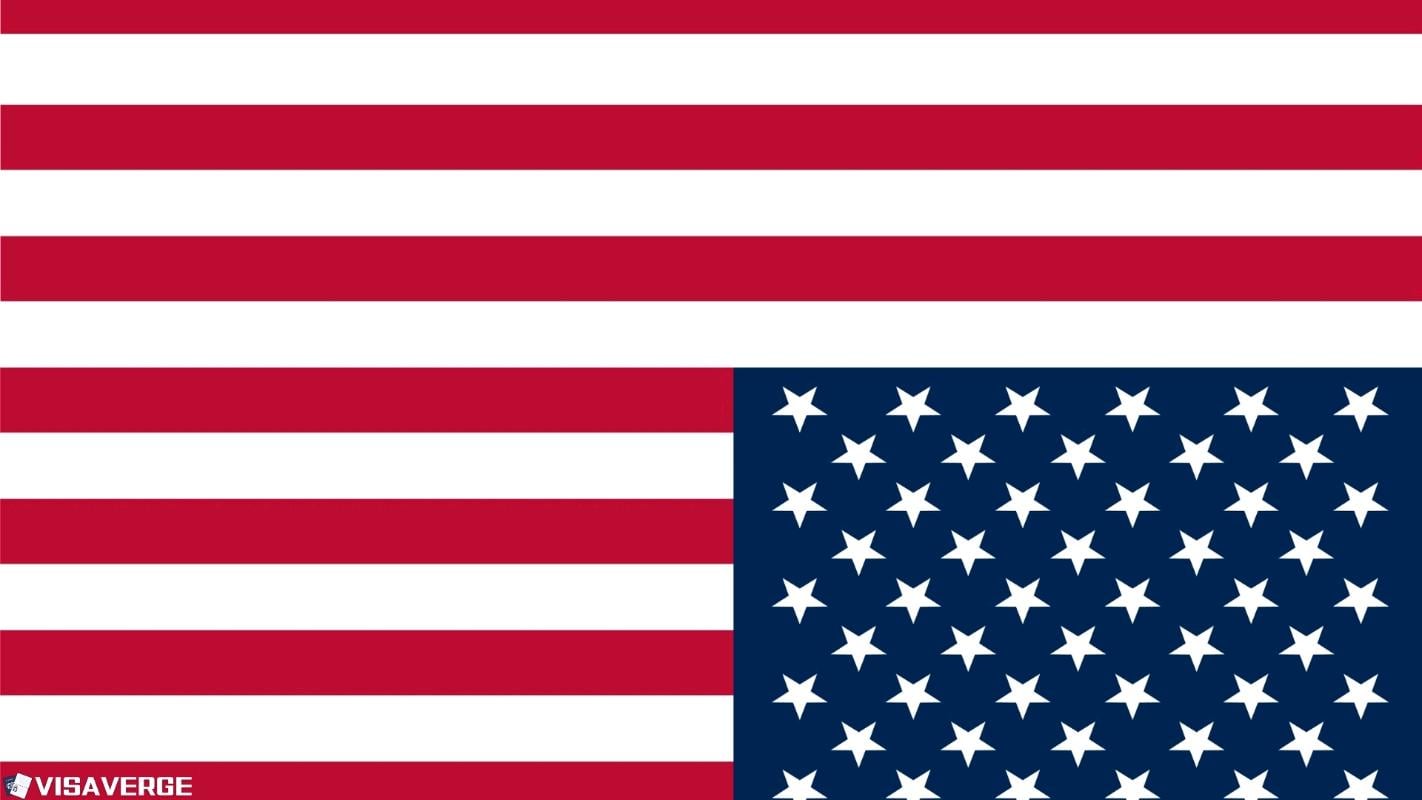
Its meaning is rooted in emergency use. Under the Flag Code, the U.S. flag should fly inverted only as a signal of “extreme danger to life or property.” The rule is advisory, not criminal. That matters when the display appears at demonstrations.
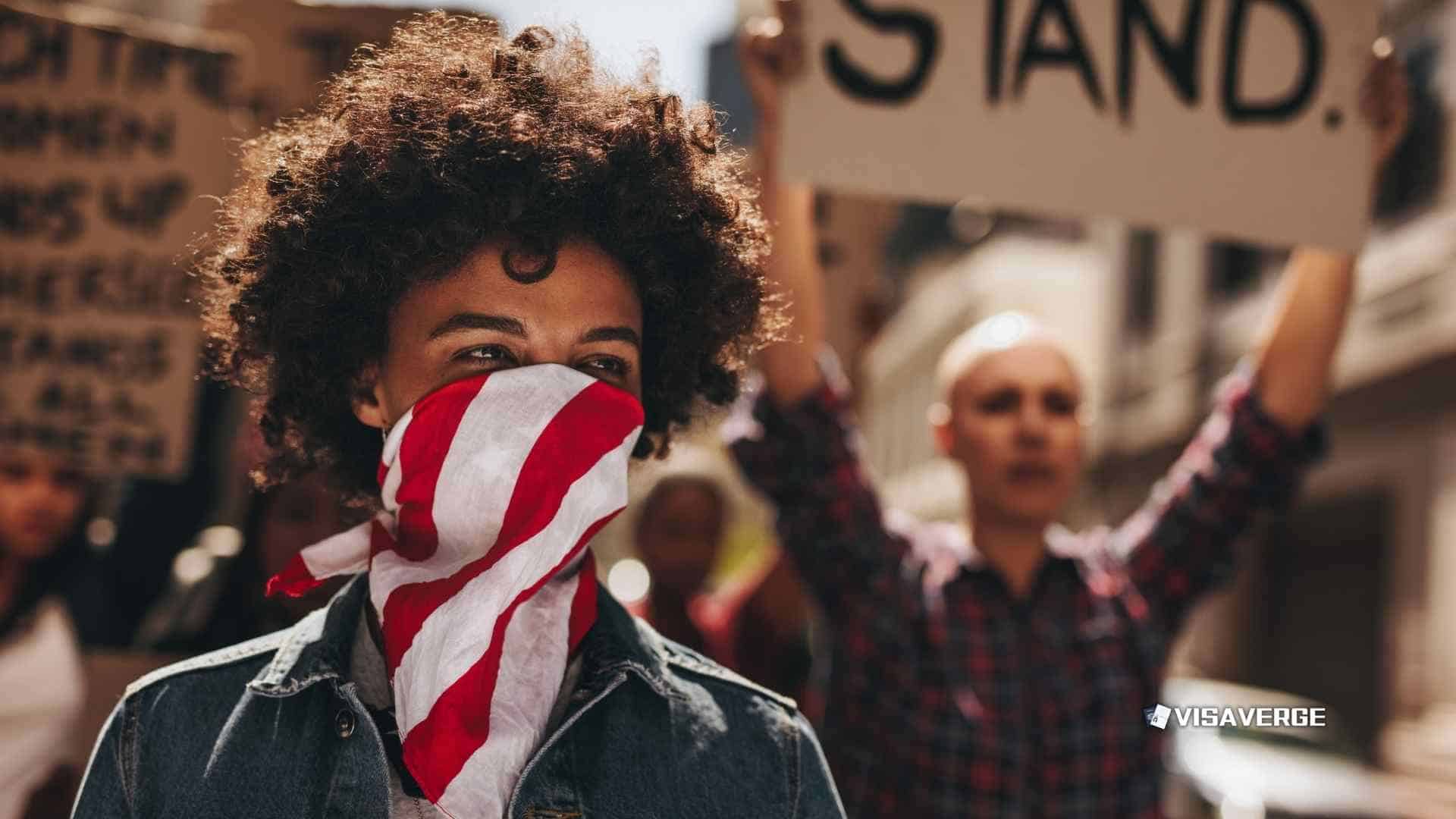
For immigrants new to the United States, the symbol can be confusing. It often appears beside political slogans, police lines, and heated crowds. the upside-down American flag usually signals alarm, anger, or rejection of current events. It rarely signals a literal emergency today.
Free toolB1/B2 Tourist Visa Stay Calculator onlineFrom maritime distress to modern protest
The tradition began at sea. Ships used an inverted flag to call for immediate help when danger threatened lives on board. That older meaning still shapes public reactions. Many Americans still see the gesture as a cry for help, even when no emergency exists.
Over time, the symbol moved into street politics. It appeared in antiwar protests during the Vietnam era and in civil rights activism in the 1960s. Since 2021, public displays have grown more visible across the country. The symbol now shows up in campaigns tied to elections, social justice, climate concerns, and frustration with government.
That wider use creates tension. Some people see the upside-down American flag as a direct warning that the country is in trouble. Others see disrespect, especially when it appears near veterans’ memorials, courthouses, or schools. The same image can signal fear to one person and insult to another.
Public reaction became especially sharp after the January 6, 2021 Capitol riot, when some participants carried inverted flags. The image also drew attention in later controversies, including displays outside Justice Samuel Alito’s residence. Each incident added to the symbol’s political charge and public visibility.
The legal meaning is narrower than the emotional one. The U.S. Flag Code says the flag should be flown upside down only in extreme danger. Still, the code does not create criminal penalties. People often mistake etiquette rules for enforceable law. They are not the same.
A useful official reference is the U.S. Flag Code guidance from the National Archives, which explains proper flag etiquette and the limited distress use. The page is a practical starting point for anyone trying to separate custom from law.
Why the First Amendment protects the display
The First Amendment protects symbolic speech, not just spoken words. The Supreme Court has repeatedly treated flag acts as expression. That is why burning, altering, or inverting the flag can fall within constitutional protection, even when many people find the act offensive.
The leading case is Spence v. Washington in 1974. The Court protected a student who displayed an upside-down flag with a peace symbol attached. Later, Texas v. Johnson in 1989 and United States v. Eichman in 1990 reinforced the same principle. The government may dislike the message, but it cannot ban it simply because the message offends.
That legal protection matters in real-world disputes. In 2007, Joseph Yamrus, a Pennsylvania resident, was arrested after flying an upside-down flag to protest the Iraq War. The charges were later dropped. The episode showed how local authorities and the public can react before constitutional law settles the issue.
For immigrants, this distinction is important. A protest symbol that looks disrespectful is still legal speech in many settings. Private property rules are different. Employers, landlords, and event organizers can set their own limits on what appears on their property. Public authorities face stricter constitutional rules.
The First Amendment also does not erase social consequences. A person may be legally protected and still face criticism, confrontation, or removal from a private venue. The law sets the floor. Public reaction sets the tone.
What travelers and immigrants may encounter today
People crossing the United States today may see the upside-down American flag at road intersections, protest sites, or homes with political signs. They may also see it at rallies where crowds are angry about election results, immigration policy, taxes, or policing. The sight often signals a dispute already in progress.
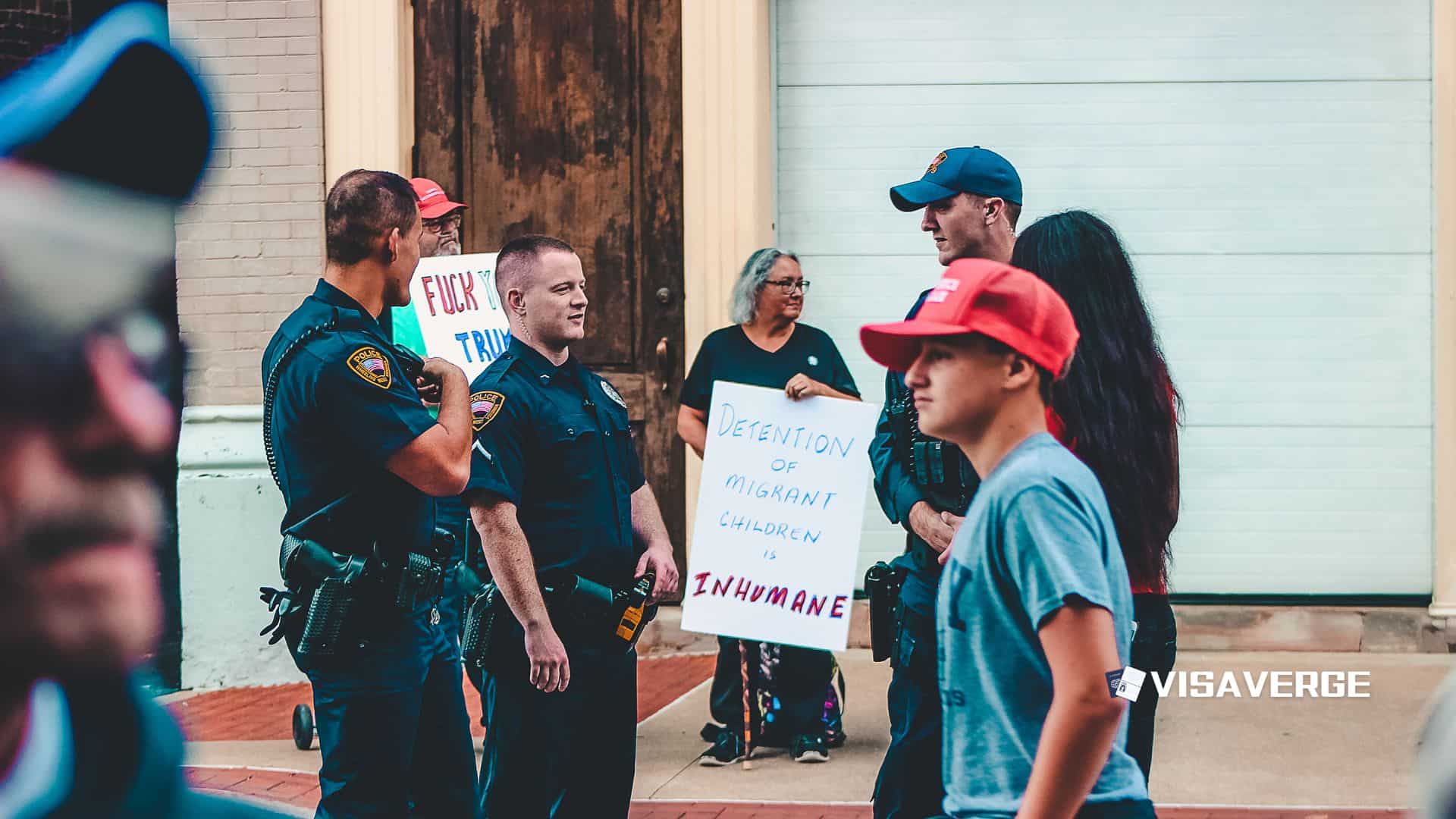
At public demonstrations, the flag usually appears with chants, signs, and heavy police presence. Crowds can be loud but lawful. Immigrants and visitors should keep a safe distance, avoid filming too closely, and follow local instructions. A symbol that starts as free expression can sit inside a tense or fast-moving scene.
Veterans and military families often react strongly. Many view the flag as a promise tied to sacrifice, service, and national unity. Inverting it outside a genuine emergency feels like a rejection of those values. That emotional response helps explain why the symbol generates such intense debate.
The argument is not new. During the Civil Rights Movement, activists used inverted flags to call attention to racial inequality. During the Vietnam War, protesters used them to oppose military action. Each generation has reused the symbol for a different grievance. The pattern shows how a national emblem can become a vehicle for dissent.
VisaVerge.com reports that the growing visibility of the upside-down American flag reflects the larger split over patriotism and protest in the United States. That split is visible in neighborhoods, court filings, campaign events, and online arguments. The flag has become a shorthand for national anxiety.
For newcomers, one practical lesson stands out: context matters. An inverted flag near a disaster zone can mean distress. The same image at a protest means political speech. Near a private home, it may be a personal statement. In every setting, the legal question and the social reaction are different.
The line between etiquette, offense, and lawful speech
The Flag Code speaks to respect, not punishment. That is why many Americans quote it when they object to an upside-down American flag, even though the code itself cannot be enforced like a criminal statute. It serves as a national guide, not a police rule.
This separation often surprises people from countries where national symbols receive stricter legal treatment. The United States gives wide room to dissent, even when the dissent is pointed and unpopular. The First Amendment protects that room. The tradeoff is visible in every flag dispute.
Understanding that tradeoff helps explain why the same cloth can provoke tears, anger, pride, and political action. For many Americans, the flag still represents unity. For others, inverting it is the only way to say that unity has failed. Both reactions are part of the current American moment.
As protests continue and political tempers stay high, the upside-down American flag will remain a familiar sight. It speaks in the language of emergency, but it now carries the weight of modern American debate.