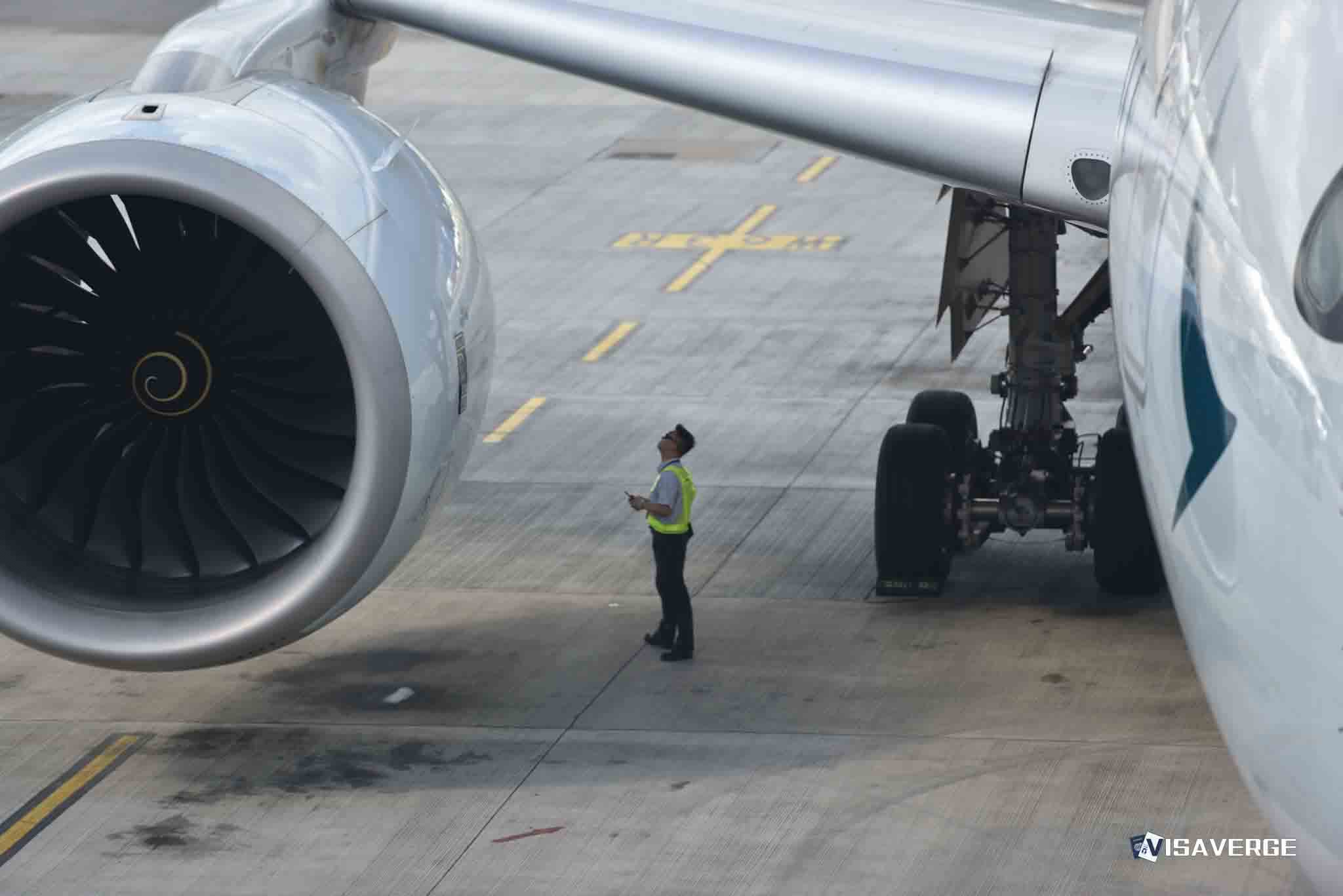
- The U.S. government lifted the flight ban on Venezuelan airspace, effective January 29, 2026.
- Airlines can now reduce fuel and flight times by avoiding long detours around Caracas.
- American Airlines plans daily direct flights, while Copa Airlines remains the steadier near-term option.
(VENEZUELA) — Venezuelan airspace is back on the table for U.S.-registered civilian flights, and that can mean shorter routings, fewer last-minute reroutes, and—eventually—more nonstop options to Caracas.
If you’re planning travel to Venezuela (or connecting around the Caribbean and northern South America), the smartest play right now is to book an itinerary that already exists in airline schedules, then watch for nonstop service to return once carriers finish the restart checklist.
The U.S. government lifted its ban on civilian air traffic in Venezuelan airspace late Thursday, Jan. 29, 2026. In airline terms, this removes restrictions that affected overflights, takeoffs, and landings by U.S.-registered passenger and cargo aircraft.
It does not automatically mean your preferred nonstop is back tomorrow. What it changes immediately is dispatch flexibility—flights that had been detouring around the Caracas flight information region (FIR) can often plan more direct tracks again.
That reduces block times and fuel burn, and it can improve on-time performance. It also reopens serious talks about restarting U.S.–Venezuela service, which has been largely absent since 2019.
How an airspace closure shows up for passengers
- Longer flight times and higher odds of misconnects.
- More cancellations when crews time out or alternates become limited.
- Fewer “good” connection options, because banks and minimum connection times get stressed.
A reopening usually reverses those trends, but in steps. Airlines have to re-file routes, validate safety processes, and rebuild airport operations—steps that take longer than a headline.
American vs Copa vs “connect elsewhere”: quick comparison
| Category | American Airlines (planned nonstop return) | Copa Airlines (connect via Panama City) | Other connections (varies by carrier/country) |
|---|---|---|---|
| Bookable right now | Plans announced, pending approvals and clearances | Yes, Caracas flying again as of Jan. 13, 2026 | Some routings may exist, but depend on country permissions and schedules |
| What you gain | Potentially fastest trips if nonstop returns | Most predictable near-term option, with a single connection | Sometimes cheaper, sometimes more available seats, but more moving parts |
| Main risk | Timeline uncertainty and early schedule volatility | Connection risk at PTY if banks shift | Extra connections, longer itineraries, and higher reaccommodation complexity |
| Miles and points | Earn/burn via AAdvantage; partner earning depends on ticketing | Earn/burn via ConnectMiles; Star Alliance partner options may apply | Depends on carrier; check fare class earning before you buy |
| Best for | Travelers who want nonstop convenience and can wait | Travelers who need to go soon and want a stable plan | Travelers with flexibility, or those chasing a specific fare or cabin |
⚠️ Heads Up: “Airspace reopened” is policy permission. “Flights are back” requires schedules loaded for sale, airport handling in place, and crews positioned.
1) What the policy reversal means in plain airline terms
The late-January 2026 decision reopens Venezuelan airspace to U.S.-registered civilian aircraft. That matters in three operational ways.
First, overflights. Even if you aren’t landing in Caracas, airspace closures force dispatchers to route around large chunks of airspace, which can push flights into more congested corridors over the Caribbean.
That can also add fuel requirements, alternates, and sometimes technical stops in edge cases.
Second, takeoffs and landings. A ban that affects U.S.-registered aircraft can shut down nonstop service even when demand exists. Airlines can’t just “decide” to fly if the legal and operational environment blocks it.
Third, routing options for airlines that rely on Miami-style gateways. When Venezuela is off-limits, network planners often lean harder on connections via third countries, which can thin out capacity and reduce seat choices on peak days.
Why it matters now is simple: carriers can plan more efficient routes again, and they can start rebuilding direct service plans. Passengers see the benefits later, once the schedules are actually published and stable.
2) Timeline: how NOTAMs ripple into real trips
The closure was driven by NOTAMs—Notices to Air Missions. Think of a NOTAM as the aviation industry’s operational bulletin board where airspace restrictions, hazards, and procedures get published for pilots and dispatchers.
In late November 2025, Venezuelan airspace was effectively treated as “completely closed” for the affected operations. Airlines such as United and American had to route around it, raising fuel costs and increasing block times.
On Jan. 3, 2026, an emergency NOTAM closed Venezuelan airspace for roughly 24 hours during the upheaval tied to Nicolás Maduro’s arrest in Caracas. A one-day airspace shutdown can create a multi-day mess.
- Aircraft are out of position after diversions and cancellations.
- Crews time out, and reserves get used quickly.
- Maintenance routing breaks, and swaps create knock-on delays.
- Airports and handlers face sudden surges, then lulls.
As conditions improve, airlines don’t instantly snap back to the old timetable. They must confirm ground handling capacity, security posture, and staffing, and get comfortable with alternates and contingency planning again.
For travelers, separate the “published timetable” from the “restored operation.” The timetable may show flights, but day-of-travel reliability improves only after a few weeks of consistent flying.
3) What officials said—and what airlines still need before normal flying returns
The reopening was ordered by President Donald Trump during a cabinet meeting, with follow-up direction to move quickly. The practical aviation trigger was the FAA removing multiple Caribbean NOTAMs, including the Venezuela-related one, after calling them precautionary and no longer needed.
That FAA step is the industry’s green light to begin normal flight planning again. It is not a guarantee that every airline resumes service immediately—“clearing the way” usually translates into a checklist, not a single switch flip.
In practice, “safety assurances” and “guidance” can mean updated dispatcher routing and alternates for Caracas-area operations, new security coordination with airports and local authorities, insurance reviews, and crew briefings for irregular operations and diversions.
Diplomatic signals also matter, because airlines hate uncertainty. They need a stable environment to sell tickets months out without constant schedule whiplash.
4) How airlines restart service after a policy shift (and what that means for your booking)
Airlines don’t restart a suspended market the way they launch a brand-new route. In many ways, it’s harder. You’re rebuilding station operations, crew logistics, maintenance support, and customer support playbooks for rebookings and waivers.
American Airlines: big upside, but timing risk
American announced plans on Jan. 29 for daily direct U.S.–Venezuela flights, pending approvals and security clearances. No specific city pairs, dates, or aircraft were provided.
That “pending” language matters: approvals, airport readiness, and staffing will decide the start date more than marketing. Early weeks also tend to be volatile, with schedule changes and aircraft swaps.
American’s CCO Nat Pieper summed up the intent: “We have a more than 30-year history connecting [Venezuelans] to the US, and we are ready to renew that incredible relationship.” Miami is the obvious launch point, given American’s hub strength and historic patterns.
Miles angle: If you’re an AAdvantage member, a nonstop return can be a big deal—fewer connections usually means fewer irregular-ops failures and cleaner elite-qualifying earnings.
Copa Airlines: the “already flying” option
Copa resumed Caracas flights on Jan. 13, 2026. Operating flights requires functioning airport processes, workable security routines, and consistent dispatch planning.
For many U.S. travelers, Copa’s value is straightforward: you can connect through Panama City (PTY), which is built for transfers. When nonstop service is uncertain, a reliable one-stop itinerary often wins.
Miles angle: Copa’s program is ConnectMiles. If you credit flights to a partner program, double-check fare class earning—some discounted buckets earn less.
Industry view: why coordinated resumption matters
ALTA, the Latin American and Caribbean Air Transport Association, welcomed the lifting of the Maiquetía FIR NOTAM and pushed for coordinated resumption. That’s code for: don’t flood the market, don’t create congestion at a fragile airport, and don’t set passengers up for mass disruptions.
Cargo is part of this too. When airspace restrictions lift, belly cargo capacity can return, which helps supply chains. Airlines may prioritize cargo-friendly schedules early, because it supports route economics.
Consumer protections: what you can usually count on
When schedules are unstable, your best protection is booking terms you can live with. Airlines tend to sort remedies based on whether you faced a cancellation versus a delay, and whether the itinerary touches certain jurisdictions.
The labels and triggers vary, so read the rules tied to your ticket and point of sale. Practical advice: if your trip is time-sensitive, avoid “tight” same-day connections and separate tickets that won’t protect you during a misconnect.
5) Why this reversal matters historically, without the politics rabbit hole
U.S.–Venezuela air links have been constrained for years, including a 2019-era suspension of U.S. commercial and cargo flights. Whatever your view of the politics, the aviation impact was real.
- Networks shift to third-country hubs.
- Fares often rise, because seats are scarcer and trips take longer.
- Cargo lanes lose capacity and speed, which can hit industries beyond tourism.
For airlines, reversals like this change route planning math. Miami-style gateways regain relevance, as do “tag” options and regional connections that didn’t pencil out during the suspension era.
Commercial restoration usually comes in phases: limited frequencies to prove operational stability; expanded schedules once completion factors and reliability look good; then cabin and product consistency once the route settles.
6) Choose X if…, choose Y if… (real-world scenarios)
Choose American if…
- You value nonstop convenience and can wait for schedules to load.
- You’re chasing AAdvantage status and want cleaner earning.
- You prefer dealing with a single U.S. carrier for changes and waivers.
The trade-off is timeline risk—early restarts can be choppy, even when they succeed.
Choose Copa if…
- You need to travel in the next few weeks and want a plan that exists today.
- You want one connection, on one ticket, through a transfer-focused hub.
- You want more day-to-day frequency options via PTY.
The trade-off is connection exposure—if irregular operations hit, you’re dependent on the hub bank structure.
Choose “connect elsewhere” if…
- Your dates are flexible and you’re willing to accept longer itineraries.
- You’re positioning from a smaller U.S. city where PTY options don’t line up.
- You find award space that’s meaningfully better through another gateway.
The trade-off is complexity—more segments usually means more failure points.
What to expect next (and how to reduce your risk)
In the near term, expect a phased return with limited frequencies, aircraft substitutions, and continuing routing tweaks as dispatch procedures settle.
Airlines will be working through a familiar restart checklist: operational approvals and security clearances, confirmed airport handling and baggage performance, crew logistics and hotels, and call center and airport staffing that can handle rebookings.
Your traveler checklist should match that reality: recheck entry and transit rules before departure, watch your flight status starting 72 hours out, and leave extra time at the airport because processes can be slower at restart.
💡 Pro Tip: If your trip is urgent, book the most “boring” itinerary you can find: one ticket, one connection, and a longer layover.
The nuanced verdict: the reopening of Venezuelan airspace is a real operational shift, and it should improve routing efficiency quickly. For actual passenger trips, Copa is the steadier near-term bet because it’s already flying.
American is the higher-upside pick once daily nonstops are loaded and running consistently. If you’re planning February or March travel, prioritize itineraries that exist today, and treat new nonstop launches as a bonus until they’ve flown for a few weeks without repeated schedule changes.
Live Government Data
State Dept • CBPBusiest Border Crossings
- Nogales 210 min
- Nogales 120 min
- Brownsville 90 min