- South Korea has imposed overseas travel bans on three civilians following a drone investigation.
- The probe involves alleged unauthorized drone flights into North Korean territory and military sites.
- Regular travelers are advised to book flexible fares due to potential security-related airport disruptions.
(SOUTH KOREA) — South Korea just imposed overseas travel bans on three civilians tied to alleged drone flights into North Korea, and while most travelers won’t be affected, it’s a timely reminder to book Korea trips with “exit-risk” resilience.
My quick recommendation: if your plans are even slightly uncertain, pay for flexibility—either a refundable cash fare or an award ticket with low redeposit fees. The “cheapest nonrefundable deal” can get expensive fast if you face last-minute disruption, extra screening, or a missed connection from airport delays.
This isn’t a blanket ban on leaving South Korea. It’s an investigation-driven exit restriction on specific people. Still, when headlines involve drones, borders, and retaliation threats, airports tend to feel it first.
Flexible cash ticket vs. low-cost nonrefundable fare: which is smarter right now?
Here’s the traveler-facing comparison that matters most for near-term Korea flying, including common itineraries to China and New Zealand.
| Feature | Flexible / refundable cash ticket | Cheapest nonrefundable / “basic” fare |
|---|---|---|
| Typical upfront price | Higher | Lower |
| Change options | Usually allowed with low or no change fee (fare difference may apply) | Often restricted, fees can be steep, and some fares can’t be changed |
| Refund | Often to original form of payment | Often credit only, or no refund at all |
| Missed-connection protection | Stronger when on one ticket; rebooking is simpler | Weaker if you split tickets to “save money” |
| Best for | Uncertain schedules, tight connections, winter weather, fast-changing advisories | Fixed plans, nonstop flights, travelers who can absorb sunk cost |
| Miles/points earning | Usually normal accrual, depending on fare class | Some discounted fare buckets earn less on partners |
| Award alternative | Can still be pricey in cash-heavy weeks | Sometimes the only “cheap” option, but highest risk |
You’ll notice I’m not telling you to cancel your trip. I’m telling you to avoid painting yourself into a corner.
1) What an overseas travel ban means in real airport terms (and why this story matters
An “overseas travel ban” in South Korea is best thought of as an exit restriction. It’s not the same as a destination entry ban. It’s also not an airline policy.
In practice, exit restrictions typically surface in a few ways:
- You might learn about it through a police notice or during questioning.
- You might only discover it at the airport, at exit immigration.
- In some cases, a carrier may be notified late in the process, but airlines don’t “decide” the ban.
On Friday, January 23, 2026, South Korean authorities imposed overseas travel bans on three civilians. The action is tied to a joint police-military investigation.
The alleged conduct involves unauthorized drone activity linked to September 2024 and January 4, 2026. Investigations like this can include summons, interviews, device reviews, and new allegations.
What’s known, and what is not confirmed, also matters. South Korea’s government and military have denied operating the drones. The inquiry remains focused on civilian actors, and the broader probe is ongoing.
The practical takeaway for regular travelers: this is not a “don’t fly” alert. It’s a “book smart and stay document-ready” moment.
2) Who the suspects are, what they’re accused of, and how exit restrictions hit travelers
Authorities identified three individuals linked to a drone firm:
- Oh, described as a graduate student. He reportedly admitted in a media interview that he flew drones from Ganghwa County. He claimed the goal was checking radiation levels at a North Korean uranium facility. The drone also photographed a South Korean Marine Corps base.
- Jang, suspected of building the drones.
- A third person who worked at a drone manufacturing company set up by Oh and Jang.
Reporting also links the group to contract work in the former president’s office in 2022. One suspect was reportedly summoned for questioning in the past week.
Here’s what matters for travelers. Exit bans are usually individual-specific, not destination-wide. If you’re flying Seoul to Shanghai, Beijing, Auckland, or anywhere else, you should not read this as a blanket departure block.
It’s also important to understand enforcement. Airlines can deny boarding for passport and visa issues. But an exit restriction can still stop you after check-in, right at the departure control point.
That creates ugly real-world scenarios:
- You check in, clear security, then get stopped at immigration.
- Your onward connection is missed, even if your first flight departs on time.
- Your itinerary turns into a no-show mess if segments cancel in the wrong order.
- If you booked separate tickets, you can lose the second ticket entirely.
The travel document checklist below is worth treating like a pre-flight ritual. It focuses on the items that save the most time when plans go sideways.
If you’re traveling for work, this is also where company travel policies can bite. A nonrefundable ticket booked to save $120 can turn into a multi-day rebooking cost.
For points-and-miles travelers, flexibility is often hiding in plain sight. Many award tickets let you cancel and redeposit for a predictable fee. Cash “sale” fares usually don’t.
You’ll also want to think about how you ticket connections. A single ticket gives you far more protection than two separate bookings.
3) The legal backdrop, in plain English: aviation rules and military-site protections
Investigators reportedly aim to pursue charges under two laws:
Aviation Safety Act (as it relates to drones). At a high level, aviation safety rules cover airspace use, operational safety, and the permissions needed to fly. Drones can trigger scrutiny quickly when flights involve borders, controlled zones, or sensitive infrastructure.
Protection of Military Bases and Installations Act. This type of framework covers restricted areas and protected sites. It also tends to treat surveillance and close-in activity as serious conduct.
South Korea’s denial of operating the drones matters because it speaks to attribution. It does not automatically close the door on a criminal inquiry into private actors. For travelers, the legal detail is less important than the process.
Active investigations can produce sudden scheduling pressure for anyone directly involved. Again, the ordinary traveler angle is indirect. But when aviation, drones, and military sites collide, it often leads to tighter security posture and more cautious messaging.
4) Government messaging, tensions, and what travelers usually notice first
President Lee Jae-myung called for a thorough investigation. He also warned against unnecessary tensions that could hurt the economy and complicate diplomacy. Talks have been stalled since 2019.
On the other side, North Korea has made accusations and issued retaliation threats tied to the drone incidents.
Even without any new travel restriction announcements, heightened tensions can show up in traveler-visible ways:
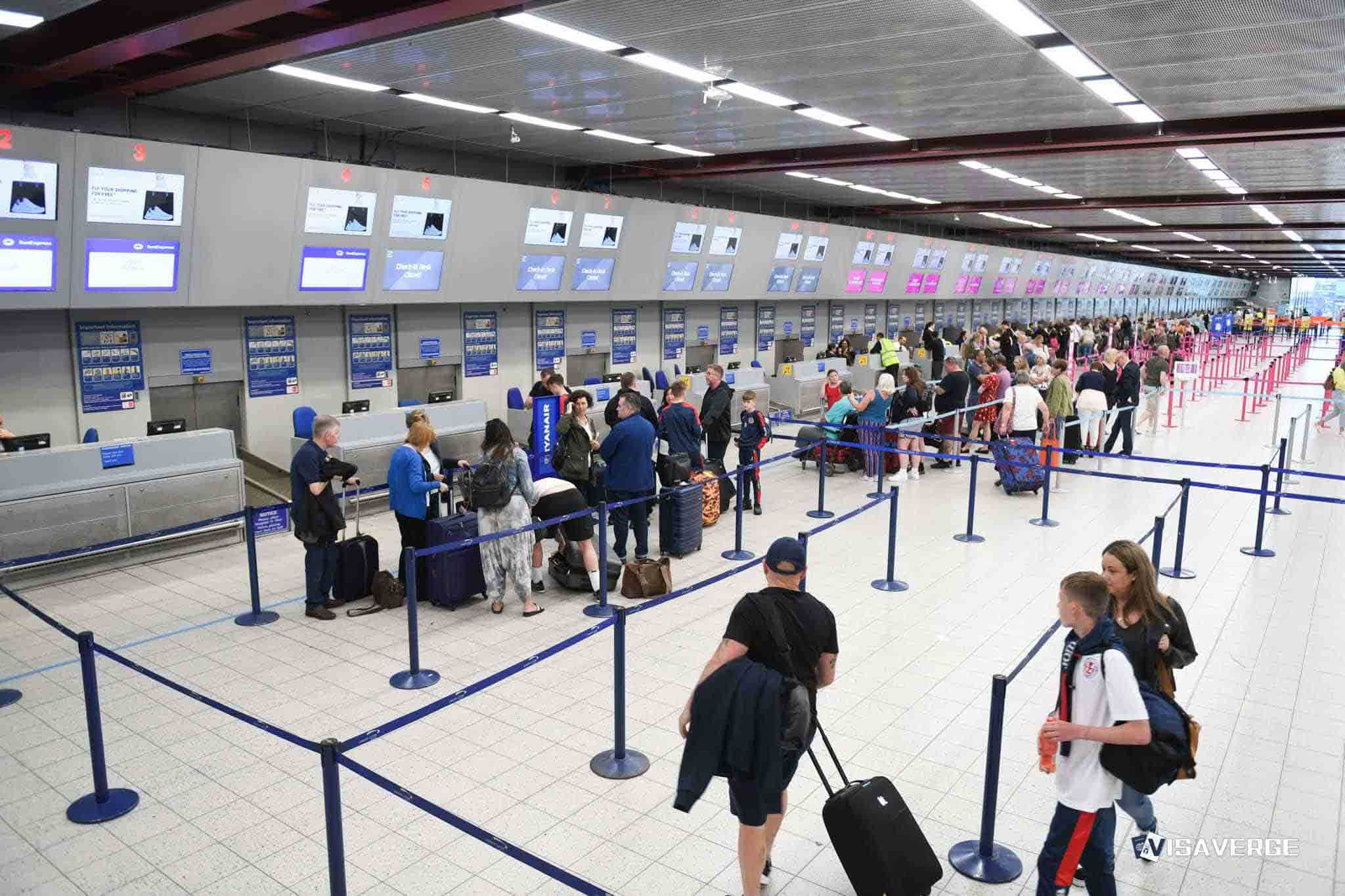
- Extra screening or questions at departure points.
- More conservative flight planning near sensitive airspace.
- Fast edits to government advisories and airline travel notices.
This is especially relevant if you’re connecting through hubs that depend on stable routings. China itineraries, in particular, can involve complex overflight and slot constraints.
New Zealand routings are usually more straightforward, but weather and long-haul rebooking can be punishing if your ticket is inflexible. The smart move is to monitor official updates and carrier notices close to departure.
In weeks like this, “nothing has changed” can turn into “policy updated” quickly.
Points and miles angle: don’t ignore the earning and status math
If you’re chasing elite status, disruptions can cost more than time. They can cost qualifying credit.
- Flexible cash fares often book into fare classes that earn better on partner charts. That can matter on China routes via SkyTeam and Star Alliance carriers.
- Deep discount fares can earn poorly when credited to a partner program. The cheapest buckets sometimes earn a fraction of distance, or nothing.
- Award tickets usually won’t earn miles, but they can protect your wallet when you need to cancel late.
For Korea-based flyers, program strategy matters. Korean Air and Asiana travelers should pay attention to fare class and crediting. If you’re mixing in China flying or adding New Zealand, partner earning rules can swing wildly.
If you’re one trip away from renewing status, consider paying more for a fare that protects both your schedule and your qualification plan.
Comfort and operations: where flexibility matters most on China and New Zealand trips
Korea-to-China flying is often short, busy, and schedule-sensitive. A two-hour delay can wipe out an international connection if you built a “perfect” itinerary.
Korea-to-New Zealand flying is the opposite. It’s long-haul, often limited-frequency, and rebooking can mean losing a day or more. In that context, a nonrefundable ticket is a bigger gamble.
If you’re choosing between travel styles, think like this:
- On short-haul, you’re buying flexibility to protect connections.
- On long-haul, you’re buying flexibility to protect your entire trip length.
Choose X if… / Choose Y if…
Choose a flexible or refundable cash ticket if:
- You have tight connections through Seoul.
- You’re mixing carriers, especially across alliances.
- You’re booking Korea–China during a high-demand week.
- You must arrive on a specific day for business or family.
- You’re chasing elite status and need predictable qualifying credit.
Choose the cheapest nonrefundable fare if:
- You’re flying nonstop and your dates are truly fixed.
- You can absorb a total loss if plans change.
- You have backup points for a rescue booking.
- You’re traveling light and can handle irregular operations.
Choose an award ticket if:
- Your program offers low redeposit fees.
- Award space is reasonable on your dates.
- You want the option to pivot airports or routings quickly.
Competitive context: how this compares to “normal” disruption playbooks
South Korea’s exit bans here are targeted and investigation-driven. That’s different from broad travel limits you see during pandemics or sudden entry-policy shifts.
But from a traveler standpoint, the protective tactics look familiar. When geopolitical tension rises, airlines globally tend to do three things:
- communicate more cautiously,
- re-accommodate within stricter policy language,
- protect schedules and crews with conservative operational choices.
In other words, you don’t need a formal advisory for your trip to feel less predictable.
5) Why drones can create ripple effects in aviation and borders (and the timeline recap)
Analysts have linked the timing of North Korea’s rhetoric to domestic political goals. They point to the Workers’ Party congress window and discussion of a “two-state” doctrine.
This isn’t the first time drones have driven loud messaging. Prior disputes have included accusations about leaflet-dropping flights and military responses to border incursions.
When drones enter the story, aviation and border agencies tend to take notice, even if commercial flying continues normally. The timeline tool below lays out the sequence of the alleged incidents and the latest enforcement step.
What matters for travelers is recency. The newest event is close enough to today that policy language and screening posture can shift with little warning.
A nuanced verdict: this is not a reason to avoid South Korea. It is a reason to stop treating the cheapest fare as the best fare. If you’re flying in the next few weeks—especially on a Korea–China connection or a Korea–New Zealand long-haul—book a ticket you can change, keep your documents tight, and recheck your airline’s notices within 24 hours of departure.