(UNITED STATES) The Federal Aviation Administration ordered airlines to cut scheduled flights at 40 of the country’s busiest airports starting November 13, 2025, a move that will keep many travelers facing delays and cancellations even after the government shutdown ends.
The emergency order requires a 6% reduction in daily scheduled domestic operations during the core travel window of 6:00 a.m. to 10:00 p.m. local time, and it remains in place until the agency cancels it. Carriers serving these hubs have been told to reshape airline schedules now to comply.

Why the reductions were ordered
The FAA said the reductions are necessary because of ongoing air traffic controller shortages and fatigue concerns that have worsened during the shutdown. Officials described the cuts as a safety measure, not a short-term convenience fix.
While federal services are expected to restart when funding resumes, the agency warned that FAA flight restrictions won’t disappear overnight. Airlines and passengers should plan for continued disruption as staffing stabilizes and traffic flow resets across the national airspace system.
“Flight cuts will remain until air traffic control staffing levels stabilize.” — Transportation Secretary Sean Duffy
Secretary Duffy underscored the policy’s staying power, confirming that delays and cancellations will persist beyond the shutdown’s official end. That signals a cautious approach by safety managers who must balance heavy travel demand with the realities of stretched tower and center teams.
Immediate operational impacts
Airlines have already been canceling thousands of flights per day to meet the FAA’s directive. Industry planners expect cancellations to rise to about 10% by week’s end during the shutdown period.
Key operational pressures include:
– Peak banks (clusters of connecting flights) are hit hardest, causing cascading effects across crews, aircraft rotations, and downstream gates.
– The backlog built during the shutdown, combined with the new FAA restrictions, is likely to slow recovery for days or longer even after government workers return.
FAA authority and how cuts will be managed
Under the emergency order, the FAA retains authority to:
– Adjust or reject airline schedules to spread reductions more evenly.
– Protect smaller markets by preventing disproportionate impacts on regional and essential air service routes.
– Direct alternative cuts if an airline’s plan would create uneven burdens.
This means some carriers may be asked to trim more at certain times in exchange for flexibility elsewhere, aiming to keep a predictable rhythm that air traffic control can safely manage.
Effects on airlines and planners
Executives across the industry say the rule adds a firm constraint to already fragile operations. Schedule planners must:
1. Rework crew pairings.
2. Move aircraft to different rotations.
3. Decide which departures to pull without stranding communities.
Carriers that rely on tight turn times face extra risk because a reduced departure window can magnify minor maintenance or weather issues. Schedules that looked workable a week ago may no longer line up with the new operating day or the staffing available in key facilities.
Passenger experience
Passengers flying through the affected airports will feel the cuts in different ways:
– Some will see outright cancellations.
– Others will be rebooked onto later flights, creating heavier loads and longer connection times.
– Morning and early evening waves at big hubs are most exposed.
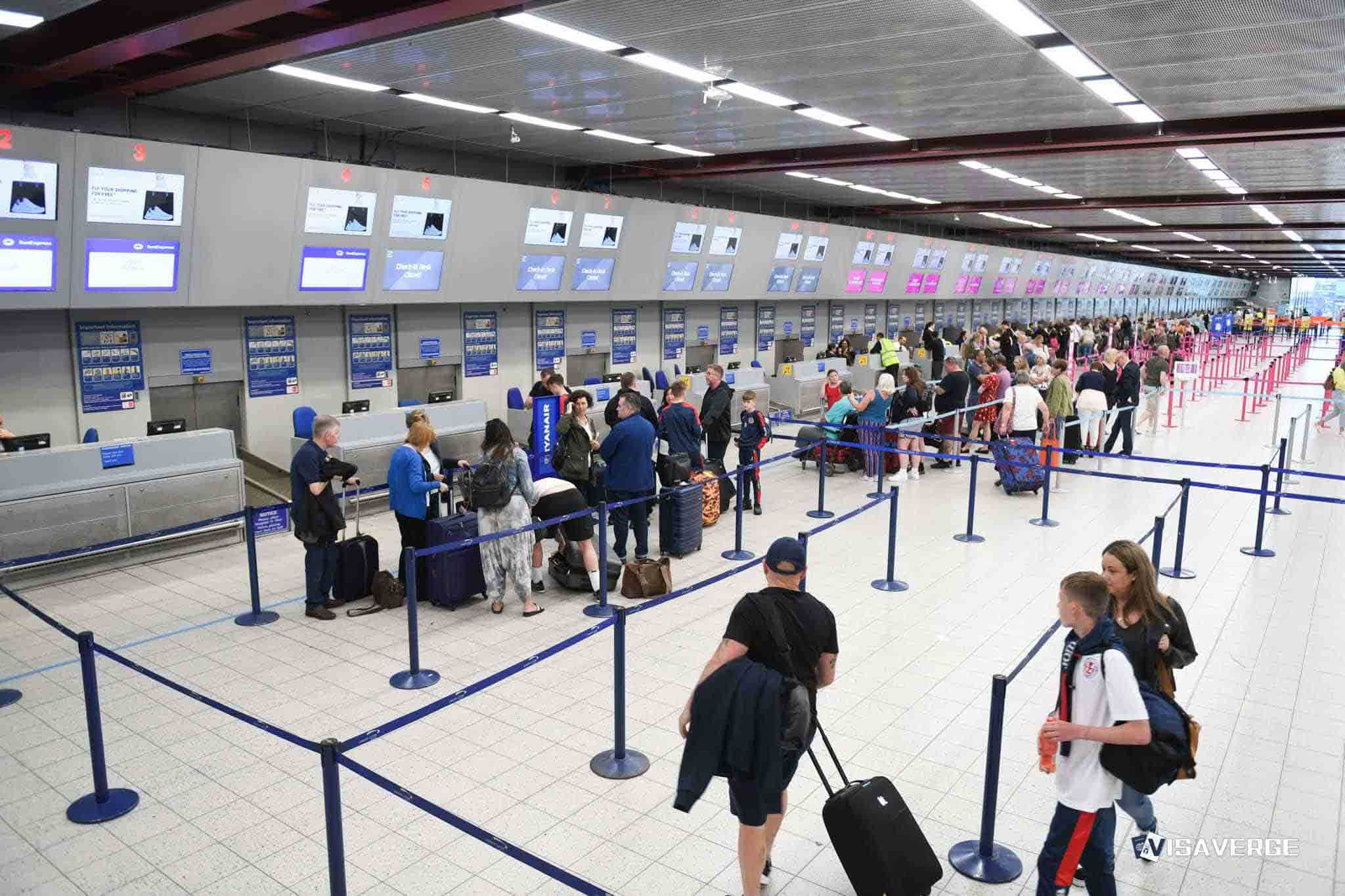
– Families and business travelers can expect slower rebooking and longer customer service queues.
Practical advice for travelers:
– Watch for proactive airline notices and accept reassignments promptly.
– Consider earlier flights and build in extra connection time.
– Families with medical or school needs should contact carriers early for document review and flexible options.
– Note: fees are often waived during major irregular operations, but seat inventory is the larger constraint under the cap.
Airport and local economic impacts
For airports and service providers:
– Gate assignments and ramp timing must be rethought to match the slimmer schedule.
– Concession operators, ground handlers, and fuel suppliers are adjusting labor and shift patterns.
– Regional connectors may see fewer inbound spokes, affecting local tourism and small business travel for weeks.
Community leaders worry repeated trims could lead airlines to prioritize larger markets when frequencies are rebuilt later.
Staffing, training, and why recovery will be slow
Air traffic unions have long warned of a thin pipeline for new controllers. The shutdown has:
– Paused some training.
– Slowed facility transitions.
Training a controller to full certification often takes years, and fatigue rules restrict overtime reliance. These realities make a fast rebound unlikely even if funding disputes end quickly.
Oversight, monitoring, and possible adjustments
The FAA said it will continue monitoring airline schedules and traffic trends daily and will revisit the 6% figure as staffing levels improve. That review could:
– Loosen the cap, or
– Tighten the cap,
depending on controller availability, facility fatigue, and seasonal demand.
There is no firm end date. The agency’s priority is to maintain safety while keeping the system moving in a predictable way. The public can follow updates on the Federal Aviation Administration website.
Context and broader perspective
According to analysis by VisaVerge.com, the agency’s approach mirrors past capacity management playbooks used during regional ATC pinch points, but it is unusual to see a sustained nationwide cap tied directly to staffing stabilization rather than a fixed calendar date.
Even as political leaders argue over funding, the underlying operational challenge is technical, not partisan. The shutdown worsened an existing staffing strain, but the FAA flight restrictions are built to manage safety risk regardless of the political calendar.
Bottom line
- The FAA’s cap is intended to prevent larger system breakdowns by reducing scheduled movements now.
- Recovery will be gradual: airlines must rebuild rotations, reposition aircraft, and move crews; controllers need rest and relief.
- Until staffing and operational balance return, the 6% reduction will act as a guardrail to keep flights moving safely—if more slowly—across the United States ??.
This Article in a Nutshell
The FAA imposed a 6% reduction in scheduled domestic operations at 40 major U.S. airports from November 13, 2025, citing controller shortages and fatigue amid a government shutdown. The emergency order is a safety measure that forces airlines to reshape schedules, causing thousands of daily cancellations and potential 10% disruption by week’s end. Recovery will be slow because controller training is lengthy and fatigue rules limit overtime. The FAA will monitor staffing and traffic and may adjust the cap; no firm end date exists.