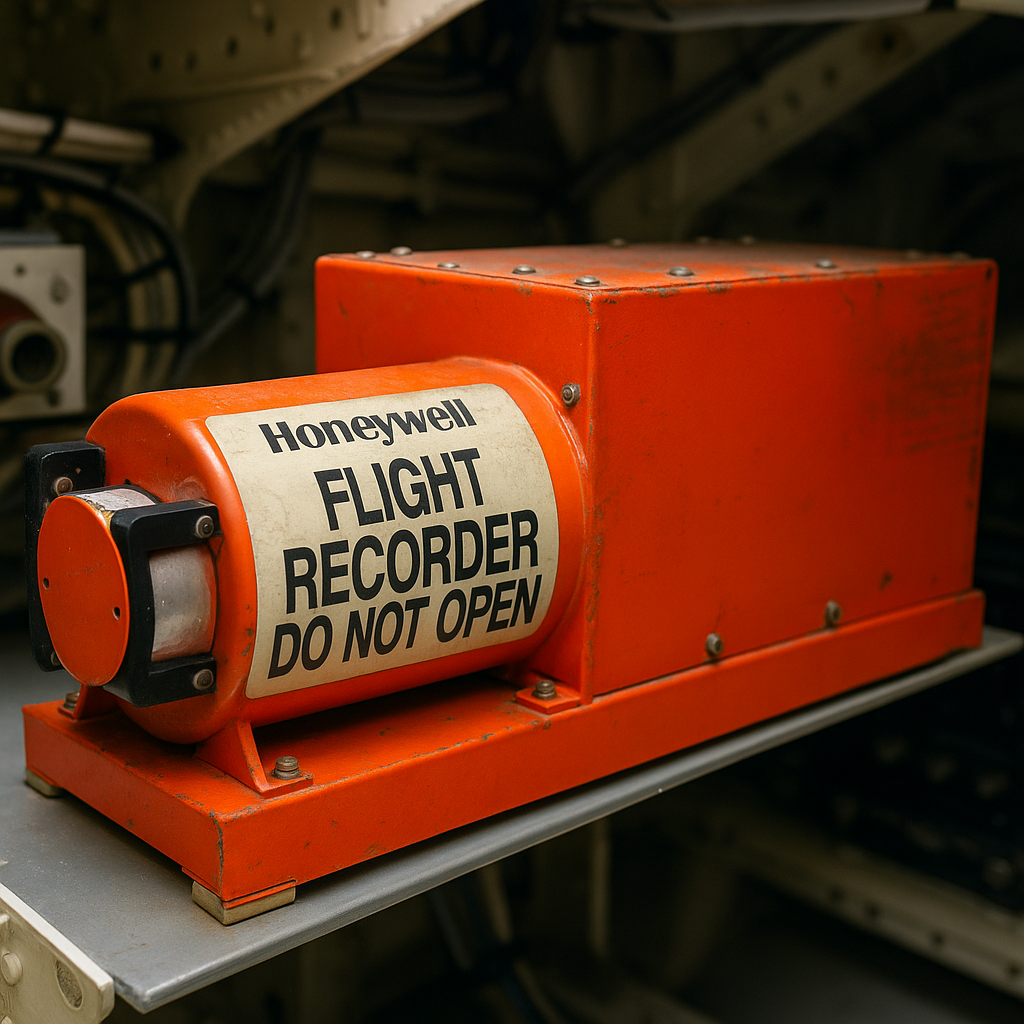
- The F-A-A issued a safety alert urging immediate power shutdown of cockpit voice recorders after aviation incidents.
- Current two-hour recording loops risk overwriting critical evidence if the aircraft remains powered following an emergency.
- New regulations mandate twenty-five-hour recording capacity for all newly manufactured aircraft starting in February twenty twenty-six.
The FAA urged airlines to preserve Cockpit Voice Recorder data immediately after accidents and serious incidents, warning that older systems can erase critical audio within two hours. The agency’s July 7 alert tells crews and maintenance teams to shut off recorder power after a reportable event.
The guidance appears in Safety Alert for Operators SAFO 26002. It directs operators to update flight, maintenance and dispatch manuals with instructions for pulling the CVR circuit breaker immediately after an incident.
Free toolB1/B2 Tourist Visa Stay Calculator online
That action stops the recorder’s continuous loop. Without it, an aircraft that remains powered on the ground or continues flying for more than two hours can overwrite the recording investigators need.
The agency issued the alert as airlines prepare for a broader equipment change. A February 2, 2026, final rule requires newly manufactured aircraft to carry recorders capable of retaining 25 hours of audio, replacing the previous 2-hour standard.
Airlines must protect recordings before the new equipment standard takes hold
The final rule, identified as RIN 2120-AL92, gives investigators a much longer record of cockpit activity. The agency said the change will provide more audio to help determine the probable causes of incidents and accidents and prevent future events.
“This action provides accident investigators, aircraft operators, and civil aviation authorities with substantially more CVR data to help determine the probable causes of incidents and accidents and prevent future incidents and accidents.”
The FAA Reauthorization Act of 2024 separately requires all commercial aircraft operating under Part 121 to receive 25-hour recorder retrofits by 2030. The immediate preservation procedure addresses aircraft still using the shorter system.
That system records continuously. The oldest audio disappears as new audio replaces it, making a delayed shutdown potentially permanent.
The Alaska Airlines investigation exposed the two-hour gap
The policy push followed Alaska Airlines Flight 1282’s door-plug blowout in January 2024. The NTSB found that the cockpit recording had been completely overwritten because the recorder was not powered down quickly enough after the aircraft landed safely.
The safety board formally recommended action on July 10, 2025. Its recommendation called for established procedures for both flight crews and ground crews to preserve recordings after incidents.
The preserved audio can include more than pilot conversations. Investigators use crew communications, alarms and background cockpit sounds to examine how an event developed and how people responded.
Crews and airlines now carry the preservation responsibility
Pilots and ground personnel must identify a reportable event and disable the CVR circuit breaker under the operator’s procedures. Examples include a runway incursion or an in-flight emergency.
The alert also puts implementation work on airline operators. They must assess their Safety Management Systems to ensure the preservation protocols work in practice and update related training programs.
The longer recordings will eventually let investigators examine several flight legs before an event. That broader window may reveal patterns involving fatigue or procedural errors that a 2-hour recording could miss.
The measure does not wait for the 25-hour retrofit deadline. It asks airlines to protect the audio already available on current aircraft, beginning with manual instructions and crew training.
Airlines should place the circuit-breaker procedure in flight, maintenance and dispatch documentation and reinforce it during training. The 25-hour retrofit requirement remains tied to 2030, while the preservation alert applies after a reportable event under the operator’s procedures.