Thomson Reuters Checkpoint projected a maximum Earned Income Tax Credit of $8,496 for families with three or more qualifying children in tax year 2027. The estimate, released September 11, 2026, is not an official change announced by the IRS.
As of October 27, 2026, the agency had not released final 2027 amounts. A second projection places the largest maximum at about $8,400.

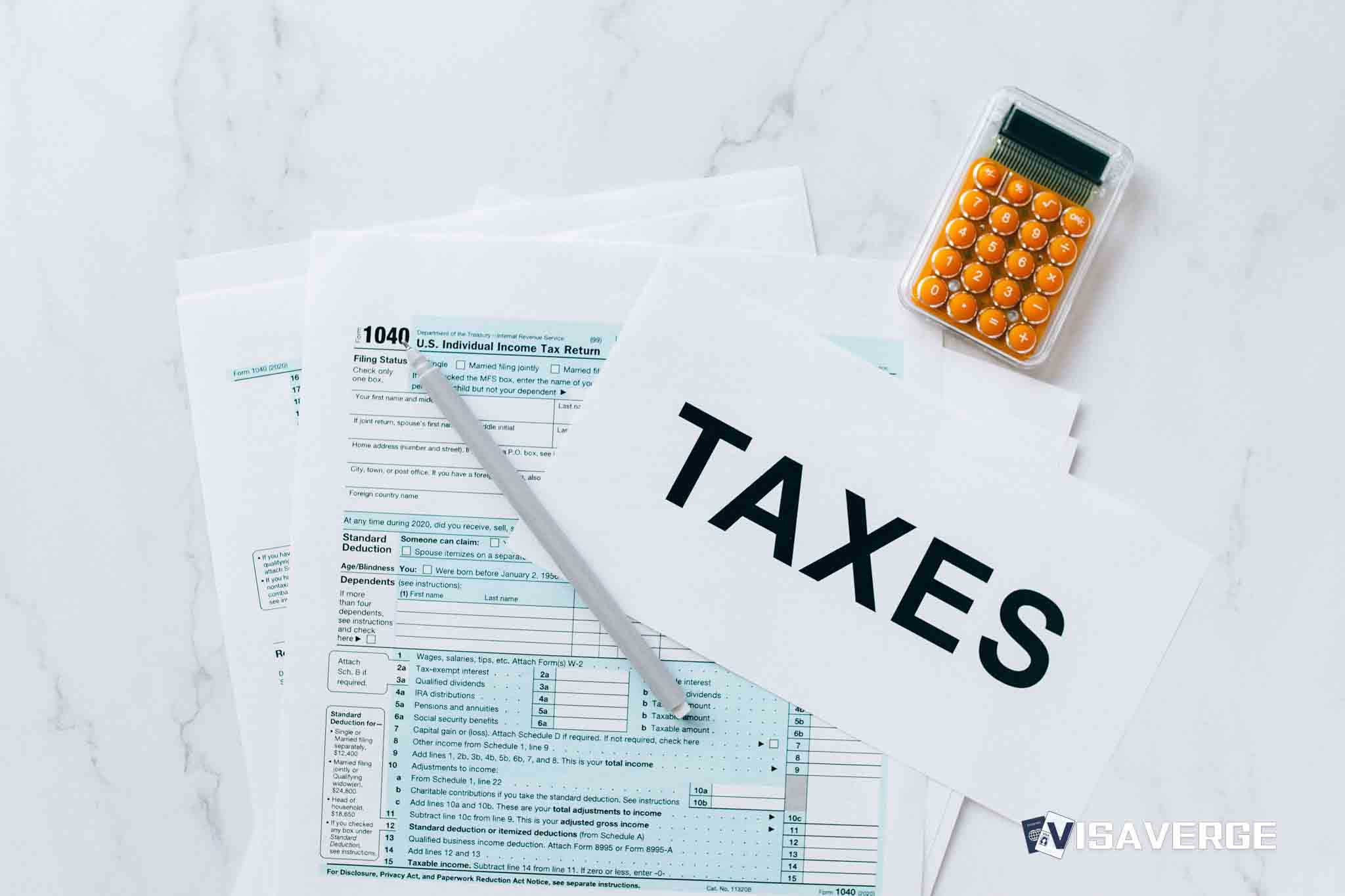
The credit is refundable. Eligible workers can receive it even if they owe no income tax, and claim it on Form 1040 or Form 1040-SR.
Filers claiming children must attach Schedule EIC. Workers without a qualifying child do not need that schedule.
Returns filed in spring 2027 cover tax year 2026. The 2027 projection is for a later tax year, with returns filed in 2028.
The projections differ across all four family-size categories
| Qualifying children | Checkpoint 2027 projection | Second estimate | Official 2026 maximum |
|---|---|---|---|
| None | $685 | About $680 | $664 |
| One | $4,573 | About $4,538 | $4,427 |
| Two | $7,552 | About $7,499 | $7,316 |
| Three or more | $8,496 | About $8,400 | $8,231 |
The second estimate cautioned that its amounts may differ by a few dollars from the final figures. The 2026 amounts are the official maximums. Each projection is a ceiling, not a guaranteed refund.
The estimate uses incomplete inflation data and statutory formulas
The projection draws on 11 months of inflation data, from September 2025 through August 2026. The 2025 government shutdown left no consumer price index for October 2025, so that month is absent from the calculation.
The credit is not a flat payment. It rises with earnings, holds at its maximum over an income range, then declines as earnings pass the phaseout threshold. Filing status and the number of qualifying children also affect the amount.
For families with two or more children, the projection uses earned income of $18,880, compared with $18,290 in 2026. Federal law sets the credit at 45% of that amount for families with three or more children, yielding the projected $8,496 maximum.
For families with children, the projected phaseout would begin at $32,170 for joint filers and $24,660 for other filers. For families with three or more children, the credit would disappear at about $72,500 for joint filers and $65,000 for other filers.
The final figures will come from agency tables that group incomes in $50 ranges. The agency typically publishes annual credit amounts in a Revenue Procedure between October and November.
Eligibility depends on earnings, investment income and household rules
Projected 2027 eligibility requires earned income and investment income of no more than $12,600. Filers, a spouse filing jointly and each child claimed must have valid Social Security numbers by the return’s due date.
Taxpayers must be a U.S. citizen or resident alien for the full year and cannot file Form 2555 for foreign earned income. Workers without children must be 25 to 64 at year’s end, live in the United States for more than half the year and not be claimable as someone else’s dependent.
A qualifying child must be under 19, or under 24 if a full-time student. The child must have lived with the taxpayer for more than half the year.
Residency-test failures and two people claiming the same child are common errors. So is leaving self-employment income off Schedule C. Taxpayers who missed the credit in an earlier year can amend with Form 1040-X within three years of the original filing deadline.
The official 2026 amounts show how income and filing status affect the credit
Revenue Procedure 2025-32 set the official 2026 amounts. It appeared in the Internal Revenue Bulletin on November 3, 2025. The maximums increased from 2025 by $15 for workers without children, $99 for one child, $164 for two children and $185 for three or more.
Investment income above $12,200 disqualifies a filer for 2026. The ranges below show where the phaseout begins and ends:
| Qualifying children | Single or head of household | Married filing jointly |
|---|---|---|
| None | $10,860 to $19,540 | $18,140 to $26,820 |
| One | $23,890 to $51,593 | $31,160 to $58,863 |
| Two | $23,890 to $58,629 | $31,160 to $65,899 |
| Three or more | $23,890 to $62,974 | $31,160 to $70,244 |
For two children, the 2026 credit falls by 21.06 cents for each dollar earned above $23,890. Congress sets phaseout rates in statute; annual inflation adjustments change the dollar amounts.
The maximum depends on income as well as family size. In 2026, workers without children reach it at $8,680 in earnings, while the one-child maximum begins at $13,020.
A married couple with two children and $28,000 in wages would receive the full $7,316 maximum. A single parent with two children earning $40,000 would receive about $3,900.
A House proposal would change more than annual inflation adjustments
H.R. 2800, the “Boost the Middle Class Act,” proposes broader changes to the credit. Mr. Vasquez introduced the bill on April 9, 2025, and it was referred to the Committee on Ways and Means. The bill text remains at the introduced stage in the 119th Congress’s first session.
The proposal would raise three earned-income amounts in the tax code: $6,330 to $13,629, $8,890 to $19,140 and $4,220 to $9,086. It would also change phaseout amounts from $11,610 to $24,992 in two instances and from $5,280 to $11,363 in another.
For married couples filing jointly, it would raise a phaseout amount from $5,000 to $7,612. The bill would update inflation-indexing references, replacing “2015” with “2026” and “1995” and “2008” with “2025.” Its amendments would apply to taxable years beginning after December 31, 2025.
The Institute on Taxation and Economic Policy estimates that the federal credit delivered about $69.6 billion to 24 million working families and individuals in 2025. Alongside the federal Child Tax Credit, it lifted an estimated 6.1 million people out of poverty that year.
This article is for informational purposes only and does not constitute tax advice. Consult a qualified tax professional or CPA about your specific situation.