Protect Borrowers estimated that households receiving income-driven repayment cancellation could face roughly $6,000 to nearly $12,000 in added federal taxes and lost credits. Those figures are modeled outcomes, not a guaranteed bill or a ceiling.
The change reaches borrowers whose qualifying loans are discharged after the temporary federal tax break ends, unless another exclusion applies.
The estimate reflects the combined effect of new tax and reduced credits in some household examples. A canceled balance is not cash paid to a borrower, so there is no deposit to cover any tax due.

The date of discharge and the forgiveness program matter. Some borrowers remain protected under separate federal rules.
The end of the exclusion puts many 2026 discharges on a different tax footing
The American Rescue Plan Act exempted qualifying student-loan discharges from federal income tax through December 31, 2025. Congress did not extend that temporary protection for ordinary IDR cancellation.
Section 70119 of Public Law 119-21 revised 26 U.S.C. § 108(f)(5). For discharges after December 31, 2025, that provision covers debt canceled because of death or total and permanent disability, rather than the broader temporary relief. Public Service Loan Forgiveness has its own federal exclusion under § 108(f)(1). The Department of Education reportedly said borrowers who reached their forgiveness milestone before January 1, 2026, but were discharged afterward, will not owe federal tax under an interim arrangement; a court settlement reportedly protects borrowers who met IDR forgiveness requirements before the end of 2025, even if discharge was processed later. These arrangements should be confirmed with the Department before borrowers rely on them.
Borrowers in income-based repayment, income-contingent repayment and Pay As You Earn plans may face taxable canceled debt after the exclusion ends. The repayment timelines vary: some plans require 20 or 25 years, while the Repayment Assistance Plan has a 30-year term and 360 qualifying payments.
Protect Borrowers estimates 2 million to 3 million borrowers could be exposed over the next decade. Enrollment by itself does not create taxable income; a discharge does.
Modeled household effects include lost credits as well as added tax
Protect Borrowers used an average canceled IDR balance of $49,697 in its household modeling. The examples produce different outcomes depending on income, filing status and dependents.
| Household example | Modeled federal impact |
|---|---|
| Family of four earning $40,000 | $10,558 total impact: $1,704 in new taxes and $8,854 in lost credits |
| Married borrower earning $60,000 with two dependents | $7,206 in additional taxes and lost credits |
| Single borrower earning $60,000 | $15,303 total federal tax after cancellation, versus $4,720 without it; $10,583 more |
The single borrower’s figures show total tax under two scenarios, not an added tax bill of $15,303. The other examples also combine taxes with credits that shrink, so the headline range should not be read as a tax amount every borrower will owe.
Stacey MacPhetres, senior director of education finance at Bright Horizons, said borrowers can still come out ahead financially even when cancellation produces a one-time bill.
“The borrower comes out far ahead even after paying taxes,” MacPhetres said. “The primary challenge is not the size of the tax relative to the forgiven debt, but the need to pay a potentially large one-time tax bill.”
Several federal exemptions still cover specific discharges
Public Service Loan Forgiveness and Teacher Loan Forgiveness remain exempt from federal income tax. Discharges caused by death or total and permanent disability also retain federal protection under the revised statute.
A borrower may be able to exclude canceled debt to the extent the borrower was insolvent immediately before discharge. Insolvency means liabilities exceeded the fair market value of assets at that point. The exclusion is limited to the insolvency amount, and retirement accounts count among assets.
Borrowers claim that exclusion on Form 982; the worksheet appears in IRS Publication 4681. It is not automatic. A borrower’s difficulty making loan payments alone does not establish insolvency.
Certain National Health Service Corps and state clinician-shortage repayment programs also have federal tax protection. The program responsible for the discharge determines whether a separate exemption applies.
State tax rules can diverge from the federal result
State tax treatment does not automatically follow the federal result. States use different rules, and a discharge that is federally taxable may receive different treatment on a state return.
Borrowers need current state-specific information before estimating a state bill, because state treatment may differ from federal treatment.
Protect Borrowers identified the South as especially exposed, citing larger balances and lower incomes. Its state analysis found the largest percentage increases in Louisiana and Mississippi; Louisiana’s average IDR forgiveness was nearly $55,300, compared with about $49,700 nationally. Those are canceled-balance figures, not estimates of state tax owed.
Louisiana and Alabama followed the earlier federal exemption at the state level, while Mississippi did not. State rules can change the result, so the federal estimates should not be treated as state tax calculations.
A 2026 discharge generally belongs on the return filed in 2027
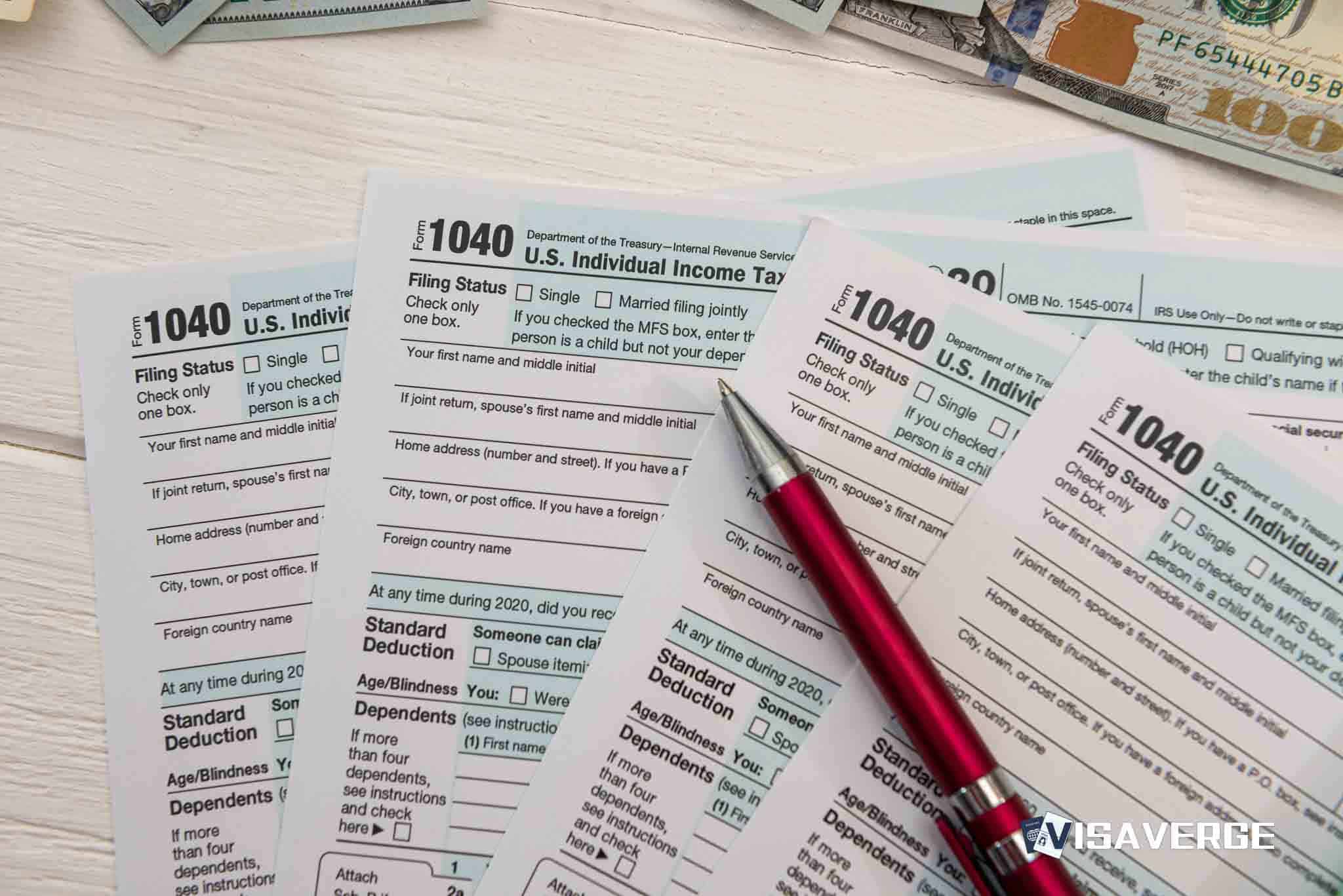
A discharge in 2026 generally goes on the federal return for that tax year, filed in April 2027. Servicers report canceled amounts on Form 1099-C. If the taxpayer cannot pay the resulting bill, the IRS offers payment plans, though interest and penalties may accrue.
Before filing, borrowers approaching cancellation can review:
- Which repayment or forgiveness program applies, and when the discharge is expected.
- The projected balance to be canceled and the tax documents issued for the discharge.
- State tax treatment, which may differ from the federal result.
- Whether the insolvency exclusion applies, including the value of assets and liabilities immediately before cancellation.
Protect Borrowers has urged Congress to make a federal exemption permanent for IDR and Repayment Assistance Plan discharges. That is a proposal, not a change in current law. Kevin Thompson, CEO of 9i Capital Group, said the bill could require some borrowers to cover a large expense at once: “This is another bill coming due for some borrowers, potentially requiring additional interest and penalties.”
This article is for informational purposes only and does not constitute tax advice. Consult a qualified tax professional or CPA about your specific situation.