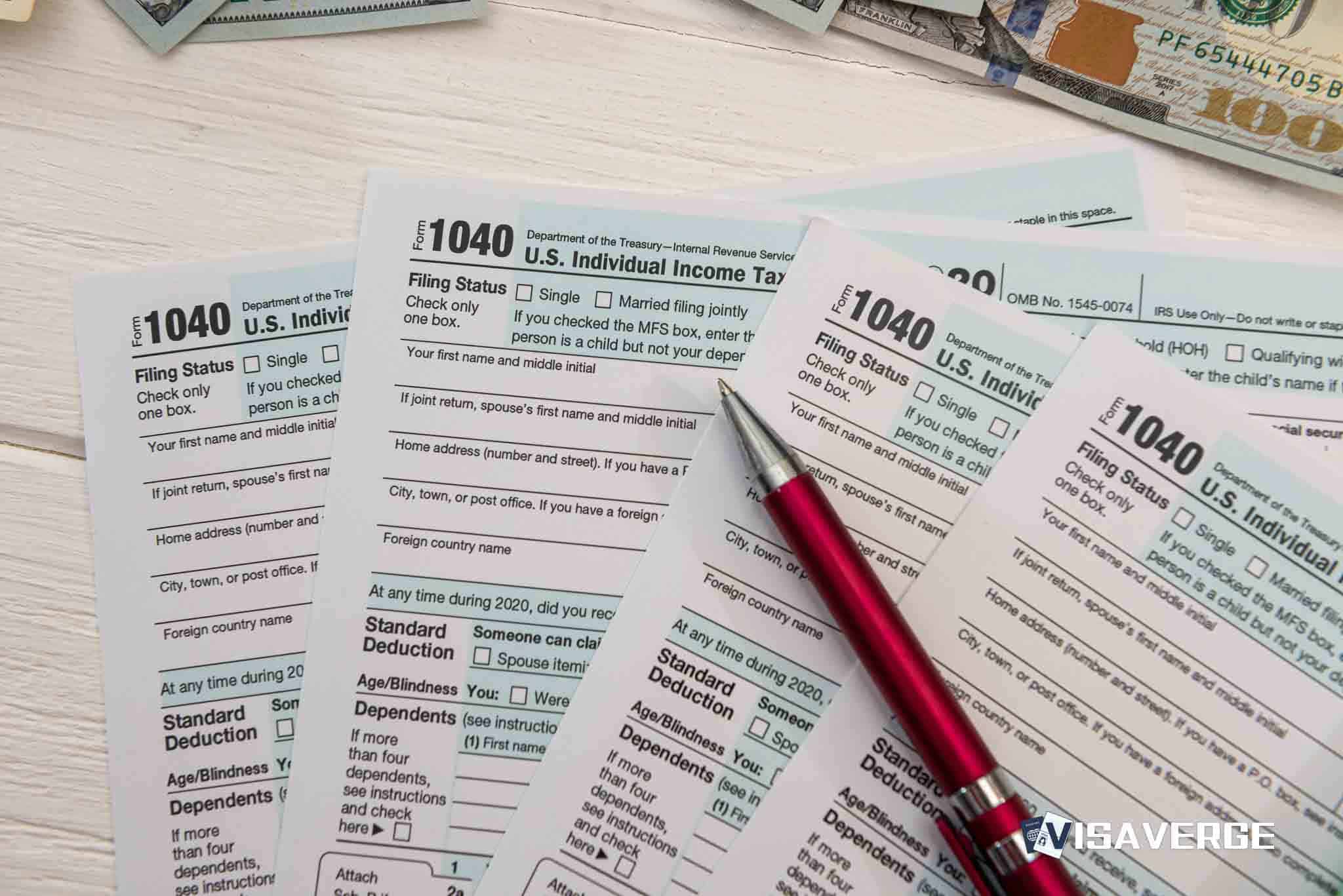
- December 2026 deadlines fall on December 7, 15 and 31, for different filer roles.
- TDS and TCS for November are due December 7 under the regular monthly rule.
- Form 141 date is December 31, but the 30-day rule points to December 30.
Checked against incometax.gov.in, wm.incometaxindia.gov.in and incometaxindia.gov.in

December 2026 has key income-tax deadlines on December 7, 15 and 31. They apply to different taxpayers, deductors, collectors and other filers, depending on their role, transaction and reporting period. Match each deadline to your situation and check for official updates.
How to use the December tax calendar
The dates apply to different roles and transactions. The calendar includes taxpayers, tax deducted at source (TDS) deductors, tax collected at source (TCS) collectors, government accounting offices, stock exchanges and people with specific reporting duties. A date on the list does not necessarily apply to you.
Match each entry to your role, the transaction and the month it covers. Also check which income period the obligation concerns, because the rules distinguish between AY 2026–27 and Tax Year 2026–27.
December 2026 income-tax deadlines at a glance
- December 7: Deposit ordinary TDS and TCS for November. Sellers must also forward applicable buyer declarations received in November using Form 127. Relevant taxpayers must deposit November STT/CTT by this date.
- December 15: Taxpayers liable under the regular advance-tax schedule must reach at least 75% of their advance-tax liability cumulatively by this date. Stock exchanges must file Form 1 for November client-code modifications. Government accounting offices must file Form 137 for November TDS/TCS paid through book adjustment. Deductors must issue Form 132 for specified TDS deducted in October. The December 2026 calendar identifies no TCS certificate due this month.
- December 31: Deductors must file Form 141 and pay for specified TDS deductions made in November. A belated return for AY 2026–27 is due by this date, unless assessment is completed earlier. Eligible taxpayers may also file a revised AY 2026–27 return in December before the additional revised-return fee begins. The additional fee applies to revised returns filed from January 1, 2027, through March 31, 2027, or until assessment is completed if earlier. From January 1, 2027, the additional fee is Rs. 1,000 for total income up to Rs.5 Lakh and Rs. 5,000 for total income exceeding Rs.5 Lakh. Eligible participants in the Foreign Assets of Small Taxpayers Disclosure Scheme, 2026 must submit Form 1 by this date.
Which year and reporting period applies?
A financial year (FY) is the period when income is earned. An assessment year (AY) identifies the year for reporting that income. Income earned from April 1, 2025, through March 31, 2026, is FY 2025–26 and is reported as AY 2026–27 under the Income-tax Act, 1961.
The Income Tax Act, 2025 uses “Tax Year” for income earned from April 1, 2026, onward. Income earned from April 1, 2026, through March 31, 2027, is Tax Year 2026–27. Its income-tax return is due in 2027, with the filing date depending on the taxpayer’s category, though advance-tax and withholding duties can fall within December 2026.
TDS and TCS deposits: the regular rule and exceptions
For ordinary monthly TDS and TCS, the November deposit deadline is December 7. Government offices that pay without an income-tax challan must instead pay on the day the tax is deducted or collected. The payment form for TDS and TCS under the Income Tax Act, 2025 is ITNS 281N.
Specified deductions reported through Form 141 follow a separate rule: file the challan-cum-statement and pay within 30 days after the end of the deduction month. For November 2026 deductions, the calendar gives December 31, 2026, but applying the stated 30-day rule points to December 30, 2026.
In a special case, an Assessing Officer may permit quarterly payment of specified TDS, but only with prior approval from the Joint Commissioner of Income-tax. The quarterly arrangement is not automatic.
Withholding statements and certificates
These reports and certificates have different filers and purposes:
- Form 127: The buyer gives a verified declaration in duplicate to the seller for qualifying purchases of specified goods. The seller forwards the required information through TAN login. The November deadline is listed above.
- Form 1: Stock exchanges file this for November client-code modifications. The filing deadline is listed above.
- Form 137: Government offices and departments use this monthly statement to report TDS or TCS paid through book adjustment. Its November deadline is listed above.
- Form 141: Deductors file this through PAN login for specified deductions, including covered rent, property-transfer, contract or professional-payment, and virtual digital asset transactions. Its November deadline is listed above, although the calendar date and the stated 30-day rule point to different days.
- Form 132: The deductor issues this TDS certificate to the person whose tax was deducted. It covers specified transactions, including rent, transfers of immovable property, technical services and transfers of virtual digital assets. Under the 2026 Rules, it replaces Forms 16B, 16C, 16D and 16E for covered transactions. The October certificate deadline is listed above.
The December 2026 calendar identifies no TCS certificate due this month.
Calculate the December advance-tax instalment
If your estimated tax payable for Tax Year 2026–27, after TDS, is ₹10,000 or more, you generally must pay advance tax. By the December 15 instalment date, taxpayers on the regular schedule must have paid at least 75% of their advance-tax liability. Subtract earlier instalments already paid from that cumulative target to work out what remains for this instalment.
Eligible taxpayers under the presumptive-tax provisions pay the full advance-tax amount by March 15, 2027, rather than following the December 15 target. A resident senior citizen aged 60 or above who has no income from business or profession is not liable to pay advance tax.
Belated and revised returns for AY 2026–27
No original AY 2026–27 return deadline falls in December. The original deadline for the specified audit-related category was extended to November 21, 2026. If you were required to file for AY 2026–27 but missed your applicable original deadline, you may file a belated return by December 31, 2026, or before assessment is completed if that happens earlier.
A belated return uses the applicable ITR form, filed electronically through the Income Tax Department’s e-Filing portal. After filing, complete verification of the return. The belated-return fee is ₹5,000, capped at ₹1,000 if your total income does not exceed ₹5 lakh.
If you have already filed a return, you may file a revised return if you meet the eligibility and time-limit conditions. For AY 2026–27, revised returns filed after December 31 and through March 31 incur an additional fee, or until assessment is completed if earlier. The additional fee from January 1, 2027, is listed in the calendar above. The final permissible revised-return date is still open.
Foreign-assets disclosures and other special cases
Eligible people may submit electronic Form 1 under the Foreign Assets of Small Taxpayers Disclosure Scheme, 2026, by December 31, 2026. The scheme covers specified foreign assets or income, but has eligibility conditions and exclusions. Check the scheme’s Form 1 guidance and, if eligible, file the declaration electronically with the prescribed income-tax authority.
The specified audit-related category’s AY 2026–27 audit-report date was extended to October 21, 2026, and its return date to November 21, 2026. For an assessee covered by section 92E, the ordinary return due date is November 30, not a December date.
How to make a tax payment
Choose the applicable Act and period.
Use the Income-tax Act, 2025 for Tax Year 2026–27 payments, or the Income-tax Act, 1961 for applicable AY 2026–27 payments.
Open e-Pay Tax.
Use the Income Tax Department’s e-Pay Tax service. For pre-login access, enter your PAN or TAN and verify with a mobile-number OTP. After logging in, go to e-File, then e-Pay Tax.
Create and check a challan.
Create a challan, also called a CRN, and choose the payment tile, tax type and period that match your obligation. Use ITNS 280N for applicable Income-tax Act, 2025 income-tax payments, including advance tax. Use ITNS 281N for applicable TDS or TCS payments. Form 141 has a separate route for its specified transactions, rather than the general monthly TDS/TCS deposit route.
Select a payment method.
Available methods include net banking, debit card at select authorized banks, payment at an authorized bank counter, RTGS/NEFT, and a payment gateway that may offer net banking, debit card, credit card or UPI. For a counter payment, print and sign the CRN and take it with the payment instrument to the bank you selected when creating the challan.
Keep the receipt.
After successful payment, retain the challan receipt as confirmation.
Gather documents and check filing details
- Reconcile income and tax paid against bank statements or passbooks, interest certificates, deduction receipts and investment proofs.
- Compare tax deducted at source (TDS) and tax-payment details with Form 16, Form 26AS and the Annual Information Statement.
- Check that the name matches your PAN details, and that the income and tax-computation figures are consistent when reporting taxes paid.
- When claiming TDS credit, select the section under which the tax was deducted.
- Use the applicable tax period and return form. The year distinction is explained above.
- Confirm which supporting documents and fees apply to your specific form or filing.
Interest, late fees and other consequences
The late-filing fee for a required return is listed above. Interest may also apply: for a delayed return, section 234A sets interest at 1% per month or part of a month on unpaid tax, from after the return due date until filing. If no return is filed, the stated period runs until assessment is completed.
| Charge | Rate or amount | When it applies |
|---|---|---|
| Section 234F late-filing fee | See the fee above | When a required return is filed late |
| Section 234A interest | 1% per month or part of a month on unpaid tax | For a delayed or missing return, as described above |
For Tax Year 2026–27 TDS/TCS obligations, interest is 1% per month or part of a month if tax is not deducted or collected on time, and 1.5% per month or part if deducted or collected tax is not deposited on time. For specified advance-tax defaults under sections 424 and 425, the stated rates are 1% per month or part, and 1% or 3% for specified instalment deferment periods. The exact advance-tax charge depends on the circumstances.
Correct an error or deal with a missed deadline
Correct an eligible income-tax challan.
Log in to the e-Filing portal’s Challan Correction service, then go to Services > Challan Correction and create a request. The portal supports eligible corrections for minor heads 100, 300 and 400. Request a Tax Year or Assessment Year change within 7 days of deposit, or another supported correction within 30 days.
Check whether the portal can make the correction.
The portal allows one correction request per challan. For a further correction, contact the Jurisdictional Assessing Officer. The portal’s challan correction service does not handle TDS/TCS challans; use TRACES or contact the Assessing Officer.
Correct a TDS/TCS statement.
Download the consolidated file from TRACES, prepare the correction statement, validate it with the File Validation Utility (FVU), and submit the validated file through a TIN-FC.
Choose the return route that fits your case.
For a return already filed, check whether a revised return is available; the fee for a revised AY 2026–27 return filed after December 31 is listed above. For a missed AY 2026–27 return, the belated-return deadline and fee are also covered above.
Check before using an updated return.
An updated return is subject to statutory exclusions and additional tax, has a 48-month filing limit, and cannot be revised.
What is not yet known
Check the Income Tax Department’s Tax Calendar for additional entries or later changes. A separate December 2026 trust or nonresident filing deadline beyond the obligations described here is still open.
The Income Tax Act, 2025 deposit timing is prescribed by rules, and not every transaction-specific exception is set out here. A complete list of supporting documents and filing fees for every December form, certificate and return is still open. The December 2026 calendar is the place to check for any additional entries or later changes. Consequences and start dates for every missed December statement or certificate, and taxpayer-specific advance-tax interest calculations, are still open.
Checking changes and getting help
Frequently asked questions
Where can I check the deadline for my filing category?
Use the Income Tax Department’s Tax Calendar and select the relevant year. Check the Department’s latest news and e-campaigns and the applicable CBDT circular, order or notification for any change to the date or its scope.
Does a public holiday automatically move a tax deadline?
The Tax Calendar page does not explain how holidays affect deadlines. Check for an official notice or circular before treating a deadline as moved.
Are the October–December quarterly TDS statements due in December?
No. The Q3 Form 138 statement for salary, pension or interest TDS, and Form 140 for non-salary TDS on resident payments, have a January 31 due date.
When should I seek professional help?
Consider consulting a qualified tax professional if you are unsure which rules or deadline apply to your circumstances, including where different tax years or an audit-related filing may be involved.
What if I receive a notice about a defective return?
A taxpayer may need to respond to a notice about a defective return. If no response is made, the return may be treated as invalid or not filed. Use the e-Proceeding guidance for the response process.