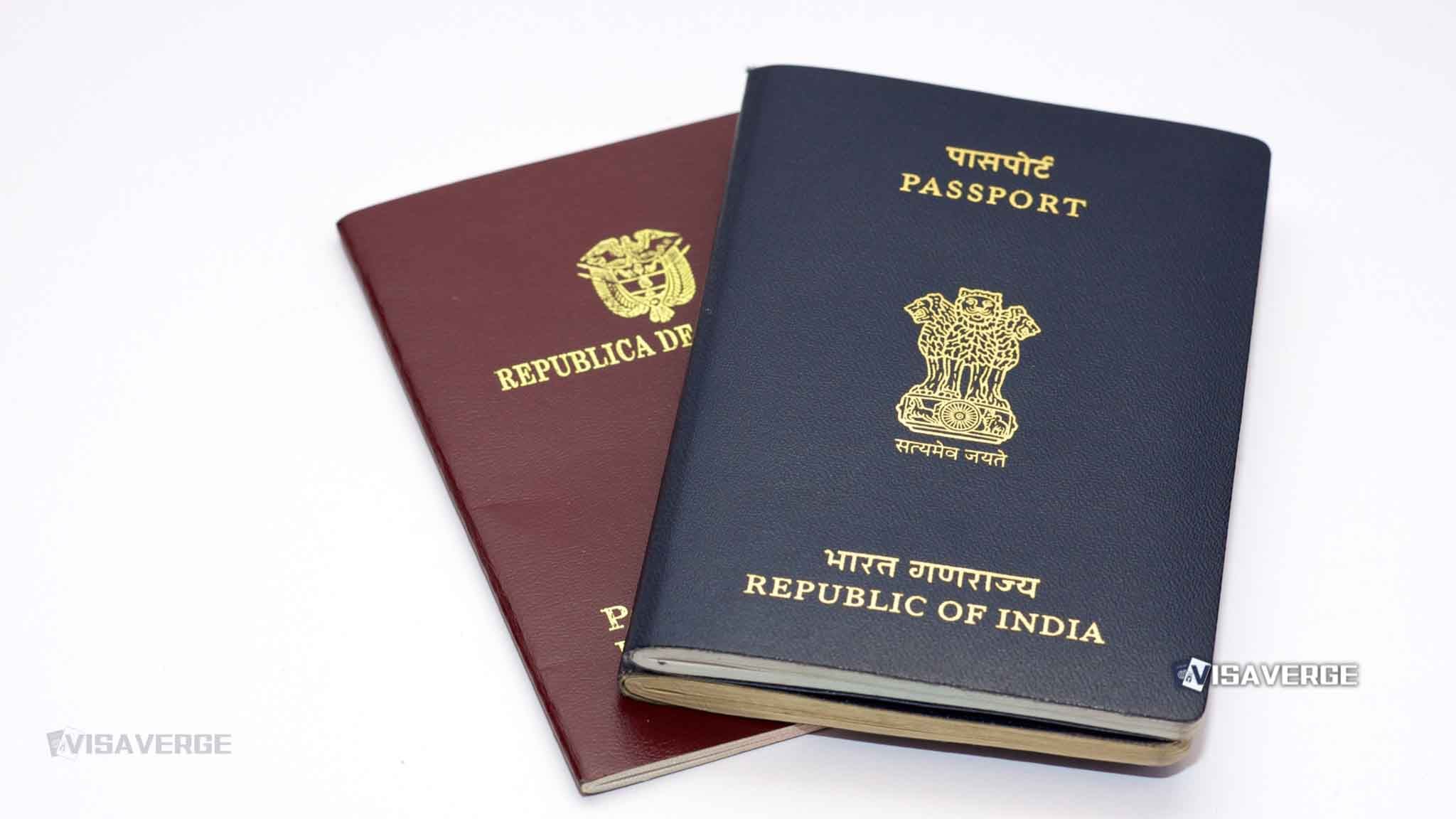
- The Bombay High Court ruled that pending criminal cases cannot automatically bar passport renewals for applicants.
- Authorities must issue standard 10-year renewals unless a specific court order mandates a shorter duration.
- The court distinguished between possessing a passport and the separate permission required to travel abroad.
(BOMBAY, INDIA) – The Bombay High Court ruled on April 29, 2026 that pending criminal cases do not automatically bar passport renewal, and it issued guidelines aimed at stopping arbitrary denials and procedural delays.
A Division Bench of Justice A.S. Gadkari and Justice Ranjitsinha Raja Bhonsale said passport authorities must process renewal applications under the Passports Act, 1967 and cannot treat a pending case, by itself, as a blanket reason to refuse a passport. The judges also drew a clear line between renewing a passport and permitting a person to travel abroad.

The ruling turned on two legal points. Section 6 of the Passports Act, 1967 governs issuance and renewal, and the bench said refusal must rest on specific statutory grounds after the necessary inquiry. The court also invoked Article 21 of the Constitution, tying passport access to the right to personal liberty.
That legal distinction shaped the rest of the judgment. A criminal court may insist on permission, or on a No Objection Certificate, before an accused person leaves India, but the Bombay High Court said the passport itself cannot be withheld as a routine response to pending proceedings.
The bench placed that finding alongside Rule 12 of the Passport Rules, 1980. Ordinary passports for people above 15 years of age carry a validity of 10 years, and renewals are granted in 10-year blocks unless authorities record reasons for issuing a shorter term.
That point mattered because the cases before the court reflected a pattern of applicants being pushed into avoidable court processes. One petitioner, facing trial under the Indian Penal Code, asked a Magistrate for an NOC to renew a passport and had that request rejected. The Magistrate noted that no court permission was needed for renewal itself.
Connected matters involving seafarers showed a different version of the same problem. Pending summons at the pre-cognizance stage stalled renewals, and that delay affected both livelihoods and work visas. The court’s guidelines addressed those disruptions directly.
The judges said passport authorities should renew passports for the standard 10-year period unless a court orders otherwise. That instruction rejected the idea that shorter renewal periods should become the default whenever criminal proceedings remain pending.
The bench also favored administrative solutions over repeated courtroom hearings. It said authorities should use administrative NOCs where possible, supported by trial status, attendance records, and undertakings or affidavits verified by the criminal court.
That approach, the court said, serves two purposes at once. It preserves the state’s interest in ensuring that an accused person remains available for trial, and it avoids turning routine passport renewal into a separate layer of litigation.
The judgment described passport authorities as arms of the state and said they must act fairly and transparently. The judges linked that duty to the practical consequences of delay, including legal costs and repeated procedural hurdles that build up when applicants are sent from passport offices to trial courts and back again.
By separating renewal from travel permission, the bench set out a narrower role for criminal courts in passport matters. Courts can impose conditions tied to travel if they need to protect the progress of a trial, but the ruling said those restrictions exist to ensure smooth proceedings and the availability of the accused, not to support a blanket denial of rights.
The judgment applies beyond the specific facts of the petitions that reached the bench. It said the same principles extend broadly, including to pending domestic violence proceedings, a point that widens the order’s effect across categories of criminal cases rather than limiting it to one type of prosecution.
That broader reach is likely to affect day-to-day processing at passport offices. Applications that once triggered a reflex demand for a court order or an NOC now fall under a framework that requires officials to identify an actual statutory ground for refusal, or to process the renewal in the ordinary course.
The ruling also addresses a recurring mismatch between administrative practice and statutory language. Section 6 of the Passports Act lists grounds on which authorities can refuse issuance or renewal, but the court said a pending case alone does not create an automatic disqualification. The existence of criminal proceedings may still matter in a given case, but it does not erase the need for an inquiry under the statute.
That reading tracks the bench’s reliance on Rule 12. If ordinary passports above age 15 run for 10 years and renewals ordinarily follow the same 10-year pattern, a shorter passport term requires reasons. The court’s directions therefore place the burden on authorities to justify any departure from the standard period rather than forcing the applicant to prove entitlement to normal renewal.
The seafarer cases highlighted the stakes in concrete terms. A stalled passport renewal can interrupt work that depends on international movement and current visa documentation, even before any court decides whether a person may travel on a particular date or for a particular job.
The petitioner whose NOC request was rejected by the Magistrate illustrated a different problem. The trial court itself took the position that no permission was needed for renewal, yet the applicant still faced a process shaped by demands for a certificate that the court did not consider necessary.
The bench’s answer was coordination. Administrative NOCs, verified records from the criminal court, and affidavits from the applicant can give passport authorities enough information to act without turning each renewal into contested motion practice.
That has implications for judicial workload as well. The judges framed their directions partly as a response to unnecessary NOC demands that pull trial courts into routine administrative questions and impose fresh costs on people already involved in criminal proceedings.
The court also tied its reasoning to constitutional protection. By invoking Article 21, the bench placed passport access within the larger frame of personal liberty, while stopping short of treating a passport as an unrestricted travel pass for every accused person in every case. Renewal and departure from the country remain separate questions.
That separation is likely to become the central operating rule after the judgment. Passport possession does not automatically entitle an accused person to leave India, and a pending prosecution does not automatically strip that person of the right to obtain or renew the document.
Authorities now have a clearer set of directions from the Bombay High Court: do not deny renewal solely because a criminal case is pending, issue the passport for the normal 10-year term unless a court orders otherwise, and use verified administrative mechanisms before sending applicants into another round of litigation.
The judges urged a system that reduces “unnecessary delay and inconvenience,” a phrase that captures the practical problem the ruling set out to fix: a passport renewal process slowed not by the statute itself, but by habits of refusal that the court said the law does not support.