- Heathrow handled 18.9 million passengers in Q1 2026, marking a 3.7% increase despite regional conflict.
- Middle East traffic plummeted by over 50% in March due to the ongoing war in Iran.
- Persistent geopolitical uncertainty is expected to suppress traveler demand through the remainder of 2026.
(LONDON, UK) – Heathrow Airport warned that the ongoing war in the Middle East will likely cut its passenger numbers for the rest of 2026, even after the airport posted growth in the first three months of the year.
The airport said the conflict, which began on February 28, 2026, has created enough uncertainty across the region to weigh on demand through the end of the year. Heathrow linked that outlook to disrupted travel patterns, initial airspace closures, and continued caution among travelers even after much of the region reopened.
Free toolB1/B2 Tourist Visa Stay Calculator online
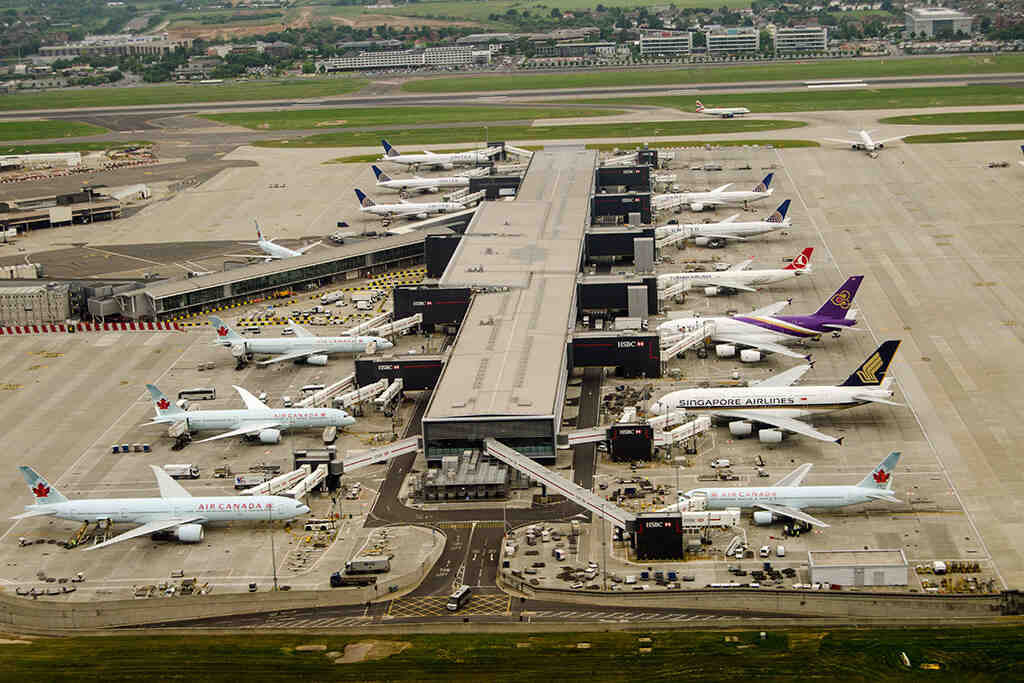
Heathrow handled 18.9 million passengers across its four terminals in the first quarter of 2026, a 3.7% year-on-year increase. That rise came as the airport temporarily absorbed demand diverted from other hubs.
Pressure showed up most sharply on routes tied to the conflict zone. Middle East-bound traffic through Heathrow collapsed by over 50% in March 2026 because of the Iran war, even as total passenger numbers still rose.
The airport said the early phase of the conflict brought airspace closures across the region. Much of that airspace has now reopened, but Heathrow said many travelers remain reluctant to fly there while fighting continues.
That matters for Heathrow because traffic flows through the Middle East reach far beyond the region itself. Dubai, Doha, and Abu Dhabi airports, central transfer points for Europe-Asia and Australia routes, typically handle about 500,000 passengers per day.
When those hubs face disruption, the effects spread into connecting traffic through Heathrow Airport. A drop in confidence among passengers bound for the Middle East, or those passing through it, can alter flows across long-haul networks that depend on those transfer points.
Heathrow set out that outlook in its trading update, saying: “While Heathrow has temporarily absorbed demand from elsewhere, passenger numbers for the rest of the year are likely to be impacted whilst there is significant uncertainty in the Middle East.”
The wording points to a split picture in the airport’s traffic. Heathrow benefited in the first quarter from passengers and airlines shifting around immediate disruption elsewhere, but it also signaled that such gains do not cancel out the broader drag from a prolonged Iran war and wider instability in the Middle East.
The first-quarter figures capture that tension. Total passenger volume rose, yet one part of the network deteriorated sharply in March 2026, when Heathrow’s Middle East-bound traffic fell by more than half.
That contrast helps explain why Heathrow’s warning focused on the rest of the year rather than on the quarter already reported. Early displacement can lift traffic at a major hub for a time; persistent uncertainty can then suppress bookings, reshape itineraries, and reduce appetite for travel linked to the affected region.
Heathrow did not describe a broad collapse in overall demand. Its figures instead show an airport still growing, but doing so while one strategically important corridor weakened severely.
The regional role of the three Gulf hubs adds to that pressure. Dubai, Doha, and Abu Dhabi do not serve only local passengers; they anchor vast connecting networks between Europe and destinations across Asia and Australia, so disruption there can ripple into airports far outside the conflict zone.
For Heathrow, that means the impact of the Middle East conflict reaches beyond flights ending in the region. It also touches passengers who would normally transit through those airports, airlines adjusting schedules, and route patterns that depend on reliable connections across the Gulf.
Airspace conditions have improved from the first days of the conflict, with much of the region reopened. Heathrow’s warning suggests that operational reopening has not fully restored traveler confidence.
That distinction is central to the airport’s outlook. Flights can resume through reopened airspace, yet passenger numbers can still weaken if travelers continue to avoid the region or change their plans because of uncertainty tied to the Iran war.
Heathrow’s statement also indicates that the airport sees the issue lasting beyond a short operational shock. Its reference to passenger numbers “for the rest of the year” places the effect across much of 2026, not only in the immediate aftermath of the conflict’s outbreak on February 28, 2026.
The airport’s first-quarter performance nonetheless showed resilience at scale. Handling 18.9 million passengers across four terminals while parts of the global network came under strain reinforced Heathrow’s position as one of the main points where displaced demand can briefly land.
Still, Heathrow made clear that temporary support from diverted traffic has limits. A sustained period of uncertainty in the Middle East can weigh on aviation demand in ways that a single strong quarter does not offset.
That leaves airlines and passengers facing a market shaped by caution as much as by capacity. Travel decisions, routing choices, and the use of Gulf transfer hubs all become more sensitive when conflict persists and the outlook remains unsettled.
For the wider industry, Heathrow’s figures offer an early measure of how a regional war can produce opposite effects at once: a short-term rise in passengers at one major airport, and a steep fall on traffic tied directly to the conflict area. Heathrow’s own assessment points to the second force lasting longer.
Its quarter began with growth and ended with a warning. Passenger numbers rose by 3.7% year on year, but Heathrow said the uncertainty hanging over the Middle East is likely to shape the rest of 2026.