- Congress has allocated $170 billion to fund the largest immigration enforcement and detention buildout in decades.
- New policies aim to hold 116,000 non-citizens daily while significantly increasing deportation operations and ICE funding.
- Restrictive measures including visa suspensions and social media vetting could block half of all legal immigration to the U.S.
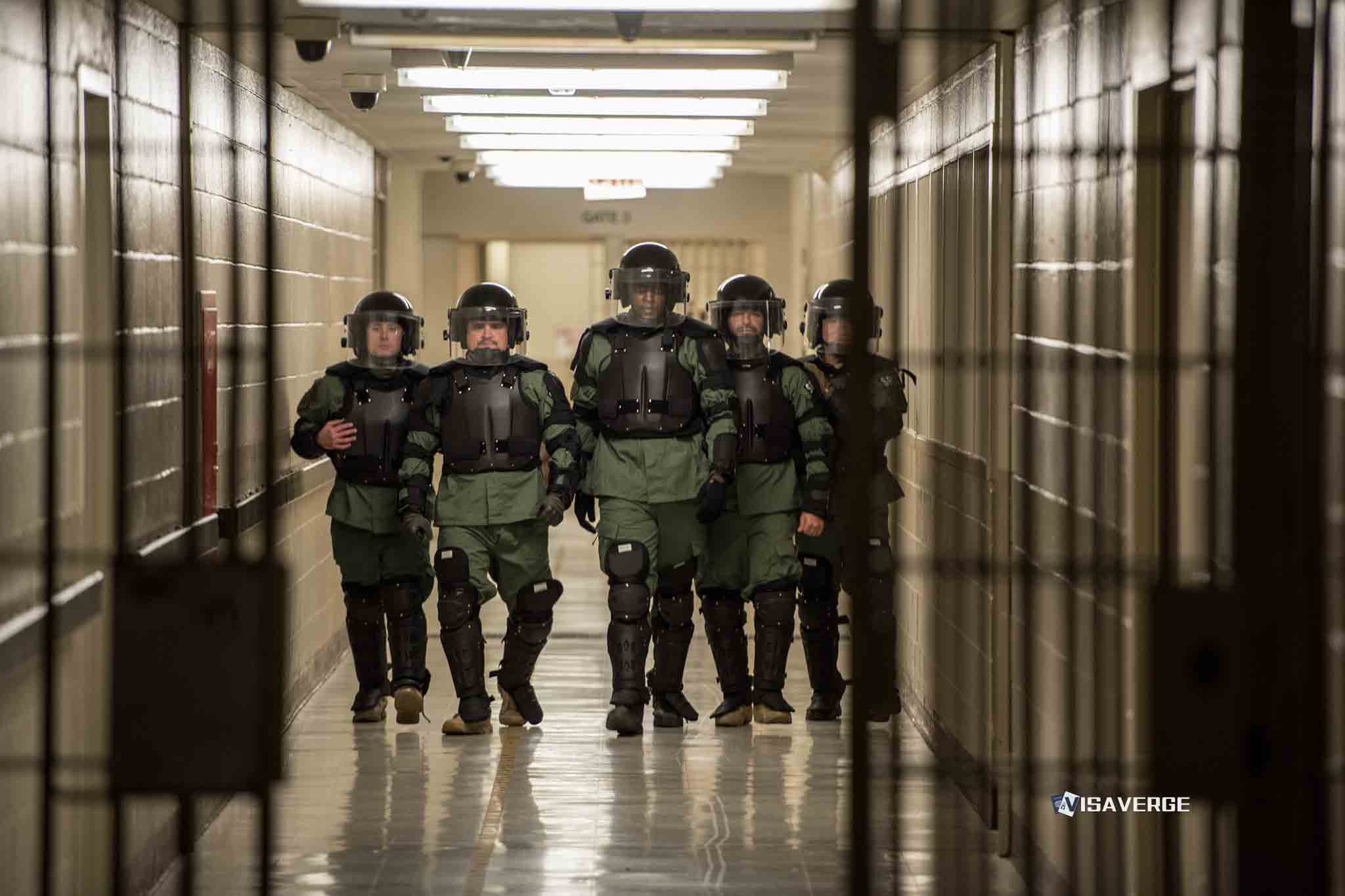
(UNITED STATES) — Congress approved a July 1, 2025 reconciliation bill that allocates $170 billion for immigration enforcement, detention, and border infrastructure, setting in motion the largest enforcement buildout in decades and giving federal agencies funds to hold at least 116,000 non-citizens in custody each day.

That funding more than doubles federal support for removals, with a 265% increase in funding for ICE detention and a threefold boost to deportation operations. Analysts estimate between 11 million and 17 million people could face removal if the plans proceed at scale, including approximately 700,000 TPS holders.
As of early 2026, the Trump Administration has paired that enforcement expansion with broad limits on legal immigration. It suspended the approval of immigrant visas for people from 75 countries in January 2026, imposed new vetting rules across more visa categories, and moved to cancel or revoke humanitarian protections for over 1.5 million people.
Free toolUSCIS Receipt Number DecoderThe enforcement push reaches beyond undocumented immigrants. In June 2025, President Trump issued an Executive Order restricting nationals from 19 countries from entering the U.S., and the Administration later argued that suspending immigrant visa approvals for people from 75 countries would ensure individuals from “high-risk countries do not utilize welfare in the United States.”
By some estimates, that measure will block about half of all legal immigration to the U.S. The policy is being challenged in the Southern District of New York.
At the same time, the Administration reshaped the H-1B program. It introduced a $100,000 fee for new petitions for workers located outside the U.S. and replaced the random lottery with a system favoring positions with higher wages.
In March 2026, the Department of Labor proposed broader wage changes that would raise minimum salary thresholds across all H-1B levels, with entry-level wages potentially increasing by more than 30%. The proposal also applies to H-1B1, E-3, and PERM cases, affecting new filings only.
December 2025 brought another layer of screening when the U.S. Department of State announced the creation of a new USCIS Vetting Center to “centralize the enhanced vetting” of applicants. Starting March 30, 2026, the department expanded online presence screening to more nonimmigrant visa categories, including K-1 fiancé(e) visas, religious workers, trainees, domestic workers, and humanitarian categories such as T and U visas.
Applicants must make social media accounts public for review. Expanded travel restrictions effective January 1, 2026 also take into account passport nationality, country of birth, dual nationality, prior long-term residence abroad, and recent travel history.
The reconciliation bill sits at the center of the machinery now taking shape. It funds new detention centers, including family facilities, supports expanded arrest teams, and backs fast-track removal processes that can move cases from arrest to deportation in days.
That expanded detention capacity gives federal authorities room for sustained mass arrests and transfers nationwide. Plans also envision wider use of expedited removal, a summary process that bypasses full immigration court hearings and cuts time in custody while reducing due process protections.
Project 2025 proposals have added another layer to those changes. Conservative policy architects behind the plan, backed by President Trump and allied think tanks, seek the repeal of all Temporary Protected Status designations and call for the mass removal of all undocumented immigrants, a population commonly estimated at about 11 million and, by some counts, higher.
The plan also aims to accelerate removals by expanding expedited removal beyond border regions, restricting access to legal counsel, and imposing strict case-completion quotas on immigration judges. Advocates and legal groups warn those steps would shrink due process and make it easier to deport people who might otherwise qualify for relief, while supporters describe the approach as a return to “law and order.”
Mixed-status families stand at the front of the impact. About 4.4 million U.S.-born children live with at least one parent who lacks permanent status, and policy models project that when a parent is removed, median household income typically falls by 50%.
Those models also project a cumulative loss of $118 billion in support for U.S.-citizen children left behind. Children often face sudden changes in caretakers, unstable housing, and long gaps in schooling after a parent’s detention or deportation.
Housing pressures could spread quickly through immigrant communities. Around 1.2 million households with undocumented residents have mortgages, and missed payments after a detention or removal can cascade into foreclosures.
Community groups warn that forced sales could depress property values, unsettle municipal tax bases, and slow neighborhood recovery for years. The effect would be especially sharp in Latino neighborhoods, where recent homeownership gains may be uneven and newer buyers more exposed to job loss.
Economists also project broad national costs if removals proceed at scale. Forecasts project a 4.2% to 6.8% decline in U.S. GDP, with a potential $4.7 trillion cumulative loss over a decade.
Tax collections would fall as well. In 2022, undocumented immigrants paid an estimated $46.8 billion in federal taxes and $29.3 billion in state and local taxes, while contributions from undocumented workers were estimated at $22.6 billion to Social Security and $5.7 billion to Medicare.
The Penn Wharton Budget Model projects that mass deportation would raise the deficit by $986.8 billion over 10 years, even if some public spending falls. Business groups warn labor gaps would push up costs and slow projects in agriculture, construction, and hospitality.
Some bipartisan groups of lawmakers have proposed narrower adjustments instead of broad restrictions, including exempting healthcare workers from the H-1B fee and increasing the availability of H-2A visas. The Administration has also proposed changes to the H-2A program to address farm labor shortages and has expressed openness to reform some ICE tactics.
Social fallout is already a concern for schools, clinics, and local governments. Community clinics and school districts report that parents are avoiding vaccinations, routine checkups, and school events to limit exposure to authorities.
Public health experts warn that behavior could spread illness and weaken local safety nets. Healthcare providers also report that pregnant women avoid prenatal care, parents delay vaccinations for children, and people with chronic conditions skip appointments.
Hospitals and clinics that serve immigrant populations are bracing for reduced patient volumes and related financial strain. Some healthcare systems have already had to reduce services or close facilities in areas where immigrant populations declined because of enforcement actions or voluntary departures.
Schools face their own strain. Teachers report that fear of immigration enforcement affects classroom participation and academic performance, while children whose parents are detained or deported often face disrupted education, increased absenteeism, and psychological trauma.
Districts with large immigrant populations are preparing for possible enrollment declines and the loss of federal funding tied to student attendance. International students and their families face another layer of uncertainty as social media vetting extends to more visa categories, including student visas, and lengthens processing times.
Legal fights are moving alongside the policy changes. States and cities that limit cooperation with federal immigration arrests face pressure as new funding allows federal teams to work without relying on county jails or local police.
Courts are also hearing challenges to detention conditions, fast-track removals, and restrictions on legal access. Some cases may turn on whether strict judge quotas and reduced representation deny fair hearings.
The Supreme Court heard oral arguments on April 1, 2026 on President Trump’s effort to end birthright citizenship for those born to parents who are present in the U.S. illegally. The case could affect millions of U.S.-born children with undocumented parents.
Even as enforcement expands, the legal immigration system has moved unevenly in other areas. The U.S. Department of State released its April 2026 Visa Bulletin with forward movement in several employment-based and family-based categories, and USCIS said it will continue to accept adjustment of status applications based on the “Dates for Filing” chart for the sixth consecutive month.
The EB-2 category for the Rest of the World, Mexico, and the Philippines became “Current” for final action dates. India EB-2 moved to January 15, 2015 for Dates for Filing, while the Final Action date advanced to July 15, 2014.
Family-based categories also moved forward, with F-2A returning to “current” across all countries. But the Department of State attributed recent advancement to reduced immigrant visa issuance at U.S. consulates after actions implemented by the Trump administration, and warned that movement may remain limited and non-linear before the fiscal year ends on September 30, 2026.
The government also updated income rules for family-based sponsorship. In 2026, most sponsors must earn at least $27,050 to support a household of two under the Affidavit of Support process, with higher thresholds for larger families.
Green card holders face more scrutiny as well. New travel restrictions and enhanced background checks have produced longer processing times and greater variability at consular posts and ports of entry, especially in the early part of 2026, while stricter enforcement for conditional green card holders and expanded refugee re-screening have added to the pressure.
For families living with the threat of removal, the effects are immediate. A construction worker who has lived in the U.S. for a decade may face a roadside stop, transfer to custody, and a one-way flight in a matter of days if expedited processes apply.
A mother with TPS could lose her status and struggle to present evidence for other relief without counsel. Even lawful permanent residents may avoid public spaces when sweeps are rumored, worried that a paperwork error could lead to ICE detention and months away from work and children.
State and local leaders remain divided. Some governors and mayors support the federal push, arguing it will reduce irregular crossings and ease pressure on shelters and schools, while others warn it will damage local economies and leave classrooms reeling when children lose a parent overnight.
Immigrant rights organizations are calling for legalization programs for long-settled residents, work authorization to meet employer demand, and guaranteed legal representation in removal proceedings. Immigration lawyers argue that when people have counsel, courts make better decisions, whether the outcome is removal or lawful status, and they warn that a speed-driven system with less legal access will push error rates higher as volume rises.