- ICE purchased a warehouse for $145.44 million to create Salt Lake City’s first dedicated detention center.
- Local leaders condemned the plan as inhumane and a violation of local zoning and community resources.
- DHS defends the project, citing significant economic benefits including thousands of jobs and billion-dollar GDP contributions.
(SALT LAKE CITY, UTAH) — U.S. Immigration and Customs Enforcement purchased a 24.9-acre warehouse at 6020 W. 300 South in Salt Lake City, Utah, for $145.44 million on Wednesday, March 11, 2026, setting up plans to convert the property into a detention facility and triggering an immediate backlash from local leaders.
The sale closed on March 11, 2026, and federal plans call for turning the warehouse into an ICE detention facility, a move that would give Utah its first dedicated ICE center.
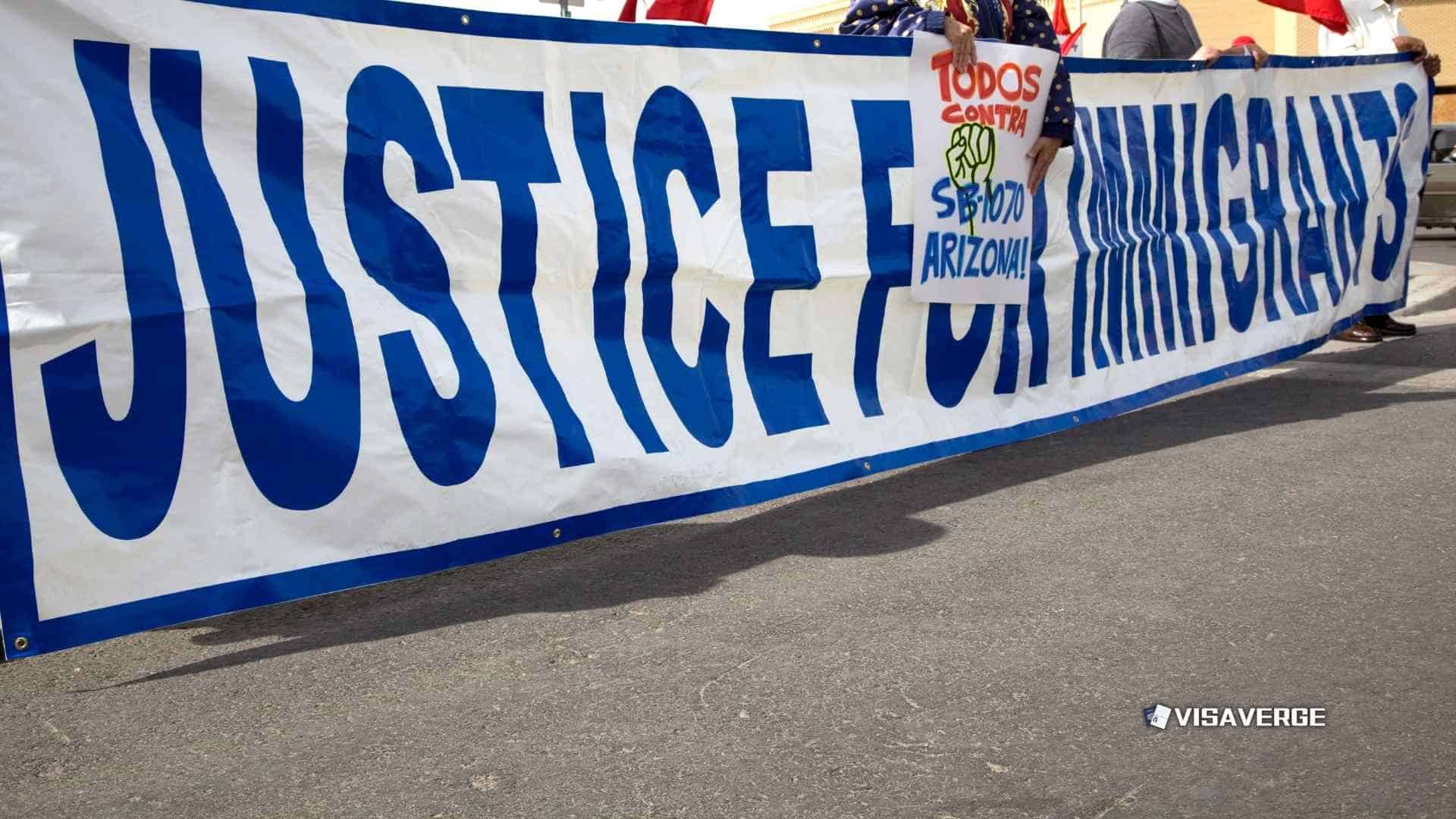
Salt Lake City Mayor Erin Mendenhall responded two days later with a public statement that called the proposal “inhumane” and “outside the scope” of local zoning allowances and resources. She directed city attorneys to explore legal interventions while coordinating with federal and state partners.
Mendenhall tied her objections to the setting around the property, pointing to its proximity to the state prison and a homelessness-services campus. “Utah’s capital city—settled 175 years ago by pioneers seeking safe refuge—is not the place, nor does it have the capacity, to host the state prison, a homelessness campus and a federal ICE detention center so closely congregated,” she said.
Salt Lake County Mayor Jenny Wilson also denounced the plan and urged residents to resist. Wilson pointed back to January 2026, when protests halted a prior rumored site at 1197 N. 6880 West owned by The Ritchie Group, which later confirmed no sale to ICE.
| India | China | ROW | |
|---|---|---|---|
| EB-1 | Apr 01, 2023 ▲31d | Apr 01, 2023 ▲31d | Current |
| EB-2 | Jul 15, 2014 ▲303d | Sep 01, 2021 | Current |
| EB-3 | Nov 15, 2013 | Jun 15, 2021 ▲45d | Jun 01, 2024 ▲244d |
| F-1 | May 01, 2017 ▲174d | May 01, 2017 ▲174d | May 01, 2017 ▲174d |
| F-2A | Feb 01, 2024 | Feb 01, 2024 | Feb 01, 2024 |
Utah State Sen. Luz Escamilla, a Democrat from Salt Lake City whose district includes the area, called the purchase “irresponsible.” She said ICE moved ahead without consulting local officials and warned the project would strain infrastructure while casting what she described as a “chilling effect” over the diverse west side community.
The dispute quickly widened beyond city hall. U.S. Sen. John Curtis, a Republican from Utah, warned against moving forward without local input and said he relayed concerns to Sen. Markwayne Mullin, a potential DHS secretary nominee.
Utah Senate Minority Leader Lelia called the development “alarming,” citing a lack of transparency and plans for “mega detention centers” housing up to 7,500 detainees. The Utah Democratic Party opposed expanding detention operations and called for greater federal disclosure.
The Department of Homeland Security confirmed the purchase and defended the project in a statement that framed the detention facility as part of a broader federal buildout. “ICE purchased a facility in Salt Lake City, Utah. These will be very well-structured detention facilities meeting our regular detention standards,” a DHS spokesperson said.
Federal officials said community impact studies showed the site would not create infrastructure hardship for the surrounding area. DHS also cited projected economic effects of 9,893 jobs, a $1.1 billion GDP contribution and $238.7 million in tax revenue.
The Salt Lake City purchase fits into a $45 billion national initiative under the “Big Beautiful Bill” to repurpose warehouses in multiple states. Officials tied the Utah plan to similar efforts in Arizona, Georgia and Texas.
That broader push has raised the stakes in Utah because the project would not expand an existing dedicated ICE center. It would create a new detention footprint in a state that has not previously had one.
Local officials have treated that distinction as central to the fight. Their objections have gone beyond immigration policy and into land use, public services and whether a large detention facility belongs in an area already shaped by prison operations and homelessness services.
DHS has argued the opposite, saying detention standards are structured and manageable for the community. The agency’s position has set up a direct conflict with city and county leaders who say the project falls outside local priorities and expectations for the site.
Support for the plan has not been absent. Gayle Ruzicka, president of Utah Eagle Forum, backed detention for people who entered illegally and for criminals, including violent offenders.
Even so, public officials still left some questions unanswered. Governor Spencer Cox’s office and ICE did not immediately comment on some queries about the project.
That has added to concerns from critics who say the purchase moved forward with too little public disclosure. Their complaints have focused on how a federal real-estate deal of this size advanced before many local leaders knew a warehouse in Salt Lake City had become part of a national detention effort.
Legal options for opponents may be narrow. Federal authority may preempt local zoning efforts, limiting the range of challenges available to city officials even as Mendenhall ordered attorneys to look for possible interventions.
That tension — between federal immigration power and local control over land use — now sits at the center of the Salt Lake City fight. City leaders can object, organize and test legal arguments, but the project’s fate may turn on how far federal authority reaches once ICE has bought the land.
For local Democrats and some community advocates, the purchase also became a transparency issue as much as a detention issue. Curtis, Escamilla, Lelia and the Utah Democratic Party each framed the matter in part as a failure to consult residents and elected officials before a new federal detention facility took shape.
Wilson’s reference to the January 2026 protests showed how quickly that concern can spill into public action. Those demonstrations helped derail the earlier rumored site, and county leaders have made clear they expect residents to mobilize again.
The warehouse location itself has become part of the political argument. Mendenhall and other local officials say its proximity to the state prison and a homelessness-services campus deepens pressure on public services and raises questions about neighborhood impact.
Their criticism also reaches the question of fit. In their view, placing a federal detention facility near those existing operations would concentrate too many burdens in one part of the city.
Supporters see the matter differently, describing detention as a legitimate federal function and an appropriate response for people in the country illegally and for criminals. That split has left the Salt Lake City project as a flashpoint not only over immigration enforcement, but over who gets to decide what kind of infrastructure a community must absorb.
For now, one real-estate transaction has become a statewide and regional fight. ICE has secured the warehouse, local leaders are weighing legal and political responses, and the debate over what belongs at 6020 W. 300 South now reaches from city hall to Washington.