- United Airlines is slashing 5% capacity due to skyrocketing fuel prices and Middle East tensions.
- Jet fuel costs doubled to $4.56 per gallon, prompting major financial losses for Delta and American Airlines.
- Industry leaders warn that fuel could run out if the Strait of Hormuz remains blocked beyond 90 days.
(CHICAGO O’HARE) — United Airlines began cutting flights as jet fuel shortages and price spikes tied to Middle East tensions forced carriers to trim schedules, raise fares or add surcharges, with United reducing planned capacity by 5% effective immediately.
Scott Kirby, CEO of United Airlines, said the cuts include approximately 3 percentage points from off-peak flying, 1 point from Chicago O’Hare reductions, and 1 point from suspended service to Tel Aviv and Dubai. United expects to restore its full schedule in the fall.
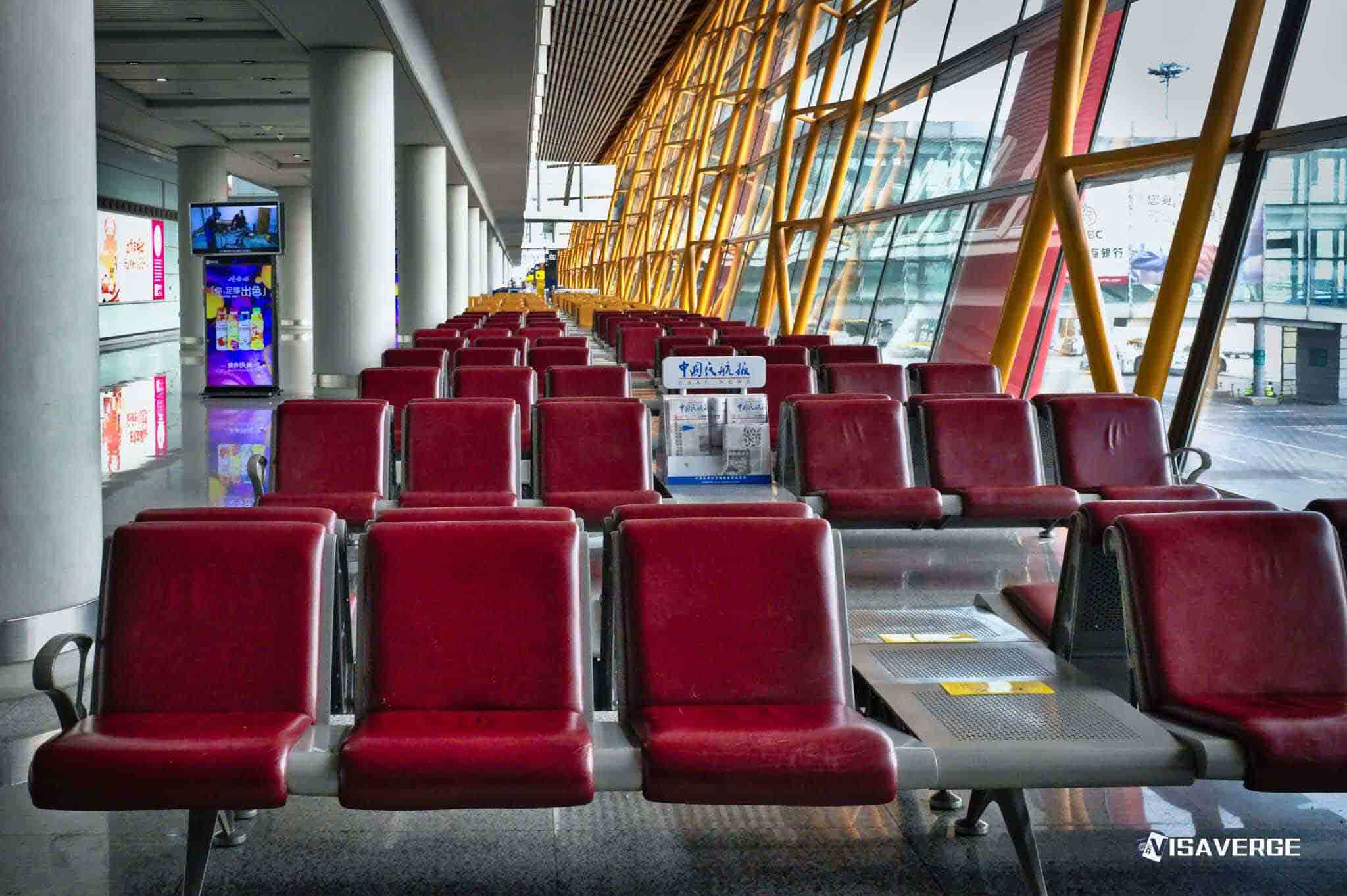
The move places one of the largest U.S. carriers at the front of an industry response to a fuel shock that airlines said could spread further within weeks. Ryanair CEO Michael O’Leary warned that if the war in Iran does not end “by the end of April,” European airlines will begin cutting scheduled flights.
Jet fuel prices have doubled since the Iran conflict began, rising from approximately $2.17 to $4.56 per gallon by March 20. United is modeling oil prices at $175 per barrel and expects prices could remain above $100 through the end of 2027.
Those price levels are already pushing up airline costs across markets. Delta Air Lines reported that the jet fuel spike added as much as $400 million in costs in March alone, while American Airlines expects fuel to add about $400 million to its first-quarter expenses.
The strain is also showing up in schedules. Scandinavian Airlines, or SAS, canceled about 1,000 flights in April due to rising costs.
Other carriers have so far chosen a different path. Air France-KLM, Cathay Pacific, Qantas, and Thai Airways are increasing fares and fuel surcharges rather than cutting flights at this stage.
The fuel squeeze has centered on tensions in the Middle East and disruptions at the Strait of Hormuz, a chokepoint that airline executives identified as a driver of shortages and price spikes. O’Leary said the duration of the disruption matters.
He said the Strait of Hormuz has been closed for 30 days, and if it remains closed for 60-90 days, “we’re all facing an unknown scenario.” He also said airlines will have only a few days’ notice from fuel suppliers, leaving little time to adjust operations.
That warning points to a problem beyond price alone. Airlines are confronting the risk that fuel may not only cost more, but may also be harder to secure on a stable schedule.
European airline executives, including those from Lufthansa and Air France-KLM, warned that a prolonged Middle East conflict will push fares higher and strain fuel supplies. Some cautioned that jet fuel could run out if disruptions persist.
United’s reductions offer one of the clearest breakdowns yet of how a large airline is trying to absorb the shock. By trimming off-peak flying, pulling back in Chicago, and keeping Tel Aviv and Dubai suspended, the carrier is spreading the cuts across weaker demand periods, a hub operation, and routes directly affected by the regional turmoil.
Kirby paired the reductions with a timeline for recovery, saying United expects to restore its full schedule in the fall. That sets the airline apart from carriers that have not yet committed publicly to when normal operations might resume.
Ryanair has not begun those broader cuts yet, but Michael O’Leary sketched out a timetable for when they could begin. He said European airlines could reduce 5-10% of flights through May, June, and July if the conflict in Iran continues.
His warning suggested the industry may face a second phase of disruption if the supply problems persist. United has already acted. Ryanair signaled what may come next.
The contrast also reflects different airline strategies. United is cutting capacity now, while Air France-KLM, Cathay Pacific, Qantas, and Thai Airways are trying to protect schedules by charging passengers more through fare increases and fuel surcharges.
That approach may preserve planned flying in the near term, but executives said a prolonged conflict would still raise pressure on the sector. Higher fares can offset part of the cost surge, but they do not solve shortages in supply.
Fuel has become the central variable in those calculations. United is modeling oil prices at $175 per barrel, a level that shows how sharply carriers are stress-testing operations against a prolonged crisis.
The airline also expects prices could remain above $100 through the end of 2027. That outlook extends well beyond the immediate disruption and suggests airlines are preparing for a longer period of elevated fuel costs.
For U.S. carriers, the impact is already measurable. Delta’s added fuel bill of as much as $400 million in March alone and American’s expectation of about $400 million in first-quarter expenses show how quickly a spike in jet fuel feeds through to airline finances.
Those figures help explain why airlines are making visible operating changes so early in the crisis. Schedule cuts, fare increases and surcharges each serve the same purpose: coping with a sudden rise in a core cost that carriers cannot easily avoid.
The response is widening across regions. United has reduced capacity in the United States and on international routes tied to Tel Aviv and Dubai. SAS has canceled flights in Europe. Asian and European carriers are leaning on price increases.
Chicago O’Hare has become part of that reshaping. United included 1 point of its 5% reduction in planned capacity from Chicago O’Hare reductions, placing one of its biggest hubs directly inside the carrier’s fuel-saving plan.
The off-peak changes form the largest share of the cut. Approximately 3 percentage points of the reduction come from midweek and overnight routes, a sign that United is targeting flying periods where it sees more room to pull back.
Another 1 point comes from suspended service to Tel Aviv and Dubai. Those routes sit closer to the center of the geopolitical tensions driving the fuel shock, giving the cuts both an operational and regional dimension.
Elsewhere, executives are warning that the longer the Strait of Hormuz remains disrupted, the less predictable the market becomes. O’Leary’s reference to a 30-day closure and the prospect of 60-90 days captured that uncertainty in stark terms.
His comment that “we’re all facing an unknown scenario” reflected concern not only among low-cost carriers but across the wider European industry. Airlines have to make schedule decisions weeks in advance, yet O’Leary said fuel suppliers may provide only a few days’ notice.
That short notice leaves little room to reshuffle aircraft, crews and slots without affecting passengers. It also makes a gradual response harder, raising the chance of more abrupt cuts if supply conditions worsen.
For now, the industry response remains uneven. Some airlines are already canceling flights, some are shrinking planned capacity, and others are trying to ride out the disruption with higher prices.
What unites them is the same trigger: severe jet fuel shortages and price spikes tied to Middle East tensions and disruptions at the Strait of Hormuz. With jet fuel rising from approximately $2.17 to $4.56 per gallon by March 20, carriers are confronting a cost surge that is moving directly into schedules and fares.
United Airlines has moved first among the biggest U.S. carriers with a defined network response, and Scott Kirby has tied that move to a fall recovery target. Michael O’Leary, meanwhile, has warned that if the conflict does not ease “by the end of April,” airlines could soon cut 5-10% of flights through May, June, and July.
For passengers, that means the next stretch of the crisis may bring fewer seats, higher prices or both. For airlines, the warning from executives was sharper still: if disruptions persist, jet fuel could run out.