(MOUNT POCONO, PENNSYLVANIA) Former President Donald Trump’s latest anti-immigration speech, delivered at a 2025 rally in this small Pocono Mountains town, has triggered a sharp backlash across the country, intensifying an already fierce fight over his administration’s new crackdown policies and rhetoric toward migrants.
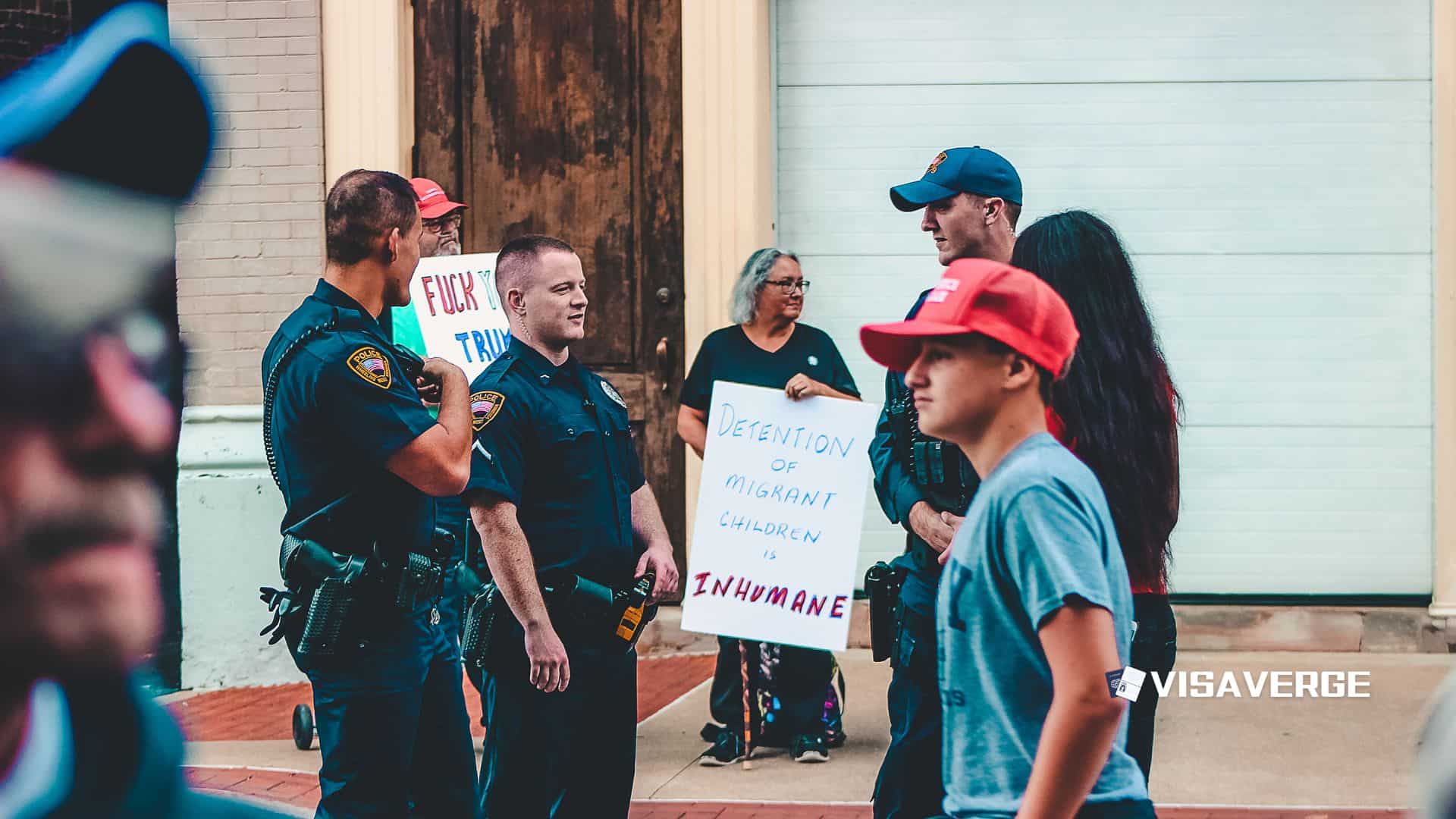
Speaking to supporters in Mount Pocono, Trump announced what he described as a permanent pause on migration from a group of countries he labeled “hell holes,” including Afghanistan, Haiti, and Somalia. He went further, calling Somali immigrants “garbage” and declaring Somalia “barely a country,” language that quickly echoed nationwide and drew loud condemnation from protesters, civil rights groups, and Democratic lawmakers.

Impact on Somali American communities and local response
The remarks landed especially hard among Somali American communities, including in Minnesota, where Somali immigrants have built large, visible neighborhoods and political networks. Lawmakers from the state denounced Trump’s comments as racist, while community advocates warned that such words put people at greater risk of harassment and violence — even far from Mount Pocono, Pennsylvania, where the speech took place.
“Such language puts entire communities at risk,” community advocates said, pointing to increased fears of harassment and violence following the rally.
Policy framing and rhetoric
Trump again tied immigration to crime and welfare abuse, portraying it as a direct threat to the country’s future. He repeated claims that migrants drive up lawbreaking and drain public benefits, and he used those arguments to justify what he has billed as the “largest deportation program in American history.”
According to analysis by VisaVerge.com, the Mount Pocono rally marks one of the clearest public outlines yet of this broader 2025 enforcement plan.
Administration moves and enforcement measures
Inside the administration, officials have moved ahead with measures that go far beyond past crackdowns:
- Expand expedited removal nationwide, allowing rapid deportation of many people without traditional immigration court hearings.
- Militarize the border with more military personnel and hardware.
- Increase immigration detention capacity to hold far more people for longer periods.
These steps represent a significant shift in enforcement tactics and raise questions about due process and civil liberties.
Protections targeted and workplace enforcement
The administration is pursuing plans that affect multiple protected groups and workplace practices:
- End protections for hundreds of thousands of immigrants with Temporary Protected Status (TPS).
- Phase out protections for Dreamers (brought to the U.S. as children).
- Remove temporary protections for Ukrainians who received shelter after Russia’s invasion.
- Expand workplace verification programs such as E-Verify, making it harder for employers to hire people who lack legal status.
- Give state and local police new authority to enforce federal immigration laws.
Under this model, local officers can join workplace raids and public sweeps, with immunity for civil rights violations they commit in the process, according to legal critics.
Risks, community effects, and advocacy concerns
Immigrant families and their lawyers warn that the combination of expanded enforcement and immunity invites abuse, especially in communities with low trust in police. Advocates stress these likely consequences:
- Workers may avoid hospitals, schools, and domestic violence hotlines for fear of deportation.
- Families risk being separated by widespread deportation actions.
- Local economies could suffer from labor disruptions and increased business uncertainty.
Legal and civil-rights groups highlight the danger of turning everyday interactions with authorities into potential immigration enforcement triggers.
Funding and punitive measures
The 2025 immigration agenda is backed by a $170 billion federal budget allocation for enforcement, detention, and deportation. The funding supports:
- More criminal prosecutions for immigration-related offenses.
- New fees on asylum seekers and border crossers, which critics argue make protection inaccessible to the poorest migrants.
Critics say these measures erode humanitarian protections and asylum rights, recalling the “zero tolerance” era that produced widespread family separation.
Legal challenges and oversight
Legal groups have already begun documenting and challenging the new tactics. Notably:
- The New York City Bar Association’s Immigration and Nationality Law Committee and Rule of Law Task Force have tracked the administration’s steps.
- They argue the White House is testing the outer limits of executive power in immigration through:
- Sweeping use of expedited removal.
- The scale of planned deportations.
- The involvement of local police in federal enforcement.
Courts may be asked to intervene on constitutional and statutory grounds.
Public opinion and polling
Public sentiment has shifted notably against the hardline approach. By mid‑2025, polls show:
| Group | Share saying Trump’s immigration policies are “too harsh” |
|---|---|
| Overall Americans | 52% |
| Independents | 57% |
| Moderates | 60% |
| Hispanics | 61% |
| Young adults | 65% |
Additional polling trends:
- Support for reducing immigration fell from 55% in 2024 to 30%.
- 79% of Americans now view immigration positively, according to surveys cited in policy reports.
Many respondents oppose broad deportation drives targeting long-time residents, especially in Hispanic neighborhoods. Workplace raids and removals of people with no criminal record have become flashpoints across the political spectrum.
Political and economic consequences
Opponents warn that aggressive enforcement:
- Tears apart families and disrupts local economies.
- Creates fear among U.S. citizens with foreign‑born relatives.
- Raises employer concerns about labor shortages and compliance uncertainty.
Supporters argue these measures are necessary to restore “law and order” at the border and within the country. Opponents counter that the approach rests on exaggerated claims about crime and public benefits and disproportionately harms the most vulnerable.
Government data cited by critics emphasize that immigrants — including those from countries Trump labeled “hell holes” — contribute significantly: serving in the U.S. military, staffing hospitals and care homes, and paying billions in taxes annually.
Congressional response and oversight efforts
The debate is playing out in Congress as well:
- Some lawmakers are pushing for hearings on detention conditions and treatment in expedited removal.
- Members from both parties have called for oversight of detention sites and limits on mass deportations.
So far, the administration has continued implementation, arguing it has wide authority to control entry and stay under existing laws.
Effects on asylum seekers and official information
For people seeking protection, the climate is increasingly hostile. Lawyers note that asylum seekers already face complex rules and long waits; added fees and stricter enforcement can push them to abandon claims.
Official information about asylum procedures is available from U.S. Citizenship and Immigration Services:
https://www.uscis.gov/humanitarian/refugees-and-asylum/asylum
Advocates fear many will never reach this official stage if turned back or detained early.
Broader societal debate
In communities far beyond Mount Pocono, the debate now turns on more than policy details. Trump’s words at the rally — from labeling some countries “hell holes” to calling Somali immigrants “garbage” — have forced many Americans to confront how far they are willing to let harsh language and sweeping enforcement define national identity.
- Supporters applaud promises to close borders and remove people without legal status.
- Opponents see a threat to immigrants and to the legal and moral standards that have long framed U.S. immigration law.
The controversy highlights deep divisions over immigration policy, civil rights, and the role of rhetoric in shaping public behavior and enforcement priorities.
At a Mount Pocono rally, Trump proposed a permanent pause on migration from countries he called “hell holes” and used dehumanizing language toward Somali immigrants. The administration plans aggressive measures—nationwide expedited removal, militarized borders, expanded detention, and increased workplace enforcement—backed by a $170 billion enforcement budget. Advocates and lawmakers warn of due-process erosion, increased harassment, family separations, and economic disruption. Legal groups are preparing challenges while public opinion shifts against broadly harsh policies.