- President Trump urged unpaid TSA agents to return to work during the fifth week of shutdown.
- Over 50,000 officers missed full paychecks on March 13, causing airport wait times to exceed three hours.
- The DHS funding impasse stems from disputes over immigration enforcement and limits for ICE and CBP.
(UNITED STATES) — President Trump posted on social media on March 14, 2026, urging unpaid TSA agents to “GO TO WORK” as the DHS shutdown dragged into its fifth week and airport lines swelled during spring break.
“I promise that I will never forget you!!!” Trump wrote, while telling workers to “Keep fighting for the USA.” He blamed Senate Democrats, calling them the “radical left,” for refusing to honor a congressional funding deal.
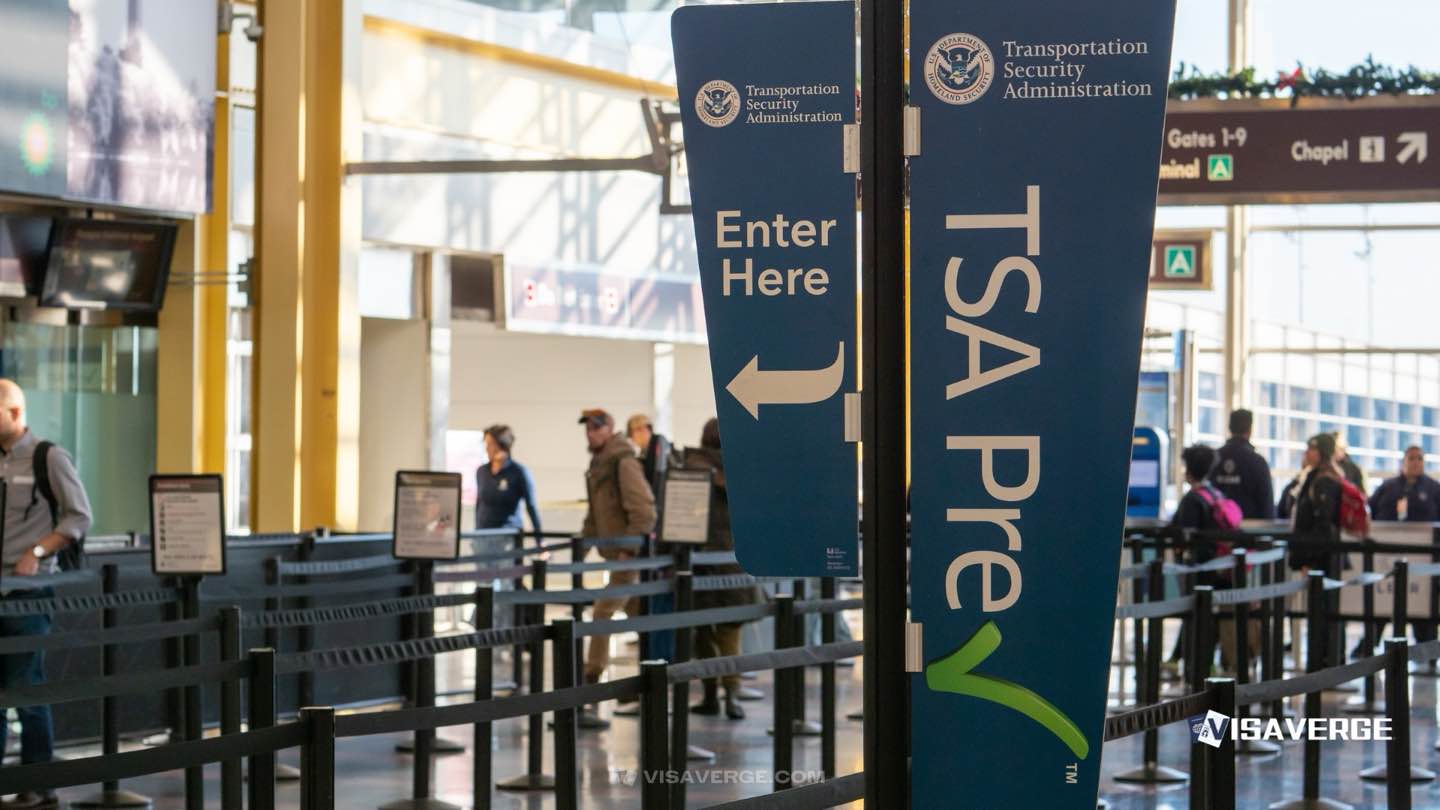
The message landed a day after roughly 50,000 TSA officers missed a first full paycheck on March 13, a milestone that officials and lawmakers said had begun to strain staffing and morale at airport checkpoints.
Travelers reported long screening lines nationwide, with waits exceeding three hours at airports like Houston and New Orleans as spring break crowds surged, even as flights continued to operate.
Negotiations over DHS funding stalled after the January 24, 2026 killing of CBP agent Alex Pretti, a case that triggered political fallout and a new fight over immigration enforcement reforms.
A prior four-day, government-wide shutdown ended February 3, 2026, but DHS funding lapsed again on February 14, 2026, starting a department-only shutdown that entered its fifth week by March 16.
House lawmakers passed H.R. 7744, the DHS Appropriations Act, 2026, on March 5, 2026, in a 221-209 vote pushed by Chairman Tom Cole (R-OK).
Senate Democrats blocked the measure while demanding operational limits for ICE and CBP, leaving Senate leaders short of the 60 votes needed to advance the bill.
Senate Majority Leader John Thune (R-S.D.) planned another vote that week, but no deal emerged as Trump announced firing DHS Secretary Kristi Noem, a move that added pressure to already tense talks.
The DHS shutdown has left paychecks uncertain for a workforce spread across airport security, disaster response, maritime patrols, and cybersecurity, while Washington argued over enforcement policy and funding terms.
At airports, the shutdown’s effects have shown up in both staffing patterns and passenger experiences, as the agency’s screening mission continued with workers unpaid and financial strain mounting.
TSA officers recently received partial paychecks that still included full deductions, and then saw full next paychecks zeroed out, a shift that employees and officials said intensified anxiety about bills, loans, and childcare.
Unscheduled absences doubled after the March 13 missed paycheck, and more than 300 employees quit since the shutdown began on February 14, 2026, adding to concerns about how long the agency can sustain staffing levels.
Acting TSA Administrator Ha Nguyen McNeill reported attrition up 25%, a trend that can cut into checkpoint staffing and push wait times higher at peak hours, particularly when passenger volumes rise during holidays and school breaks.
Courtesy escorts, including for Congress, were suspended, tightening staffing choices at some airports as managers focused personnel on core screening posts.
PreCheck remained operational, though it faced staffing constraints during the shutdown as the agency weighed how to deploy fewer officers and maintain lanes during heavy travel periods.
Airline schedules can remain largely intact even as screening lines lengthen, because passengers still must clear checkpoints to reach gates, turning staffing shortfalls into missed flights, rebookings, and crowded terminals.
The White House insisted it wanted pay restored and the department funded, while Republicans and Democrats traded blame over who was holding up the money and what conditions should accompany it.
“President Trump wants. TSA, FEMA, Coast Guard to receive their paychecks and. the department fully funded,” White House Press Secretary Karolien Leavitt said, tying the airport disruptions to broader DHS missions.
Cole framed the impasse as a choice by Senate Democrats that directly hit workers and travelers. Democrats, he said, are “actively choosing to deny resources. TSA officers are being forced to work. without paychecks.”
A frontline TSA officer, speaking anonymously, described immediate personal strain and a sense of abandonment as the shutdown persisted. “Our kids, our families, houses—everything is at stake. We are literally drowning in silence.”
Sen. Andy Kim (D-NJ) criticized the administration’s approach, accusing it of “weaponiz[ing] our government” via disruptions, as the shutdown began to touch daily life at airports and other public-facing operations.
Republicans called the impasse a “Democrat shutdown,” while Democrats sought enforcement curbs tied to Trump’s deportation policies, turning the funding bill into a fight over how DHS conducts immigration operations.
The bill’s path through Congress highlighted the leverage points on both sides, with House Republicans moving their measure and Senate Democrats using the 60-vote threshold to demand changes before allowing it to advance.
Democrats’ demands centered on operational limits for ICE and CBP, conditions that Republicans said would constrain enforcement and undercut the funding agreement Trump backed.
The enforcement fight also spilled into debate over security programs and staffing priorities, as DHS considered emergency measures meant to keep screening lanes moving while workers went unpaid.
DHS took emergency measures that included initially planning PreCheck and Global Entry cuts, then later adjusting those plans, as the department balanced staffing realities against the pressure to keep trusted traveler options running.
With TSA agents continuing to staff checkpoints without pay, the shutdown raised questions about retention and training pipelines, since employees who quit can leave gaps that do not close quickly.
At the same time, airport operations depend on coordinated staffing across shifts and terminals, and even small increases in absenteeism can ripple into longer lines when passenger volumes spike.
Beyond TSA, the DHS shutdown has placed a broader unpaid workforce under strain, affecting FEMA readiness, Coast Guard missions, and cybersecurity operations, according to the figures and descriptions provided by DHS and lawmakers.
The Coast Guard’s mission footprint included references to Bahrain operations during the funding lapse, underscoring how the shutdown touches personnel far from U.S. airports even as travelers see the most immediate effects at checkpoints.
Cybersecurity work also continued under unpaid conditions, raising operational pressure across DHS components responsible for protecting networks and responding to incidents while Congress debated funding terms.
The shutdown also hovered over security planning for major events, including the FIFA World Cup and the LA 2028 Olympics, as DHS agencies play central roles in coordinating federal support and security posture.
Thune’s plan for another vote that week left travelers, federal employees, and airport operators watching Washington for signs of movement, with the 60-vote Senate threshold looming over every proposed path to reopen DHS.
Any funding deal would need to restore pay and stabilize staffing, as agencies work through missed paychecks, heightened absences, and the challenges of resuming normal scheduling after weeks of uncertainty.
In the meantime, passengers faced the most visible consequence at checkpoints, where staffing constraints and spring break crowds combined into long waits that tested the system’s ability to move people efficiently and safely.
Trump’s March 14 directive for unpaid workers to “GO TO WORK,” paired with his promise, “I promise that I will never forget you!!!”, kept the focus on TSA agents as both the symbol of the DHS shutdown and the first point of contact for many Americans caught in it.
Live Government Data
State Dept • CBPBusiest Border Crossings
- San Ysidro 140 min
- Calexico 135 min
- El Paso 85 min