- The Trump administration asked the Supreme Court to lift an order blocking the termination of Syria’s TPS.
- A lower court previously halted the termination, citing alleged federal law violations and political influence.
- Approximately 6,100 Syrian nationals face the potential loss of work authorization and deportation protections.
(UNITED STATES) — The Trump administration asked the U.S. Supreme Court on February 26, 2026 to lift a lower-court order that indefinitely postponed ending Temporary Protected Status for Syrian nationals.
The emergency request seeks to clear the way for the administration to terminate Syria’s TPS designation while litigation continues, cutting off a form of lawful protection that provides temporary protection from deportation and work authorization tied to conditions such as armed conflict.
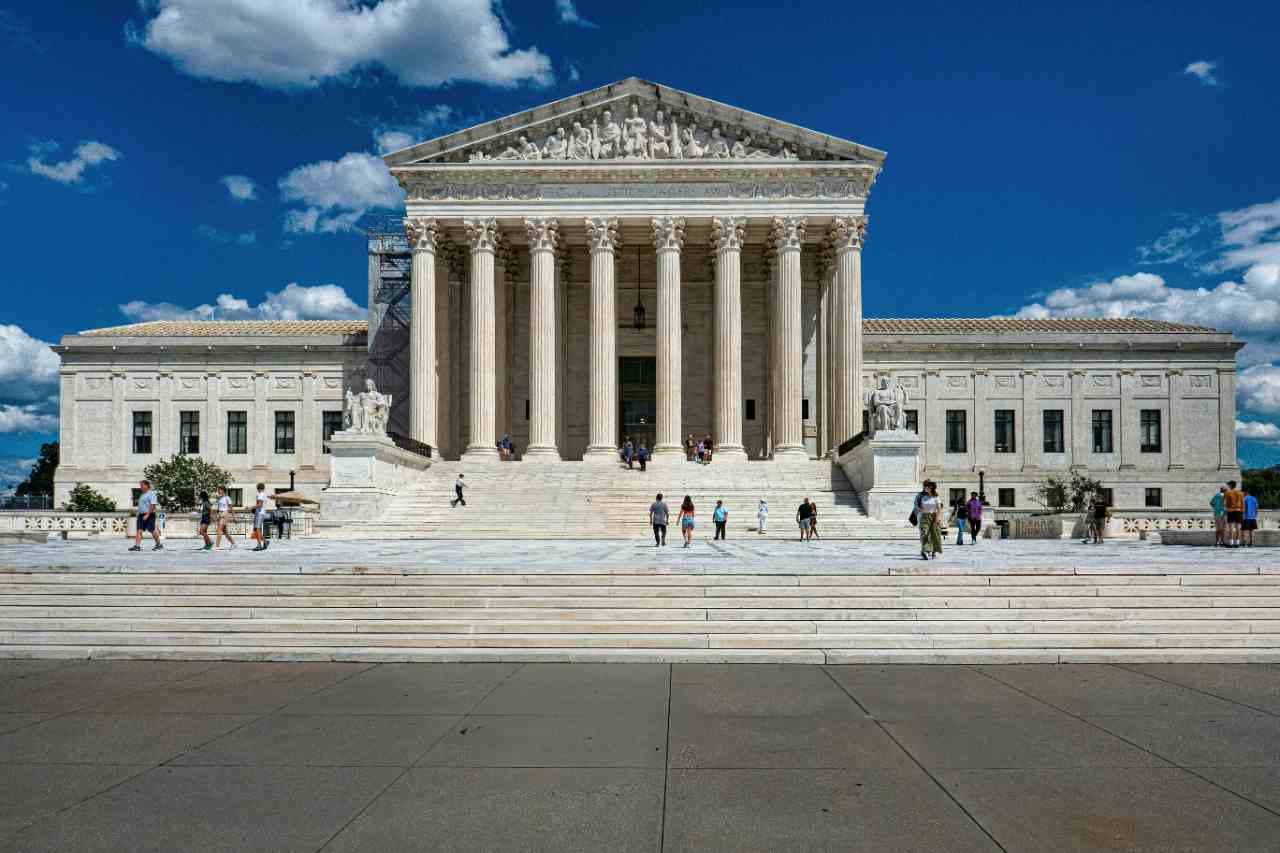
The Supreme Court directed the challengers to respond by March 5, 2026, at 4 p.m. EST, setting a fast-moving schedule that will shape what happens to Syrian TPS recipients in the near term.
The dispute traces to a decision Homeland Security Secretary Kristi Noem announced in September 2025, when she terminated Syria’s TPS designation after years of extensions.
Noem cited the fall of the Assad regime in December 2024, the lifting of U.S. sanctions, and normalization of relations with Damascus announced by President Trump in May 2025.
Her announcement also pointed to a determination that Syria no longer met the statutory criteria for ongoing armed conflict, describing remaining violence as “sporadic, isolated episodes”.
Approximately 6,100 Syrian nationals hold TPS, a country-specific status Congress created under INA § 244 (8 U.S.C. § 1254a) to provide temporary protection from deportation and work authorization when conditions in a person’s home country prevent safe return.
Seven Syrian nationals with TPS or pending applications sued in the U.S. District Court for the Southern District of New York, challenging Noem’s decision on multiple grounds and seeking to keep the protections in place.
The lawsuit alleged violations of the Administrative Procedure Act, including a lack of consultation with executive agencies and disregard of country conditions, and it raised constitutional claims alleging unconstitutional animus based on race, ethnicity, and national origin.
U.S. District Judge Katherine Polk Failla blocked the termination on November 19, 2025, issuing an order that indefinitely postponed the end of Syria’s TPS designation while the case proceeds.
Failla found Noem’s decision likely violated federal law and was influenced by “political influence.”
The U.S. Court of Appeals for the 2nd Circuit declined to stay Failla’s order, leaving TPS protections for Syrians in place as the administration pressed ahead with its emergency bid at the high court.
In the Supreme Court filing, Solicitor General D. John Sauer called the 2nd Circuit’s ruling “indefensible,” arguing it conflicts with prior Supreme Court stays in similar TPS termination cases for Venezuelans.
Sauer wrote that those earlier Supreme Court stays enabled endings for TPS from Afghanistan, Cameroon, Nepal, Honduras, and Nicaragua, and he urged the justices to step in now rather than wait for the 2nd Circuit’s merits decision.
The solicitor general argued that courts cannot review TPS terminations because they involve executive discretion tied to foreign policy and national security, and he asked for immediate intervention in response to what he called lower courts’ “persistent disregard” for prior stays.
Sauer also warned the block hinders a “core administration policy” and risks public safety, language the administration used to press the case for emergency relief on the Supreme Court’s fast-track docket.
The justices have not ruled on the emergency request, leaving in place for now the district court’s order that continues TPS protections for Syrian nationals while the litigation continues.
If the Supreme Court lifts the block, the administration would regain room to move forward with ending Syria’s TPS designation, though the underlying lawsuit would continue in the lower courts.
If the court keeps the order in place, Syrian nationals covered by TPS would remain protected from removal and eligible for work authorization for as long as the injunction governs the termination decision’s effect.
The case arrives as the administration pursues a broader second-term agenda to end TPS for multiple countries, including Afghanistan, Cameroon, Haiti, Honduras, Nepal, Nicaragua, Venezuela, Myanmar, Somalia, and Yemen.
Temporary Protected Status is a statutory, country-by-country form of humanitarian protection under INA § 244, and disputes over terminations have repeatedly produced litigation as administrations argue over the scope of executive authority to end designations.
Syria’s case now turns on the Supreme Court’s emergency orders and the next steps in the 2nd Circuit, with any operational changes expected to follow whatever direction the courts provide for DHS and USCIS implementing TPS policy.