- The Trump administration is increasing worksite immigration enforcement in 2026, targeting both undocumented workers and visa holders.
- Compliance revolves around Form I-9 inspections and audits to verify employment eligibility for all U.S. hires.
- Sectors like construction and hospitality face higher scrutiny and disruption due to reliance on subcontracted and temporary labor.
(UNITED STATES) — The Trump administration is planning to increase worksite immigration enforcement operations in 2026, with possible increases in workplace arrests, employer audits and enforcement activity aimed at businesses that hire unauthorized workers.
Those plans would push immigration risk deeper into the workplace, not only at the border, during visa interviews or at airports. Employees, employers, contractors, staffing companies and visa holders with lawful status all face the same basic question: whether a worker is legally authorized to work for a specific employer, in a specific role, at a specific time.
Free toolREAL ID Requirements Checker tool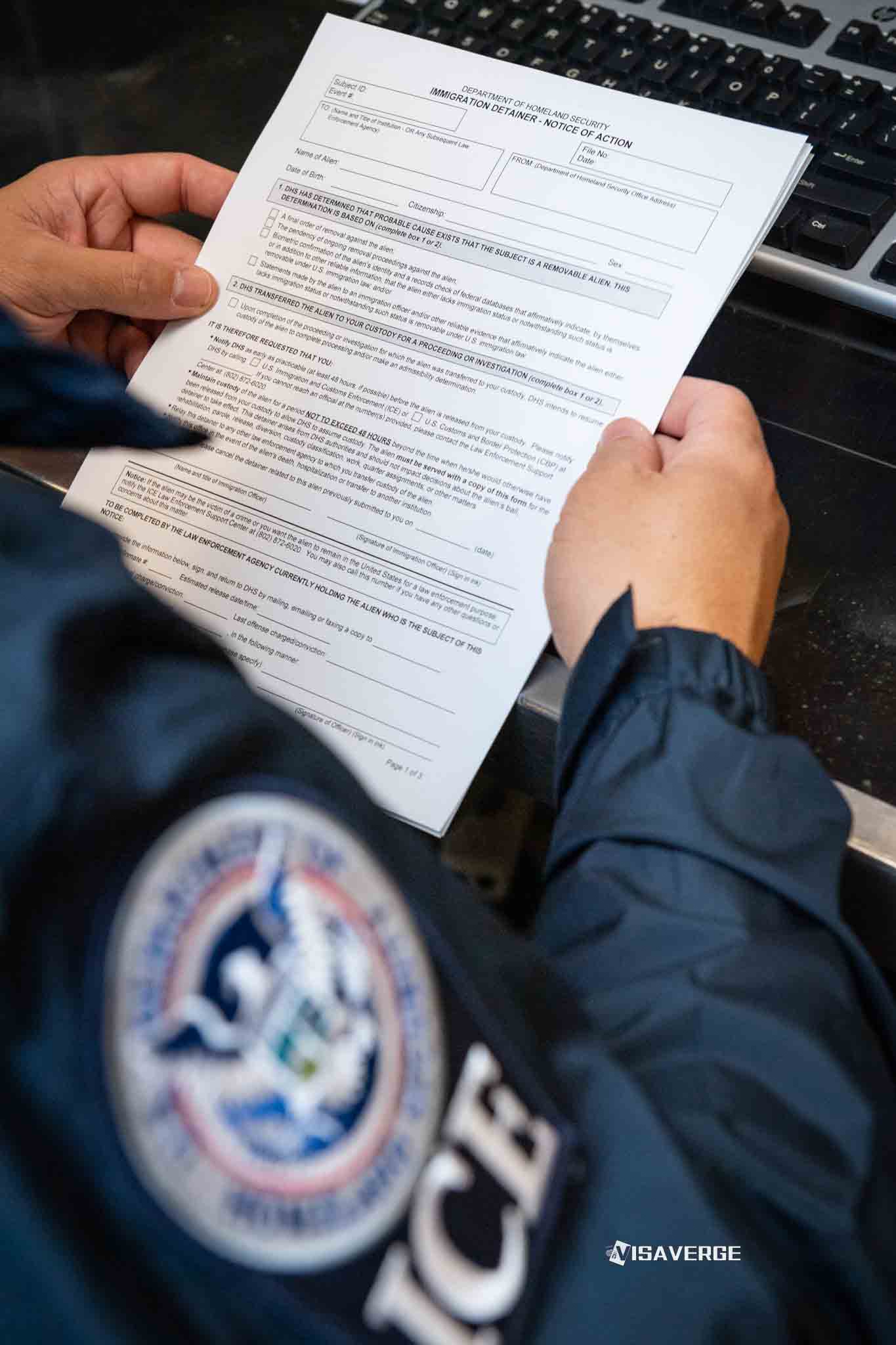
Worksite immigration enforcement includes raids, audits and fines. It can reach beyond undocumented workers to people with expired documents, workers using incorrect paperwork, employees whose jobs no longer match the terms of their status and companies with weak compliance systems.
U.S. Immigration and Customs Enforcement uses Form I-9 inspections to check whether employers comply with employment eligibility verification rules. Once an employer receives a Notice of Inspection, Homeland Security Investigations agents or auditors review the employer’s I-9 records for compliance.
| India | China | ROW | |
|---|---|---|---|
| EB-1 | Feb 01, 2023 ▲109d | Jul 01, 2023 | Current |
| EB-2 | Nov 01, 2013 | Oct 01, 2021 ▲30d | Jan 01, 2025 |
| EB-3 | Jan 01, 2014 | Jan 08, 2022 ▲7d | May 15, 2024 ▼109d |
| F-1 | Jan 22, 2020 | Jan 22, 2020 | Jan 22, 2020 |
| F-2A | Sep 22, 2026 ▲31d | Sep 22, 2026 ▲31d | Sep 22, 2026 ▲31d |
U.S. Citizenship and Immigration Services says Form I-9 verifies the identity and employment authorization of people hired for employment in the United States. That makes paperwork central to enforcement, alongside the more visible image of officers entering a job site.
Visa holders sit inside that system too. A visa, a pending application, a Social Security number or a previous approval does not automatically allow a person to work freely for any employer.
H-1B workers face that limit directly because their authorization is generally tied to the petitioning employer and the approved terms of employment. Side work without proper filing, work for a different employer or a major role or location change without proper compliance can create risk during a review.
F-1 students on OPT or STEM OPT must follow employment authorization rules, employer requirements and training plan conditions. Informal work, unrelated work or records that do not match the approved arrangement can become a problem if auditors review the file.
H-2A and H-2B workers also depend on approved temporary labor programs and approved employment conditions. Agriculture, hospitality, landscaping, construction, food processing and seasonal work can draw closer scrutiny because those sectors rely heavily on temporary and subcontracted labor.
Workers with Temporary Protected Status, pending asylum cases, parole or Employment Authorization Documents need current records as well. Expiration dates, renewal filings and automatic extension eligibility can determine whether employment remains lawful on the day an employer is inspected.
Visitors and tourists face a simpler rule. A B-1/B-2 visitor visa does not permit ordinary employment in the United States, and paid work can trigger serious immigration consequences.
Employers and staffing vendors carry their own exposure. Businesses that rely on subcontractors, staffing agencies, franchise structures or cash labor arrangements can face liability if worker authorization is not properly documented.
That pressure lands first on Form I-9. Every U.S. employer must complete and retain the form for each person hired after November 6, 1986, and employers must complete Section 2 within 3 business days of the employee’s first day of employment.
Retention rules are exact. Employers must keep the form for 3 years after the date of hire or 1 year after employment ends, whichever is later.
Paperwork errors can trigger penalties even where a worker is otherwise authorized. Missing signatures, missing dates, incorrect document information, outdated or incomplete forms, weak electronic audit trails, failures to reverify expiring work authorization and unclear treatment of contractors all create exposure during a compliance review.
Over-documentation creates risk too. Employers cannot cure uncertainty by demanding extra documents or by making discriminatory document requests.
E-Verify can help, but it does not replace Form I-9. Employers still need properly completed and properly retained I-9 records, and the system does not solve reverification problems or other compliance failures that arise after hiring.
Visa limits still govern workers even when an employer uses E-Verify. A confirmation at hiring does not convert a restricted visa category into open-ended work authorization.
Foreign workers who want to reduce risk need to check current immigration status, employer-specific authorization and the exact terms of any approval notice, I-94 or EAD. Side jobs and freelance work deserve close attention because unauthorized extra income can create problems even when the main job is lawful.
Pending renewals matter as well. Workers need proof of timely filed extensions, EAD renewal receipts and any applicable automatic extension eligibility, and their passport, I-94, EAD, approval notice, Social Security records and employer records should match.
Old job changes can return later during an audit. Anyone who changed employers should confirm that a proper petition, amendment, transfer or other authorization existed before work began.
Lawful presence and work authorization are not the same thing. That distinction runs through nearly every employment-based category mentioned in the administration’s planned enforcement push.
Employers now have a narrow set of practical tasks if they want to reduce exposure before officers arrive or a notice is served. Internal I-9 audits, timely correction of errors, HR training on document review rules and checks on reverification dates all sit near the front of that list.
Contractor and staffing agency arrangements also need review. Businesses that think they outsourced labor risk can still face questions if the people on site lack proper authorization or if the records behind those relationships are weak.
A worksite enforcement response plan can determine how disruptive an inspection becomes. Companies need to know who can speak with government officers, where records are stored and how to reach legal counsel quickly.
Several industries stand out because they often depend on hourly, seasonal, subcontracted or immigrant labor. Agriculture, meat processing, construction, hotels and restaurants, landscaping, cleaning services, warehousing, manufacturing, food service, staffing companies and franchise businesses all fit that profile.
Even compliant employers can face immediate disruption. An audit or enforcement action can interrupt operations before any final legal finding is made.
A raid and an I-9 audit are not the same event. A raid involves officers entering a worksite, questioning workers, making arrests or executing warrants, while an audit is document-based and usually begins with a Notice of Inspection demanding employment eligibility records.
Response strategies differ. Front-desk staff, managers and employees need a clear protocol for a raid, while an audit demands organized files, legal review and timely production of documents.
Workers caught in an enforcement action face their own decisions in real time. They should remain calm, avoid providing false information, avoid presenting fake documents, avoid signing papers they do not understand and avoid claiming U.S. citizenship if that is not true.
Access to records can matter quickly during those moments. Copies of immigration documents kept in a secure place, along with family members who know how to contact a lawyer, can shape what happens after an arrest, audit or notice.
The Trump administration’s plan points to a broader return to worksite immigration enforcement as a visible part of immigration strategy in 2026. That approach reaches undocumented workers first, but it also draws in H-1B, F-1 OPT, H-2A, H-2B, TPS, asylum-pending and EAD workers whose employment no longer matches the limits of their status.
Employers that treated I-9 compliance as back-office paperwork now face a different reality. In a period of tougher worksite immigration enforcement and expanded employer audits, the records behind each hire may matter as much as the person standing on the factory floor, in the kitchen, on the construction site or in the fields.