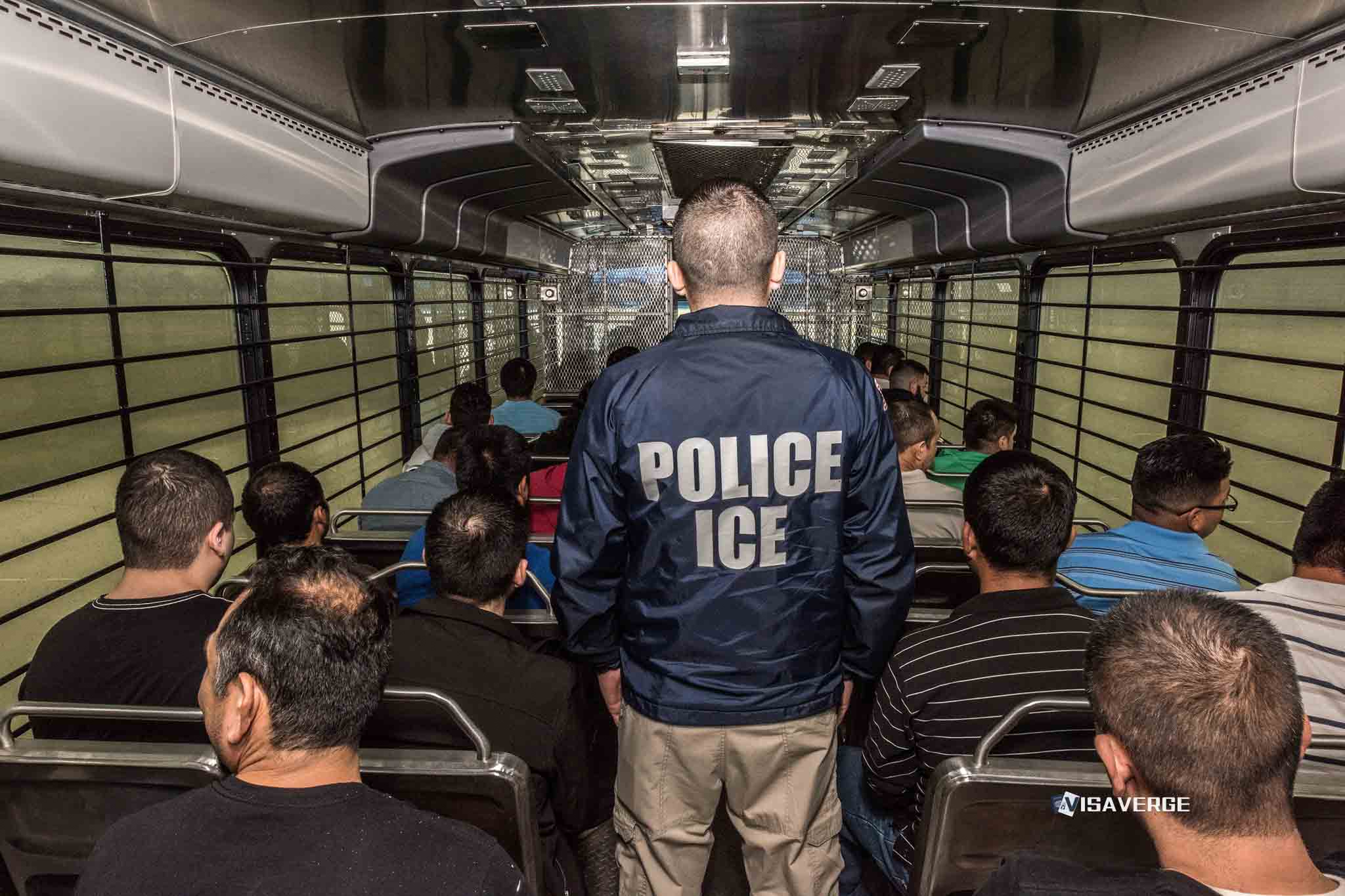
(SAN PEDRO, CALIFORNIA) Federal immigration agents detained three U.S. citizens in separate Southern California encounters this year, according to a L.A. TACO report that published their stories after a Senate investigation found nearly two dozen citizens were swept up in immigration enforcement between June and November 2025. The citizens—Julian Cardenas, Alberto Nila, and Ceasar Saltos—said they were treated as if they had no rights, even when they tried to show proof they were born in the United States 🇺🇸.
Individual accounts
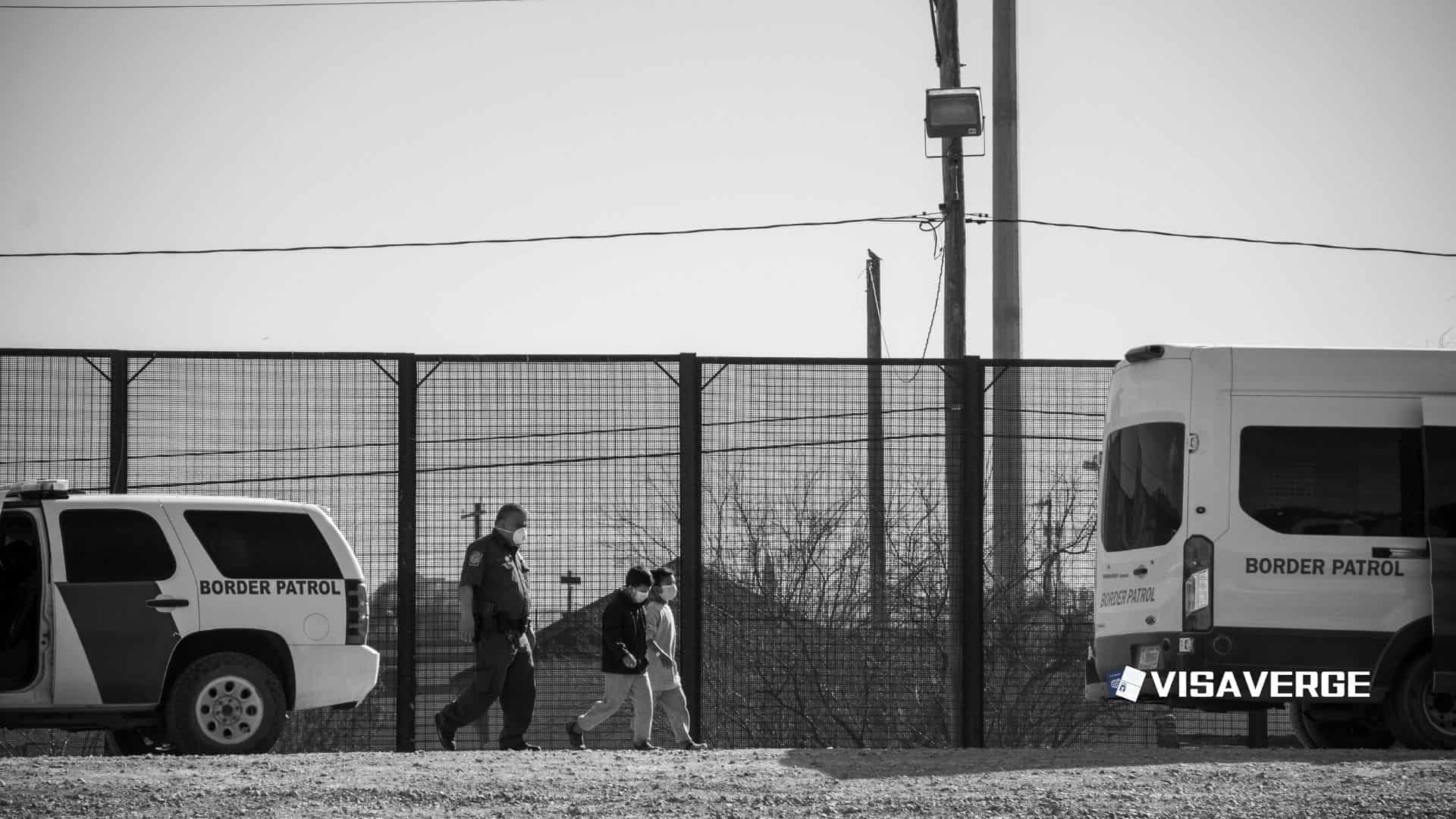
Julian Cardenas — July 6, 2025
Julian Cardenas, 28, said agents from the Department of Homeland Security stopped him in San Pedro on July 6, 2025. He described being pulled through a car window that shattered during the encounter.
“They broke my window and dragged me out,” he told L.A. TACO.
Local advocates link the stop to what they call Kavanaugh Stops, a wave of federal street stops across Los Angeles County. L.A. TACO said it documented more than 96 Kavanaugh Stops in the county, including at least 15 detentions of U.S. citizens.
Alberto Nila — August 1, 2025
Alberto Nila, 43, said his detention began on August 1, 2025, in Sylmar while he drove a work van. He described being boxed in by unmarked vehicles and approached by two masked men who identified themselves as Border Patrol agents.
He told L.A. TACO they acted as if he was already under arrest, prevented him from using his phone, and searched his pockets. “I couldn’t even call my wife,” he said.
Ceasar Saltos — August 4, 2025
Ceasar Saltos, 36, was detained for nearly 18 hours on August 4, 2025, while on a cruise ship tied to the Port of Long Beach. He said five agents entered his room around 6:30 a.m., looking for someone named “Ruben” with a warrant in Virginia—not his name.
Saltos says he showed a photo ID, his U.S. passport, and later a birth certificate, but remained handcuffed. L.A. TACO reported agents took his phone, denied family calls, and held him in a “pitch-dark room.” He was fingerprinted three times, shackled, and transferred to U.S. Marshals before release. He recalled agents saying “everything fits,” even as he denied any connection to Virginia.
Senate investigation and findings
The Senate Permanent Subcommittee on Investigations placed these cases in a broader pattern in a report titled “Unchecked Authority: Examining The Trump Administration’s Extrajudicial Immigration Detentions of U.S. Citizens.” Investigators found citizens were detained with little effort to confirm status, sometimes even after officers saw U.S. documents.
U.S. Senator Richard Blumenthal (Connecticut), who co-led the probe, said the cases show an enforcement system that can act quickly to detain people but is slow to correct mistakes.
The report grew out of complaints from families, lawyers, and local leaders who said federal agents were taking people from worksites, traffic stops, and public spaces in Southern California without asking basic questions. Representative Sylvia Garcia (Texas) joined Blumenthal in sending letters to DHS Secretary Kristi Noem demanding records and explanations for “repeated unconstitutional detentions,” according to materials cited by L.A. TACO.
Additional examples cited in the report
- Javier Ramirez — Reported ignored even after showing U.S. identification and a passport.
- “Andreina” — Pulled from a truck with her special-needs son outside Arleta High School on August 11, 2025, a scene witnessed by parents and school staff.
Patterns, concerns, and civil rights implications
For immigration lawyers, the distinction is clear: citizenship should end the inquiry. Federal officers may ask questions and briefly detain people under the Fourth Amendment if they have reasonable suspicion, but they must avoid arrests without a lawful basis.
The Senate report highlights:
– Repeated failures to check documents
– Delays in releasing people
– Lack of clear accountability when a citizen is detained
Human Rights Watch documented similar dynamics during operations at Los Angeles-area Home Depots:
– June 30, 2025, raid (Cypress Park) — 17 people detained
– July 5, 2025, raid (Van Nuys) — 14 people detained
Human Rights Watch said agents targeted Latinos without first identifying individuals, raising concerns about racial profiling. The group also reported one U.S. citizen was held for 12 hours after officials confirmed citizenship.
DHS response
The Department of Homeland Security has denied that it “arrests” U.S. citizens as part of immigration enforcement. In statements cited in the source material, DHS said:
– Officers make stops based on Fourth Amendment reasonable suspicion about immigration status.
– The Supreme Court has backed that standard.
– In one operation, officers arrested 30 “illegal aliens.”
The agency did not address, in the provided material, why some people who showed citizenship documents were still detained.
Community impacts
Fear spreads fast in immigrant neighborhoods, where many families mix citizens and non-citizens. A mistaken detention can cause:
– Missed work and lost pay
– Trauma and fear
– Reduced willingness to report crimes or help police
VisaVerge.com reports that when citizens are detained, families often struggle to get answers because immigration custody systems are designed to track non-citizens, not to quickly resolve wrongful holds of citizens.
One Southern California resident, Army veteran George Retes, testified in Washington, D.C. about his experience: “I identified myself as a U.S. citizen and a veteran, but that didn’t matter,” he said, according to Congressional materials. Retes also faced accusations of interfering with officers, illustrating how a stop can escalate into a criminal case even when immigration status is not disputed.
Remedies and redress
Advocates say one formal tool for those wrongly questioned, delayed, or detained during travel or border-related checks is the federal redress process. DHS runs the Traveler Redress Inquiry Program, known as DHS TRIP, where people can file complaints and ask the government to review records tied to screenings or watchlist mismatches.
Official information is available at the DHS TRIP website.
Oversight, training, and next steps
Immigration advocates in Los Angeles County say the mix of unmarked vehicles, masks, and fast-moving detentions makes it difficult for bystanders to tell if a stop is federal, local, or legitimate. Many reports describe the same playbook:
– Agents refusing to give names
– Separating family members
– Treating questions as threats
Blumenthal’s staff has asked DHS to explain what supervisors review after a mistaken stop and whether agents face discipline or retraining before future operations.
L.A. TACO said a related Congressional probe was published on December 13, 2025, as lawmakers pressed DHS for data on:
– How many citizens were stopped
– How long they were held
– What training officers had on checking claims of citizenship
Key takeaway: For Julian Cardenas, Alberto Nila, and Ceasar Saltos, speaking out was not only about what happened to them but about warning others that in the middle of stepped-up enforcement, showing a passport or saying “I’m a citizen” may not end the stop.
For now, the cases remain part of a broader debate over enforcement practices, civil liberties, and how quickly—and effectively—federal agencies correct wrongful detentions of U.S. citizens.
Between June and November 2025, a Senate inquiry and L.A. TACO found multiple U.S. citizens detained during aggressive immigration operations in Southern California. Three men — Julian Cardenas, Alberto Nila and Ceasar Saltos — report violent stops, withheld communication, and prolonged detention despite presenting U.S. documents. The Senate report highlights failures to verify citizenship, slow corrections, and unclear accountability. Human Rights Watch noted related raids detaining dozens. DHS cites reasonable suspicion; advocates call for improved oversight, training, and redress mechanisms.