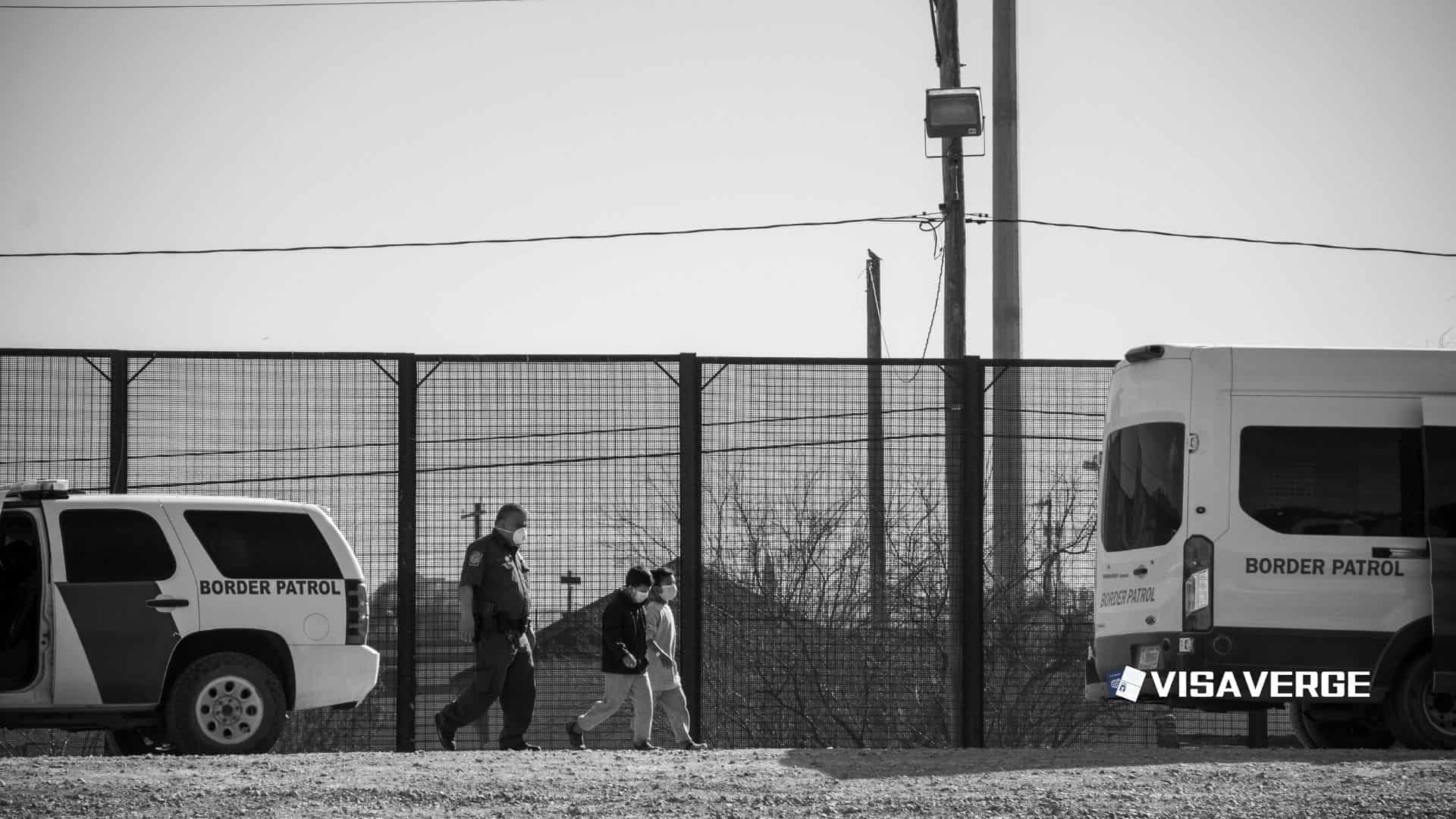
Secretary of Homeland Security Kristi Noem credited President Donald J. Trump’s enforcement push for what she called “Historic Low Encounters” at the U.S.-Mexico border as the administration closed out 2025 with sweeping changes across visas, vetting and humanitarian programs.
“We have had the most secure border in American history and our end-of-year numbers prove it. Under President Trump, we have empowered and supported our law enforcement to do their job and they have delivered,” Noem said on Oct. 15, 2025.

Border encounters and enforcement metrics
Preliminary data for November 2025 showed 30,367 total encounters nationwide, which DHS reported by December 2025 as a 95% decrease from the daily averages of the previous administration. DHS also reported the lowest number of U.S. Border Patrol apprehensions since 1970.
DHS logged seven consecutive months of zero releases of apprehended individuals into the U.S. interior, covering May–November 2025. The administration framed these results as the clearest proof of its America First approach.
“Historic Low Encounters” was presented by the administration as the signature metric of 2025.
Major funding and border infrastructure: OBBBA
The year’s largest immigration funding move occurred on July 4, 2025, when President Trump signed the One Big Beautiful Bill Act (OBBBA), H.R. 1, allocating approximately $190 billion to DHS.
Key allocations from OBBBA:
– $46.5 billion for 701 miles of primary border wall
– $75 billion for ICE to expand detention capacity and interior enforcement
A concise view of the major allocations:
| Item | Amount |
|---|---|
| Primary border wall (701 miles) | $46.5 billion |
| ICE detention & interior enforcement | $75 billion |
| Total DHS allocation (approx.) | $190 billion |
Expanded arrest authority and “protected areas” rescission
Early in 2025 the administration rescinded “protected areas” policies, widening where immigration arrests could occur. DHS stated on Jan. 21, 2025 that this action “empowers the brave men and women in CBP and ICE to enforce our immigration laws. Criminals will no longer be able to hide in America’s schools and churches to avoid arrest.”
High-skilled immigration: H‑1B fee and lottery overhaul
High-skilled immigration policy experienced a major pivot with new fees and a redesigned selection process for H‑1B visas.
- On Sept. 19, 2025, Presidential Proclamation 10973 introduced a mandatory $100,000 fee for new H‑1B petitions for beneficiaries located outside the U.S.
- A federal judge upheld the fee on Dec. 19, 2025, rejecting challenges from the U.S. Chamber of Commerce.
- DHS characterized the proclamation as part of broader “entry restrictions” tied to H‑1B.
The H‑1B lottery was replaced with a weighted process that prioritizes higher-paid, higher-skilled applicants:
– Starting with the FY 2027 cap season, positions at the highest wage levels can receive up to four lottery entries, compared with one entry for lower-paid roles.
USCIS operational changes and expanded vetting
USCIS assumed a central role in both enforcement-adjacent vetting and complex benefits adjudications under Director Joseph Edlow. Operational changes included expanded screening factors and new investigative capacity.
- On Aug. 19, 2025, USCIS updated its Policy Manual to list “anti-Americanism” and “antisemitism” as “overwhelmingly negative factors” in benefit adjudications.
- Adjudicators began mandatory screening of social media accounts for “hostility toward U.S. culture, institutions, or founding principles.”
USCIS spokesman Matthew Tragesser said on Aug. 19, 2025:
“America’s benefits should not be given to those who despise the country and promote anti-American ideologies. Immigration benefits—including to live and work in the United States—remain a privilege, not a right.”
Processing and backlog data:
– Naturalization (N‑400) processing times hit a record low of 5.5 months.
– However, the overall USCIS backlog reached a historic 11.3 million cases by mid-2025, driven in part by enhanced vetting requirements.
New USCIS staffing, Vetting Center, and investigative roles
USCIS announced new staffing initiatives and enforcement-adjacent roles:
– On Sept. 30, 2025, USCIS launched a hiring campaign for a new workforce of “Homeland Defenders” and special agents with arrest powers to investigate fraud. The campaign received over 50,000 applications by December.
– A new USCIS Vetting Center was established in Atlanta, Georgia, on Dec. 5, 2025, described as a hub to centralize AI-driven risk scoring and national security screenings.
New paid pathways: Trump Gold Card program
On Dec. 11, 2025, the administration launched the Trump Gold Card program via trumpcard.gov, creating a paid pathway to fast-track permanent residency.
Key tiers and prices:
– Individual Gold Card: $1 million gift to the U.S. Treasury to fast-track permanent residency.
– Corporate Gold Card: $2 million, allows businesses to transfer fast-tracked status between employees.
– Platinum Card: $5 million (pending full approval); offers tax exemptions on foreign‑earned income for stays up to 270 days per year in the U.S.
Humanitarian programs and terminations
The administration moved to return several humanitarian programs to what it described as “temporary” status, ending protections for multiple countries.
Temporary Protected Status (TPS) terminations announced by Noem in 2025:
– Ethiopia — Dec. 12, 2025
– Burma — Nov. 25, 2025
– South Sudan — Nov. 5, 2025
– Afghanistan — March 21, 2025
– Venezuela — Oct. 3, 2025
Large-scale parole program end:
– After litigation reached the Supreme Court, the CHNV parole program (for Cuba, Haiti, Nicaragua, and Venezuela) was terminated following a May 30, 2025 Supreme Court ruling, ending parole status for hundreds of thousands of individuals.
DACA and court constraints
DACA remained constrained by court rulings while renewals continued:
– On Jan. 17, 2025, the Fifth Circuit Court of Appeals ruled that DACA’s deportation protection is a lawful exercise of discretion, but the work permit portion may be unlawful—narrowing that portion to Texas.
– USCIS continued renewals nationwide but kept initial applications paused.
Administration framing and year-end releases
The administration described the cumulative changes—border enforcement, workplace visa redesign, and stricter benefit screening combined with paid pathways for wealthy applicants—as an America First reordering of the system.
Year-end publications cited by DHS and USCIS include:
– DHS Year-End Accomplishments Report
– USCIS End-of-Year Review: Making America Safe Again
These releases emphasized “Historic Low Encounters” as the signature metric of 2025.
The Trump administration’s 2025 immigration strategy focused on extreme vetting and border security. Significant milestones included a 95% drop in border encounters, the termination of several humanitarian programs like TPS and CHNV parole, and the introduction of paid residency options. USCIS expanded its investigative powers through the ‘Homeland Defenders’ initiative while implementing mandatory social media screenings to identify anti-American ideologies among benefit applicants.