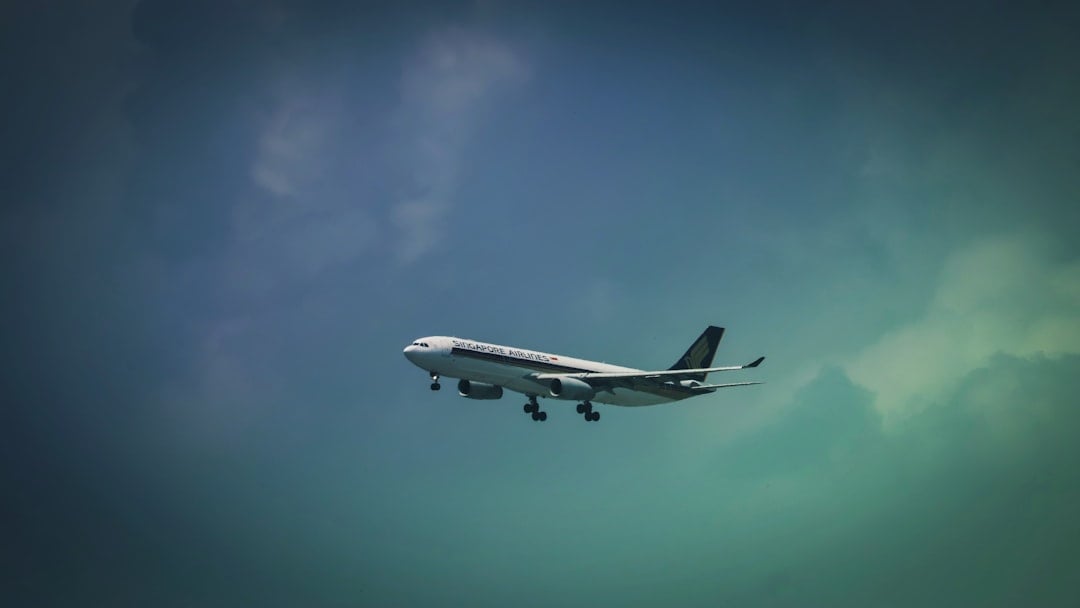
(SINGAPORE) Singapore 🇸🇬 will start ordering airlines to stop certain passengers from boarding flights to the city-state from January 30, 2026, a step that moves part of the border check to the airport of departure and puts new legal pressure on carriers flying into Changi and Seletar.
What the No-Boarding Directive (NBD) is
Under the new No-Boarding Directive (NBD) system, Singapore’s Immigration & Checkpoints Authority (ICA) will send “No-Boarding Directive” notices to airline operators when a traveler is assessed as “undesirable or prohibited” or does not meet entry rules. Airlines will then have to deny boarding before the plane takes off, rather than leaving the decision for arrival immigration officers at Singapore’s checkpoint.
The system is built around data sharing through the Advance Passenger Information (API) system, delivered through SITA, according to the source material. Airlines will submit passenger details before departure and receive a response that tells them whether the traveler is “OK to Board” or should be blocked with a “Do Not Board” alert.
That “OK to Board” message is expected to become a routine part of departure checks, alongside ticketing, baggage, and passport scanning.
Triggers for an NBD alert
ICA’s triggers for an NBD alert, as described in the source, focus on basic entry conditions and risk flags. Passengers may be stopped if any of the following apply:
- No valid visa or entry permission.
- Passport validity is under 6 months.
- The traveler appears on inadmissible-persons lists or is deemed high-risk.
- Failure to meet other document requirements.
The same expectation applies to crews: airlines must confirm clearance for both passengers and crew before departure.
Practical advice on passport validity
- ICA lists 6 months as the passport threshold.
- The source recommends carrying a buffer of at least 7 months validity — especially for complex routings (e.g., UK → Australia via Changi) where a reroute or missed connection could turn a transit into a longer stay.
Penalties and legal exposure for airlines and staff
For airlines, the new policy brings clear penalties if they carry a person who should have been blocked. The source material states:
- Non-compliance can lead to fines of up to SGD 10,000 per case.
- Pilots or staff can face fines of up to SGD 10,000, up to 6 months in jail, or both.
These sanctions raise the stakes for front-line airline workers who often have only minutes to make a boarding decision during disruptions like delays, rebookings, and missed connections.
Operational impact on airlines and handlers
Industry preparation has already started, according to the source. Key operational points:
- Carriers such as British Airways and Virgin Atlantic are reviewing guidance.
- Corporate briefings are planned in Q2 2026.
- Airlines and ground handlers will need updates to departure-control software and staff training.
- Reliable matching of passenger data requires exact spelling of names, correct surname order, and consistent passport numbers across booking, check-in, and boarding systems.
Special risk area: business aviation and operators with small passenger lists, last-minute changes, or travelers holding multiple nationalities. Operators are instructed to supply exact passport details, “especially for dual nationals,” and be ready for more checks — including completion of the SG Arrival Card.
The underlying problem: a booking under one passport versus API data sent under another can cause mismatches that trigger a “Do Not Board” result even if the traveler believes they qualify.
What travelers should expect
For passengers, the first impact will likely be at the check-in line, not at ICA counters in Singapore. Someone who would previously have flown and argued their case on arrival may now be turned away at the departure airport — sometimes after bags are tagged and seats are assigned.
The source says travelers denied boarding can apply for entry approval via ICA’s Feedback Channel before rebooking. That creates a new step between “denied at check-in” and “try again” and may add costs for rearranged flights, hotels, and work plans.
Other practical traveler guidance from the source:
- Carry proof of onward/return travel, accommodation, or business invitations — these may be requested by airline staff.
- Ensure booking details match passport data precisely (name spelling, passport number, nationality).
- Be aware that dual nationals may need to choose which passport to use consistently across booking and API submission.
SG Arrival Card (SGAC) requirements
The source states the SG Arrival Card (SGAC) must be submitted up to 3 days before arrival and is mandatory for most entrants, with some exceptions (certain transit passengers and locals).
ICA provides official information and the submission portal at ICA’s SG Arrival Card page.
While the NBD is not tied to COVID-19 or specific health mandates, standard entry requirements such as passport validity and SGAC submission still apply.
Comparison with other countries
Singapore is not the first country to use pre-departure screening. The source points to systems in Canada 🇨🇦 and the United States 🇺🇸 as comparisons. The practical effect is similar: border checks begin earlier, and airlines effectively become the “last gate” enforcing a government decision.
What makes Singapore’s change stand out is the formal NBD notice and the tight link to the API feed that produces “OK to Board” or “Do Not Board” responses.
Operational and human trade-offs
According to analysis by VisaVerge.com, systems like “OK to Board” can reduce long, high-stress disputes at arrival halls but shift pressure to airline check-in desks. That trade-off will likely affect:
- Dual nationals
- Last-minute travelers
- Passengers whose visas/permissions are valid but not easily confirmed quickly
These travelers may face faster decisions with fewer on-the-spot options.
Key takeaway: If your documents are in order and API data matches your passport, the change will be invisible. If not, the first sign may be a blunt “Do Not Board” message at the counter — before you ever leave the ground.
Start date and scope
ICA has set a single start date — January 30, 2026 — and the source says the policy will apply to all Singapore-bound flights from any country, with the operational focus on Changi and Seletar.
For many travelers, the change will be seamless. For others, it represents a new point of failure at check-in that can trigger denied boarding, rebooking costs, and the need to apply for entry approval via ICA before attempting to fly again.
Singapore’s ICA will require airlines to enforce a No-Boarding Directive from January 30, 2026, using API data delivered via SITA. Airlines will receive “OK to Board” or “Do Not Board” responses before departure and must deny boarding for travelers without valid visas, passports under six months, or those on inadmissible lists. Non-compliance risks fines up to SGD 10,000 and possible jail for staff. Travelers should ensure passport-data consistency, submit the SG Arrival Card, and carry onward-travel proof.
Live Government Data
State Dept • CBPBusiest Border Crossings
- Brownsville 120 min
- Nogales 120 min
- Nogales 120 min