- Social media posts alleging vandalism at Cathedral Rock in Arizona remain unverified by local or federal authorities.
- Investigators have found no evidence of arrests or formal charges regarding the reported defacement of the landmark.
- The site holds deep cultural and sacred meaning for local tribes, complicating the impact of potential preservation issues.
(ARIZONA) – Posts circulating on Monday accused Indian tourists of defacing Cathedral Rock in Arizona, but the allegation remained unverified and no official account of the incident accompanied the claim.
The accusation, framed around Indian tourists and defacing at one of Sedona’s best-known landmarks, pointed to an active probe. No charge, arrest or formal case announcement appeared alongside it.
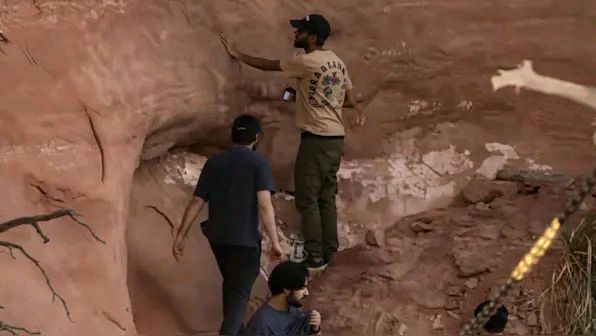
That left the central facts unsettled: what was allegedly damaged, when it happened, who reported it first, and whether authorities had confirmed any part of it. Until those points are established, the incident remains an allegation rather than a confirmed act of vandalism.
Cathedral Rock, in Sedona, Arizona, carries cultural and sacred meaning for local tribes and draws large numbers of visitors. The site also sits at the center of long-running concerns about preservation, visitor pressure and damage to protected landscapes.
Those concerns often turn a single image or accusation into a wider dispute before investigators have finished basic fact-finding. A post can travel quickly; an official record usually takes longer.
Any verified case involving damage at a place described as sacred would typically draw attention from more than one authority. Sedona or Arizona law-enforcement agencies, the U.S. Forest Service and tribal or cultural authorities could all have a role, depending on where the alleged act occurred and what was affected.
In practice, confirmation usually begins with the original report. Investigators and reporters alike would look first for the initial post or complaint, then for photographs, video, witness accounts and any statement issued by local police, sheriff’s offices or land managers.
That chain matters in a case like this because identity and motive can be misstated early. A viral claim can attach nationality, tourist status and intent to people before any official finding supports those labels.
No public statement accompanied the allegation identifying a responding agency, naming suspects or describing visible damage at Cathedral Rock. Without that, even the most basic points, including whether the site itself was physically defaced, remain open questions.
Authorities who handle sacred-site or public-land damage cases usually work through a familiar sequence. They examine the location, document any markings or destruction, determine who manages the land, and decide whether the conduct supports a criminal charge, a civil penalty, restoration work or no action at all.
Where cultural harm is alleged, tribal or cultural authorities may also weigh in on the effect of the damage, even if the criminal investigation rests with another agency. Land managers can pursue cleanup or restoration while investigators sort out who was responsible.
Cathedral Rock’s status makes any accusation there especially sensitive. Visitors know it as a red-rock landmark above Sedona; many local tribes regard places in the area as spiritually important, and preservation disputes often turn on whether tourism overwhelms respect for the site.
That tension has become a recurring feature of heavily visited natural landmarks across the American West. Photos taken for social media, off-trail access, graffiti and rock markings can transform a scenic stop into an enforcement issue within hours.
With this allegation, the most reliable path to confirmation runs through records, not reaction. The original post or report needs to be matched against statements from Sedona or Arizona law enforcement, the U.S. Forest Service and any tribal or cultural authority with ties to the site.
Only after those checks would it be possible to say whether Indian tourists actually defaced Cathedral Rock, whether investigators opened a case, and whether prosecutors or land managers intend to act. Until then, the claim remains exactly that: an accusation attached to a sacred Arizona landmark and an investigation that has yet to be publicly defined.