- Unverified claims suggest ICE attempted to enter the Ecuadorean consulate in Minneapolis on Tuesday.
- Official sources and contemporaneous reporting have not corroborated the incident at the diplomatic facility.
- A separate January 2026 detention of a 2-year-old Ecuadorean girl has fueled community anxiety.
(MINNEAPOLIS, MINNESOTA) — ICE faced an unverified allegation Tuesday that it tried to break into the Ecuadorean consulate in Minneapolis, a claim that could not be corroborated at the time of publication through confirmed, contemporaneous reporting or official statements.
The allegation circulated as a specific assertion of federal enforcement activity involving diplomatic premises, a category of claim that typically requires heightened verification because it can carry public-safety implications and immediate diplomatic sensitivity.
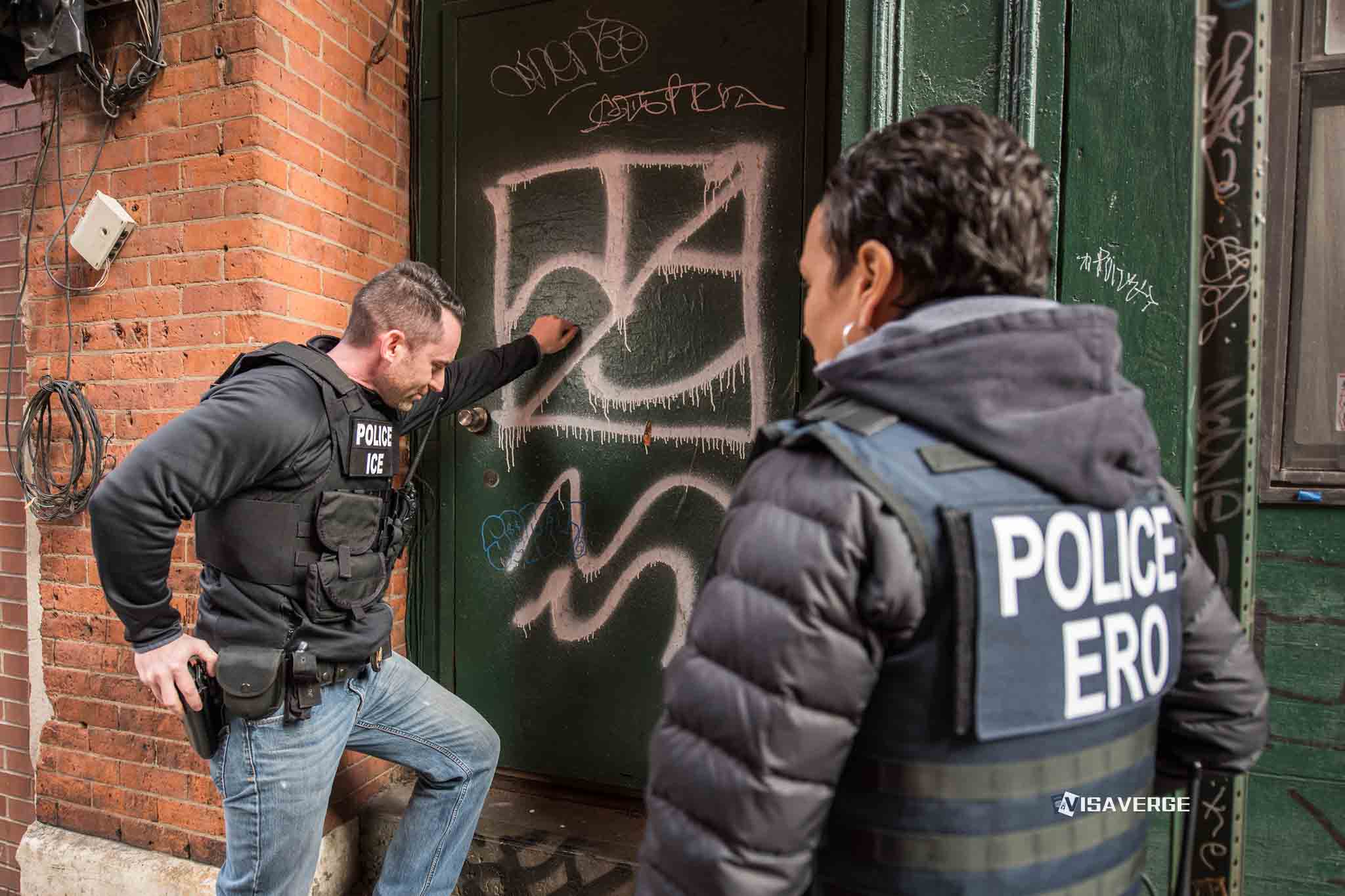
No confirmed accounts established that ICE officers attempted to enter, breach or otherwise force their way into the Ecuadorean consulate in Minneapolis on Tuesday, and no publicly available reporting at the time described such an incident at the consulate.
Consulate-related allegations draw special scrutiny because diplomatic and consular facilities operate under distinct rules and expectations of security, and any reported breach can quickly amplify fear and misinformation in immigrant communities.
Separate, publicly reported ICE enforcement activity in Minnesota during January 2026 has fueled heightened concern in some communities, but those reports do not, by themselves, verify any incident involving the Ecuadorean consulate in Minneapolis.
One widely reported January 2026 case involved the detention of a 2-year-old girl from Ecuador during a traffic stop in Minnesota, a detail that has circulated alongside broader discussion about ICE activity involving children and families.
That detention has served as a touchpoint in community conversations about enforcement practices, particularly when families and minors are involved, and it has increased attention on new claims that appear to involve Ecuadorean nationals or Ecuadorean institutions.
Even so, enforcement actions during traffic stops and other routine encounters are distinct from any allegation centered on a consular facility, and the existence of one reported event does not confirm another.
Claims involving an attempted breach of a consulate require confirmation that establishes time, location, official involvement and the nature of the interaction, especially when the allegation names ICE and a specific diplomatic site in Minneapolis.
Meaningful corroboration would typically include on-record statements from relevant authorities, documentation that a response occurred, and independent reporting that clearly describes what happened at the Ecuadorean consulate and when.
In cases where a consulate is said to be involved, confirmation from consular officials can be an important component, as can any public record of law enforcement presence or a call for service near the location.
On-record eyewitness accounts can also help clarify disputed claims, particularly when they identify what they saw, where they were standing and what actions occurred, and when those accounts are consistent with independently documented facts.
By contrast, rumors and misreporting often spread as a single, stark sentence without supporting detail, and can harden into “common knowledge” within hours even when no verified account emerges.
Verifiable events usually leave a trace that can be checked against multiple sources, including contemporaneous accounts, documented responses, and time-stamped reporting that does not rely on repetition of the same unconfirmed claim.
An information gap remains on basic questions that typically anchor a reliable account: whether any officers approached the Ecuadorean consulate, whether any attempt was made to enter, and whether local authorities responded.
Another missing element at publication time was any independently confirmed description of what “tried to break into” meant in practice, a phrase that can imply anything from an attempted forced entry to a misunderstanding over access.
Without those core facts established through corroboration, the allegation remains unconfirmed, even as it continues to circulate alongside broader discussion of ICE activity in Minnesota.
The claim’s potential significance stems from what consular premises represent, regardless of the nationality involved: a site tied to diplomatic functions that can be central to travel documentation, legal assistance referrals and contact with citizens abroad.
If verified, an incident involving consular premises can trigger diplomatic and security protocols, including stepped-up protective measures and heightened coordination over access and safety.
Such events can also ripple beyond a single building, affecting how immigrants and visitors perceive their risk when seeking routine services, and shaping the flow of information communities rely on during enforcement surges.
Local residents can also feel immediate effects when a dramatic allegation spreads faster than confirmed information, including fear about traveling, reluctance to attend appointments, or confusion about what actions are safe.
Consular operations can also face disruption when rumors drive sudden demand for reassurance or documentation, particularly when people fear they may be targeted based on nationality or recent contact with authorities.
Public-safety communications can become more difficult when unverified claims circulate widely, because officials may be asked to respond to events that have not been substantiated and because the resulting uncertainty can undermine trust.
Any broader implications, however, depend entirely on verification of the underlying event, and the allegation about ICE and the Ecuadorean consulate in Minneapolis remained unconfirmed at the time of publication.
In Minnesota, the January 2026 reporting on ICE detentions of children and families has already drawn attention to how enforcement encounters unfold and how information about them spreads.
The reported detention involving the 2-year-old girl from Ecuador during a traffic stop has been discussed as part of that climate, intensifying scrutiny of new claims connected to Ecuadorian families or institutions.
That broader environment can make a consulate-focused allegation feel plausible to some audiences, but plausibility does not substitute for corroboration, and it does not establish that a specific incident occurred at a specific location in Minneapolis.
Responsible verification separates what is alleged from what can be confirmed, particularly when the allegation is both serious and specific in naming ICE and a diplomatic site.
The most straightforward developments that would settle the claim would be an on-record statement that directly addresses whether ICE personnel approached the Ecuadorean consulate in Minneapolis on Tuesday, and whether any attempt was made to enter.
Contemporaneous local reporting supported by documentation would also help resolve the question, especially if it includes clearly attributed accounts and describes what was observed at the consulate.
Official releases, documented responses, or other verifiable records tied to the reported time and place would also provide clarity, particularly if they align with consistent eyewitness accounts.
Until those forms of confirmation emerge, readers seeking to track the allegation should look for multiple reputable outlets providing contemporaneous details and corrections, rather than relying on repeated restatements of the same unverified claim.
Updates would also be reflected through clear, on-record responses that address the central point at issue: whether ICE tried to enter or breach the Ecuadorean consulate in Minneapolis on Tuesday.