- A new federal no-tax-on-overtime deduction allows workers to subtract qualified pay from their taxable income.
- Eligible W-2 employees can deduct up to $12,500 individually or $25,000 for married couples filing jointly.
- The benefit applies specifically to the FLSA premium portion of overtime pay for tax years 2025 through 2028.
President Trump signed the One Big Beautiful Bill Act on July 4, 2025, creating a federal no-tax-on-overtime deduction that lets some workers deduct qualified overtime from taxable income for tax years 2025–2028.
The new deduction targets eligible W-2 employees and allows a subtraction of up to $12,500 of qualified overtime pay from federal taxable income, or $25,000 for married filing jointly.
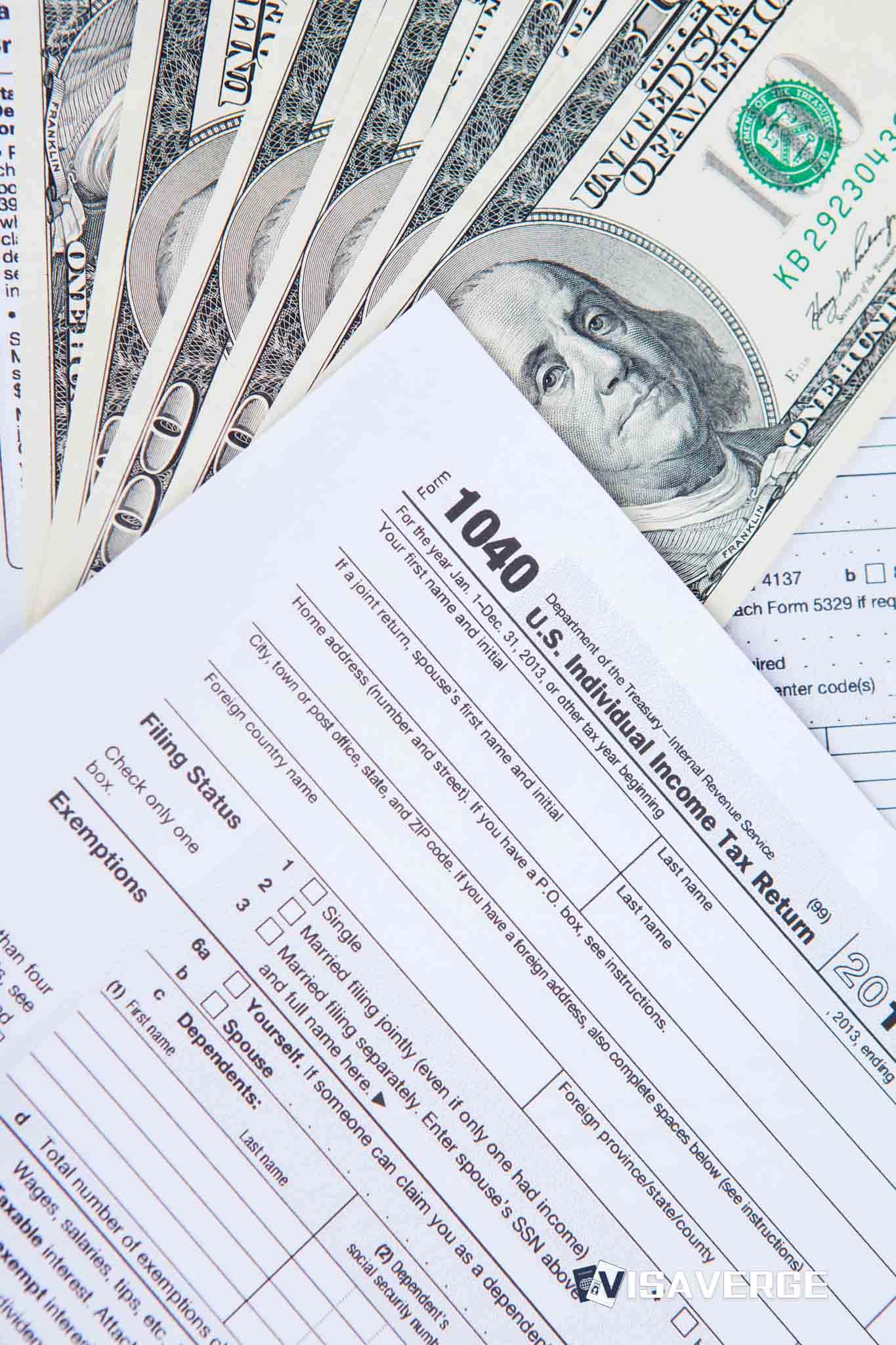
Unlike a tax credit, the provision reduces taxable income rather than directly reducing the tax bill dollar for dollar, a distinction that matters most for wage earners whose withholding already treated overtime as taxable.
Workers filing in the 2026 filing season for 2025 income face a first-year wrinkle: overtime wages were withheld and taxed through payroll as usual, so the benefit comes only when the return claims the deduction.
Congress scheduled the deduction to apply for tax years 2025–2028 and to sunset after 2028 unless extended, setting up a limited window for workers and employers to adjust to new reporting expectations.
Eligibility turns on what counts as “qualified overtime,” a term the law ties to the Fair Labor Standards Act and its definition of overtime pay for hours beyond 40 in a workweek.
Qualified overtime does not include all pay someone might call “overtime.” It is limited to the premium portion required by the Fair Labor Standards Act, such as the “half” in time-and-a-half.
That means state daily overtime, contractual overtime arrangements, or other non-FLSA overtime generally does not qualify, even when the extra hours feel like overtime to the worker.
Worker classification also matters because the deduction requires W-2 employment and a non-exempt status under the Fair Labor Standards Act, putting many exempt executives, professionals, and some salaried roles outside the benefit.
The eligibility description in the law’s rollout also references FLSA salary thresholds like $35,568 annually, underscoring that not all salaried workers qualify even when they routinely work long weeks.
Income limits narrow the pool further through a phaseout based on modified adjusted gross income, applying different thresholds depending on filing status.
The phaseout begins for modified adjusted gross income above $150,000 for single filers or $300,000 for married filing jointly, and it is fully eliminated at higher thresholds like $275,000/$550,000 depending on filing status.
Married filing separately cannot claim the deduction, a filing-status exclusion that can affect couples who file that way for reasons unrelated to overtime pay.
For taxpayers who do qualify, the deduction is described as an above-the-line deduction and is available whether a filer takes the standard deduction or itemizes, shaping who sees value from it.
Claiming the deduction for 2025 returns filed in early 2026 is expected to hinge on employer reporting, because employers must separately report qualified overtime on 2025 W-2s using new codes or boxes.
The key practical step for many workers is checking Form W-2 to see whether qualified overtime appears separately identified, because the deductible amount relies on that reporting framework.
When the W-2 does not clearly show qualified overtime, the law’s early guidance points workers back to payroll records, including pay stubs that show an FLSA-compliant calculation of the overtime premium portion.
Calculating the deductible amount centers on isolating only the Fair Labor Standards Act premium pay, such as 0.5x the regular rate for hours over 40, and then applying the caps of $12,500/$25,000 after any phaseout.
That calculation is narrower than total overtime earnings because the deduction does not cover the entire overtime paycheck amount, only the premium portion tied to the FLSA overtime requirement.
Tax software companies are expected to build the deduction into interview prompts, with the policy description naming TurboTax and H&R Block among the products expected to ask for the relevant figures.
Filers should expect the deduction to appear as an adjustment to income on Form 1040, though the specific line is described as forthcoming in IRS 2025 forms and instructions.
Record retention also becomes part of the first-year burden because the IRS warns it may scrutinize claims that lack substantiation, especially when the W-2 does not provide a clean, separately reported number.
The guidance urges reviewing pay records now, a step that can help reconcile any differences between what pay stubs show and what ends up coded on the W-2, before a return is filed.
Standard-deduction filers may see the most practical value because the deduction is available regardless of itemizing, alongside larger 2025 standard deductions of $15,750 for single filers and $31,500 for joint filers.
The Tax Policy Center estimate cited for the provision projects 17 million taxpayers will claim it in 2026 and puts average savings at $1,400, figures that have helped drive attention as filing season approaches.
That projected claim volume also raises operational questions, because employer compliance delays and payroll-system updates could affect how consistently qualified overtime gets reported on W-2s.
Mismatches between pay stubs and W-2 coding can create practical friction for taxpayers, who may need corrections or additional documentation to support what they enter into their tax software.
Immigrant workers who earn overtime can face added complexity that turns less on immigration status and more on tax filing posture, because eligibility generally hinges on W-2 employment and filing the return that claims the deduction.
Some taxpayers who file Form 1040-NR or have dual-status situations may need tailored advice as guidance evolves, particularly if their wages, withholding, and reporting differ from standard W-2 filing patterns.
The time limit built into the One Big Beautiful Bill Act keeps attention on near-term instructions, because the deduction applies to 2025–2028 tax years and then sunsets after 2028 unless Congress extends it.
For workers and employers, the next signals to watch are IRS forms and instructions that clarify how the reporting codes or boxes work across 2026–2028 filings, and how taxpayers document the Fair Labor Standards Act premium portion behind a claim.