- South Dakota enacted a new law allowing registered voters to challenge the citizenship status of other voters.
- The legislation requires documentary proof of citizenship for registration and creates a two-tier voting system.
- Advocacy groups warn that naturalized citizens and students risk being wrongfully flagged by outdated federal records.
(SOUTH DAKOTA) — South Dakota enacted a New SD law in early March 2026 that lets any registered voter file a signed, sworn challenge to another voter’s citizenship status, a change that election officials and advocates said could reshape how some residents keep or lose access to the ballot.
Governor Larry Rhoden signed the measure, which expands South Dakota’s voter-registration challenge process to cover citizenship and pairs it with a new requirement for documentary proof of citizenship to register to vote.
The law matters most in the days before an election, when a challenge can force a voter to respond on a tight timeline or risk losing registration, with naturalized citizens and mixed-status families among those most likely to face questions about paperwork.
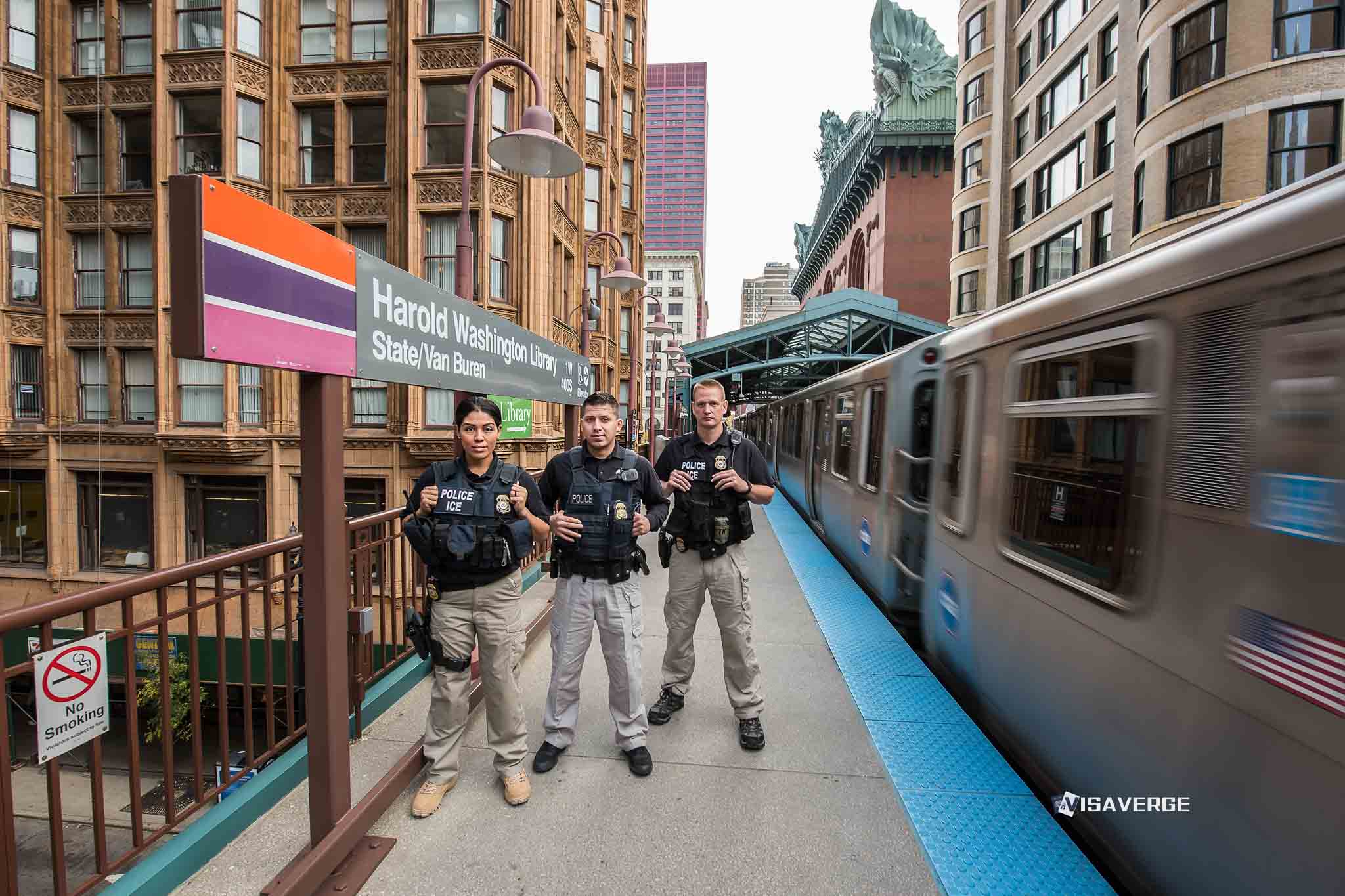
At the federal level, officials in early 2026 urged states to use federal databases while rejecting rumors of immigration enforcement at voting sites. “There are no plans to have ICE officers at our polling locations. [however] there have been cases of illegal immigrants voting and [I encourage] states to use federal resources to ensure those who are ineligible to cast ballots do not do so,” then-DHS Secretary Kristi Noem told the Senate Judiciary Committee on March 3, 2026.
DHS Deputy Assistant Secretary Heather Honey echoed that message after meeting election officials. “Any suggestion that ICE is going to be present at polling places is simply disinformation. There will be no ICE presence at polling locations for this election,” Honey said on February 25, 2026.
South Dakota’s law sets out a citizen-initiated process that election administrators must manage. Any registered voter in South Dakota can file a signed, sworn statement challenging the citizenship of another voter in their county, and the filing must come at least 90 days before an election.
The challenger must submit what the law calls “documented evidence” that the person is not a citizen, shifting the dispute from a general allegation into a paperwork fight that can land on a county official’s desk.
County-level election officials receive and process challenges under the law, and the first step is a validation stage by a county auditor before any notice goes to the voter whose registration is questioned.
What counts as “documented evidence” remains a central point of uncertainty for voters and administrators, because the law uses that term while public discussion has included a wide range of potential materials. Early reports from the South Dakota Secretary of State’s office suggested examples could range from a copy of an old visa to a sworn affidavit regarding a personal conversation.
That ambiguity can shape what a challenged voter feels pressured to produce. Even when a voter is eligible, gathering citizenship paperwork can take time, and disputes can arise over what documentation a county office considers sufficient.
The citizenship issue also intersects with how South Dakota has moved toward a two-tier voting model tied to documentary proof of citizenship. South Dakota, alongside Utah, has moved toward a “two-tier” system in which voters who provide documentary proof of citizenship can vote in all elections, while those who cannot may be limited to federal-only ballots for President, House, and Senate, a model similar to Arizona’s.
For election officials, that can mean managing different ballot types and different voter categories, while also responding to challenges that can arrive from neighbors within the same county. For voters, it can mean the practical difference between full participation in state and local races and a federal-only ballot.
Students and frequent movers can also feel the effects when addresses and records shift, because any mismatch can trigger questions that take time to resolve even if a person is eligible. Naturalized citizens can face added friction when old immigration records exist alongside proof of citizenship.
South Dakota also moved to formalize federal-state coordination earlier in 2026. In January 2026, South Dakota Secretary of State Monae Johnson signed a Memorandum of Understanding with USCIS to share the state’s full voter rolls for federal citizenship verification, including partial Social Security and Driver’s License numbers.
Those identifiers can matter because matching systems depend on consistent data across agencies, and partial numbers can help distinguish people with similar names or birth dates. Even so, the verification problem differs from routine registration work, because immigration status and citizenship are not the same thing and records can change over time.
Federal officials pointed to the SAVE program as a tool for governments, including on voter list maintenance. “The SAVE program is a tool intended to enable federal, state, and local governments to verify people’s citizenship and immigration status. more than 20 states currently have agreements with the agency permitting them to do so,” a USCIS spokesperson said in February 2026.
South Dakota’s action unfolded against a national push for proof-of-citizenship rules in elections. The law follows the U.S. House’s passage of the SAVE America Act, which seeks to mandate proof of citizenship nationwide.
Immigration leadership changes in Washington also entered the debate as the state law moved forward. On March 5, 2026, President Trump replaced DHS Secretary Kristi Noem with Senator Markwayne Mullin.
After a challenge is filed under South Dakota’s law, the process can quickly turn personal, because the outcome can affect whether a voter remains registered. If a county auditor validates the challenge, the registered voter is notified and must provide documentation to prove eligibility.
Failure to provide documentation can lead to cancellation of the voter’s registration, cutting off access to the ballot unless the person successfully contests the decision. A voter can appeal to a court or county commission.
Advocacy groups said the combination of a citizen-led challenge system and a documentary proof of citizenship framework risks discouraging eligible voters who fear being targeted. South Dakota Voices for Justice and the ACLU warned that naturalized citizens and students are most at risk of being “wrongfully flagged” or intimidated by neighbors using the challenge system.
Concerns about verification accuracy also surfaced as states expanded their use of federal databases. Recent reports from ProPublica and The Texas Tribune in February 2026 found that the expanded SAVE system frequently misidentifies naturalized citizens as non-citizens because it may rely on outdated immigration records from before the individual attained citizenship.
The reports highlighted a basic administrative problem: a person can become a citizen while older records remain in circulation, and correcting mismatches can take time when multiple agencies hold pieces of a person’s history. That can leave election officials deciding how to treat a flag while a voter tries to pull together documents.
Officials have directed voters looking for guidance to election offices that manage registration and challenges. County election offices serve as the first point of contact for challenge notices and voter-roll status, while the state election office publishes statewide rules and guidance, including on South Dakota Secretary of State election information.
State law and legislative materials remain available through the South Dakota Legislature, and federal agencies have posted broader information on the USCIS SAVE program and updates through the DHS Press Office as the debate over citizenship checks and election administration continues.