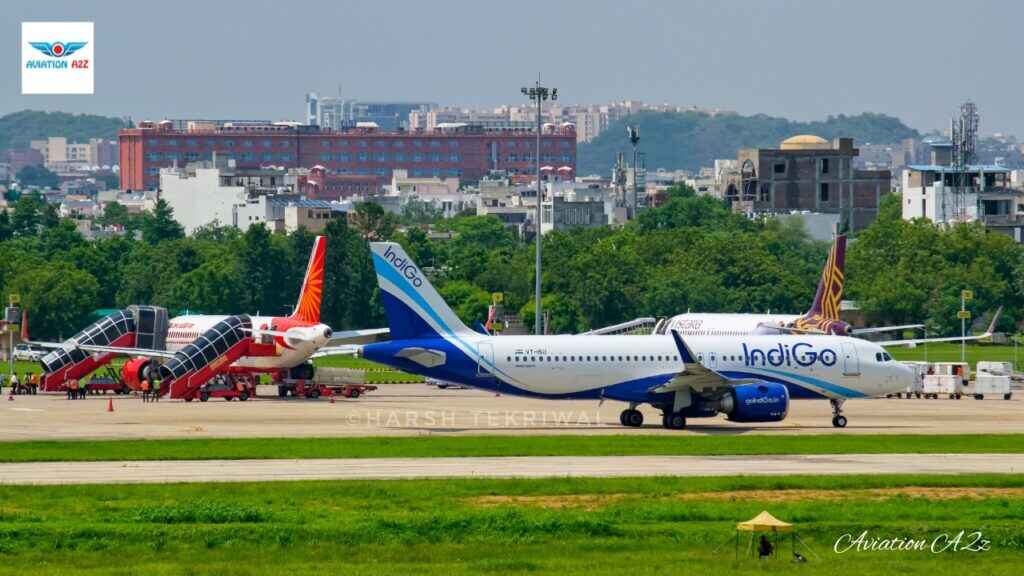
(INDIA) IndiGo’s December 2025 meltdown, which began on December 2 and worsened through December 5, stranded passengers across major airports and exposed how a single carrier’s staffing and training problems can spill into a broader travel and immigration crunch. With IndiGo holding 60–65% of India’s domestic market, the wave of delays and cancellations quickly became more than an airline operations story: it disrupted onward international connections, risked missed visa appointments, and left some travelers facing the real-world problem of expiring entry permission while they waited for seats to reopen.
Timeline and scale of disruption
- The disruption peaked on December 5, when more than 1,600 IndiGo flights were canceled in a single day, with thousands of flights affected overall across the week.
- IndiGo aimed to return to normal operations by December 10–15, with temporary adjustments stabilizing within 48 hours after an apology, according to the source.
Immediate trigger and operational causes
The immediate trigger was crew unavailability tied to India’s revised DGCA Flight Duty Time Limitations (FDTL) rules, which cut pilot duty hours and required longer rest periods.
Key operational shortcomings included:
– Early implementation of new FDTL patterns without fully accounting for added manpower needs during peak season.
– Overlapping training schedules, existing leave patterns, and a limited pool of reserve crew.
– Training bottlenecks and attrition that left new hires queued for simulator slots, route checks, and recurrent requirements—processes that cannot be safely rushed.
Other complications listed in the source material:
– A320 software updates removing aircraft from service temporarily
– Seasonal rescheduling that altered duty rosters
– Airport congestion that degraded recovery margins
– Weather amplifying delays and causing legal duty-time breaches under the new FDTL rules
When small technical, operational, or weather issues occur together, they can force immediate cancellations rather than simple delays because crew become legally unable to operate subsequent legs.
How a big carrier’s failure ripples across the system
Because IndiGo controls 60–65% of the domestic market, even a short staffing miscalculation becomes a system-level shortage:
– Rival carriers lack spare aircraft and crews to absorb the demand shock.
– Passengers compete for a shrinking number of seats, driving up last-minute prices.
– The industry reportedly lacked realistic stress-testing of the new rules for scenarios like a 10–15% capacity drop or 20% pilot unavailability.
Impact on migrants, students, workers, and tourists (immigration risks)
Domestic breakdowns often hit at critical moments: consulate appointments, job start dates, or the final week of a permitted stay abroad. Consequences include:
– Missed long-haul departures and nonrefundable tickets
– Failure to attend biometric appointments or visa interviews
– Risk of becoming “out of status” in another country if unable to depart before entry permission ends
VisaVerge.com (cited in the source material) warns these travel disruptions can quickly become immigration problems when travelers can’t reach required appointments or scheduled departures.
Regulatory and government responses
Authorities moved quickly as complaints mounted:
- December 5: DGCA granted IndiGo temporary exemptions from parts of the FDTL framework, including night duty and Leave-For-Rest norms.
- December 6: Civil Aviation Ministry imposed fare caps (the first post-COVID caps noted in the material) and ordered IndiGo to process refunds by the next day.
- DGCA issued a show-cause notice to IndiGo CEO Pieter Elbers, giving a 24-hour deadline to respond.
- Regulators mandated schedule cuts: DGCA initially required a 5% reduction in flights, later amended to 10% by the Civil Aviation Ministry, focusing on competitive routes.
- The DGCA removed four flight operations inspectors amid scrutiny of oversight and pilot-strength approvals tied to a 10% winter schedule increase.
Quote from Civil Aviation Minister Kinjarapu Ram Mohan Naidu reported in the source:
The government “stepped in immediately” with fare caps during capacity constraints.
Naidu also urged the industry to build resilience by having “5 airlines with ~100 aircraft each,” highlighting the systemic risk when one carrier dominates.
Fare caps (as imposed on December 6)
| Route distance | Fare cap (excl. UDF/PSF/taxes) |
|---|---|
| Up to 500 km | Rs 7,500 |
| 500–1,000 km | Rs 12,000 |
| 1,000–1,500 km | Rs 15,000 |
| Above 1,500 km | Rs 18,000 |
- Caps did not apply to Business Class or RCS-UDAN and were to remain until normal operations resumed.
Financial backdrop and structural context
The sector’s financial health helps explain the system’s fragility:
- IndiGo was the only major profitable carrier in FY 2024–25, posting a profit of Rs 7,253 crore.
- Reported losses for rivals:
- Air India: Rs 3,976 crore
- Air India Express: Rs 5,832 crore
- Akasa Air: Rs 1,986 crore
- Alliance Air: Rs 691 crore
- SpiceJet: Rs 56 crore
- Sector losses totaled Rs 18,600+ crore in 2022–23, even as demand surged to 16.55 crore domestic passengers, up 7.7% year on year.
Implication: carriers under financial strain are less likely to hold spare aircraft, crews, and training capacity that could shield passengers during sudden rule changes or adverse conditions.
Accountability and causes cited by pilot body
The Federation of Indian Pilots blamed:
– “Years of lean manpower planning”
– Delayed hiring
– Non-poaching deals
– Short-sighted operational practices
Even with an overall 30% hiring growth cited in the wider context, the source says attrition and training bottlenecks undermined operational capacity.
Practical advice for travelers (especially immigration-linked travel)
When domestic cancellations threaten international travel or visa compliance, practical documentation and steps matter:
- Obtain written confirmation from the airline about the cancellation and reasons.
- Keep updated itineraries and receipts for rebooked travel.
- Save evidence that may be needed by employers, universities, or immigration authorities (proof of missed departures, rebooking attempts, and airline communications).
- Rely on official government sources for entry permissions and extensions; India’s e-Visa portal is published by the Government of India at https://indianvisaonline.gov.in/evisa/
- Carry copies of approvals and entry conditions in case delayed movement must be explained to authorities.
Key takeaways and lessons learned
- Rule changes like FDTL, even if safety-motivated, must be stress-tested against real-world peak scenarios to avoid large-scale disruption.
- In markets where one carrier dominates, failures at that carrier have market-wide consequences for fares, capacity, and passenger options.
- Training pipelines, reserve staffing, and realistic contingency planning are critical system-level defenses that cannot easily be substituted by short-term hiring.
- For travelers with immigration-sensitive timelines, keep documentation and official confirmations ready—these can make the difference between a resolved schedule change and an immigration problem.
The episode left a clear warning: when Flight Duty Time Limitations change, training pipelines lag, and attrition stays high, the result is not only operational strain and fare spikes—it is also missed connections, lost time, and immigration risk for the people whose visas, jobs, studies, and family plans depend on a flight actually taking off.
IndiGo’s early December 2025 crisis, driven by newly tightened DGCA FDTL rules, led to roughly 1,600 cancellations on December 5 and widespread travel disruption. Crew shortages, training backlogs and A320 software removals compounded the collapse. With a 60–65% market share, IndiGo’s failures strained the entire system, prompting fare caps, refund orders and schedule reductions. The episode exposed structural fragilities and immigration risks for stranded passengers, underlining the need for stress-testing and stronger contingency planning.
Live Government Data
State Dept • CBPBusiest Border Crossings
- El Paso 70 min
- Eagle Pass 45 min
- Otay Mesa 45 min