- IndiGo has implemented tiered fuel surcharges ranging from ₹425 to ₹2,300 per flight sector starting March 14, 2026.
- The airline cited a 30-40% increase in operating costs driven by surging aviation turbine fuel prices.
- New charges apply per segment, affecting both domestic routes and international destinations including Europe and Africa.
(INDIA) — Price Caps“>IndiGo introduced a fuel surcharge effective from 00:01 hours on March 14, 2026, adding an extra per-sector charge to all new domestic and international bookings that varies by route distance.
Passengers booking at or after that time will see the fuel charge added for each flight segment, meaning a connecting itinerary can draw the surcharge more than once if it includes multiple sectors.
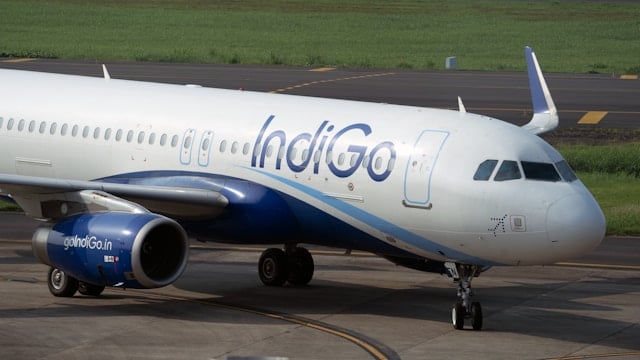
IndiGo set the charge in tiers that rise with longer routes, with the amounts ranging from ₹425 to ₹2,300 per sector across its domestic network and international regions.
Bookings made before the effective time are not covered by the new fuel charge, and the surcharge applies only to new bookings made on or after the start time on March 14, 2026.
On itineraries with more than one flight, the airline applies the fuel surcharge per sector, so a passenger flying two segments will pay the charge twice if both sectors fall under the policy.
IndiGo structured the surcharge by distance and region, spanning domestic routes and the Indian subcontinent, the Middle East, Southeast Asia, China, Africa and West Asia, and Europe.
The airline pegged the lowest band at ₹425 for domestic routes and the Indian subcontinent, rising to ₹900 for the Middle East, ₹1,800 for Southeast Asia, China, Africa and West Asia, and ₹2,300 for Europe.
One report cited ₹450 for domestic routes and the Indian subcontinent, while other reports aligned on ₹425.
IndiGo linked the move to a sharp rise in aviation turbine fuel costs, with jet fuel up over 85% in the region per IATA’s Jet Fuel Monitor.
Fuel is a major component of airline expenses, and aviation turbine fuel comprises 30-40% of airline operating costs.
The industry has also pointed to disruption drivers that can add cost through longer routings and operational constraints, including Middle East geopolitical tensions such as the US-Israel-Iran war, the Strait of Hormuz closure, and Pakistan airspace restrictions.
Crude oil prices have remained elevated, with WTI at $93.44 per barrel on March 13, 2026, adding to broader energy market pressure felt by carriers through fuel procurement.
IndiGo said the new fee aimed to soften, rather than fully pass through, the fuel shock to travellers while still helping the airline address the spike in operating costs.
“While offsetting the entire impact of this fuel price surge requires a very substantial adjustment to fares, IndiGo has introduced a relatively smaller amount as a Fuel Charge keeping in mind the consequential burden on customers,” the airline said.
IndiGo added that it will monitor fuel prices and adjust charges accordingly, signaling that the surcharge levels can change as costs move.
In practice, that kind of “monitor and adjust” approach typically means periodic internal reviews of fuel trends and operating conditions, followed by updated charge levels that appear on new bookings once the airline issues a change notice.
The decision comes as airlines in India face multiple pressures on top of fuel, including high aviation turbine fuel taxes, currency depreciation, and longer routes tied to airspace disruptions.
Air India introduced a similar surcharge beginning March 12, setting ₹399 for domestic flights and charges up to $50/₹4,600 on international routes.
Those steps have unfolded against a backdrop of financial strain for the sector, with industry FY2026 net losses projected at ₹95-105 billion, a range that points to continuing pressure on pricing and ancillary charges.
IndiGo’s scale means the added fee will touch a large share of Indian air travel, with the carrier operating 2,200+ daily flights with 400+ aircraft across 95+ domestic and 40+ international destinations.
The immediate watchpoints for passengers and competitors include shifts in fuel prices, the persistence of airspace constraints that can lengthen flights, and whether airlines revise the surcharge bands as conditions change.
For travellers, the dividing line remains the effective time, with the fuel surcharge applying to new bookings from 00:01 hours on March 14, 2026, and tiered by region from ₹425 up to ₹2,300 per sector.
Live Government Data
State Dept • CBPBusiest Border Crossings
- San Ysidro 80 min
- Nogales 60 min
- Otay Mesa 60 min